


The ability to work legally in the United States is a cornerstone of building a new life for many immigrants. For those seeking to contribute their skills and support their families, the Employment Authorization Document (EAD), often called a work permit, is absolutely essential. However, the process of applying for or renewing an EAD can be complex, and it’s constantly subject to updates and changes from U.S. Citizenship and Immigration Services (USCIS).
At Imigrar, an immigration law firm based in Orlando, Florida, we understand the critical importance of staying informed about these changes. Our mission is to "Keep Families Together," and ensuring our clients have the most accurate and up-to-date information regarding their ability to work is a vital part of that commitment. Today, we're diving deep into the latest USCIS updates concerning EAD processing, offering a comprehensive guide designed to help you navigate this crucial aspect of your immigration journey.
The reporting that sparked this guide:
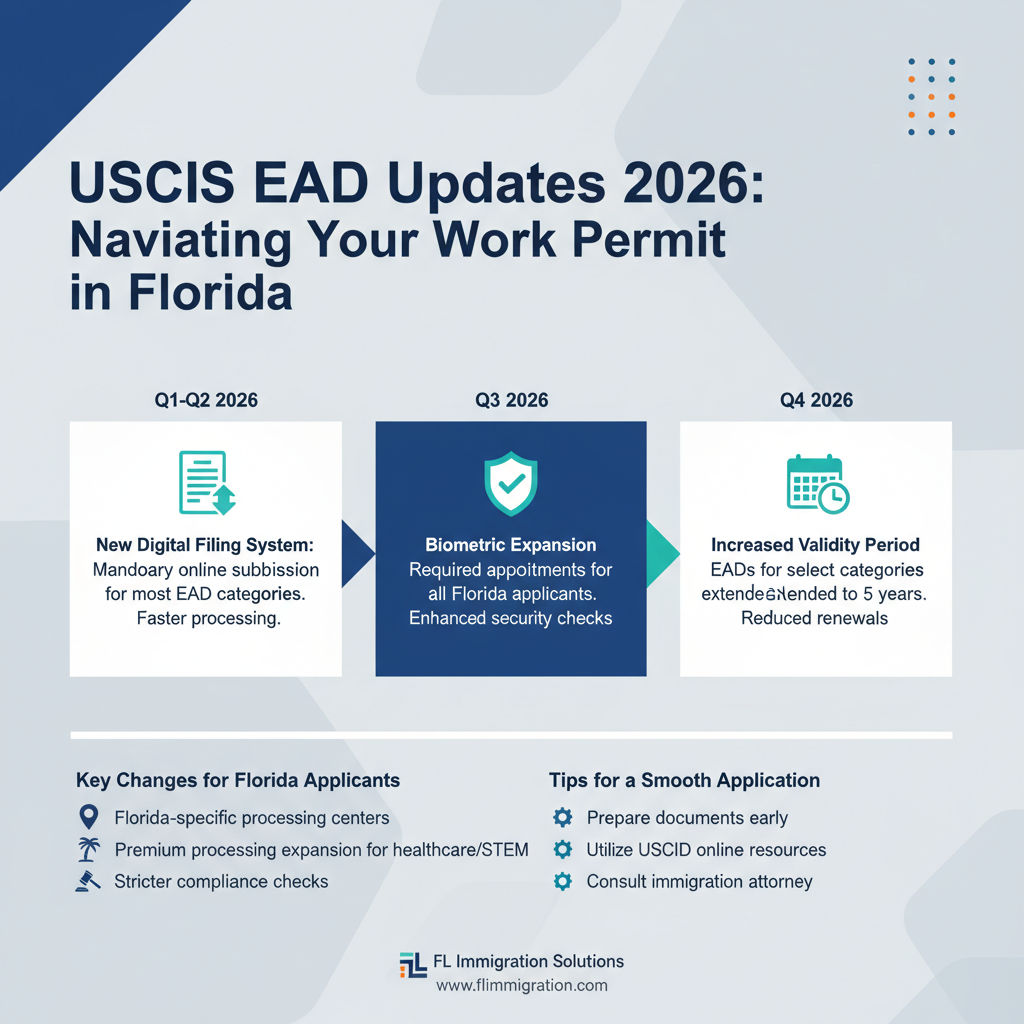
Employment Authorization Document Processing (USCIS)
What This News Means for Immigrants in Orlando and Across Florida
Recent reports and ongoing discussions within the immigration community highlight USCIS’s efforts to address persistent backlogs and streamline the processing of Employment Authorization Documents. While these efforts are aimed at improving efficiency, they also introduce new procedures and considerations that applicants must be aware of. For immigrants in Orlando, across Florida, and indeed nationwide, understanding these nuances can significantly impact the success and timeliness of their EAD applications or renewals.
Why this news is showing up now
The discussion around EAD processing is not new, but it has gained significant traction recently due to several factors:
- Persistent Backlogs: The COVID-19 pandemic severely impacted USCIS operations, leading to unprecedented backlogs in almost all application types, including EADs. While USCIS has made efforts to reduce these backlogs, they remain a significant challenge.
- Policy Adjustments: In response to these backlogs, USCIS has implemented various policy adjustments. Most notably, the automatic extension period for certain EAD renewal applicants was temporarily extended from 180 days to 540 days in 2022, and this extension was reaffirmed and clarified in late 2023 and early 2024. This change is designed to prevent eligible individuals from losing their work authorization while waiting for their renewal applications to be processed.
- Technological Initiatives: USCIS continues to explore and implement technological solutions, such as increased online filing options and process automation, to enhance efficiency and reduce processing times.
- Increased Demand: The number of individuals eligible for EADs continues to grow, putting additional pressure on the system. This includes applicants for Adjustment of Status, asylum seekers, DACA recipients, and certain non-immigrant visa holders.
- Public Scrutiny: Lawmakers, immigration advocacy groups, and the public continue to demand improved efficiency and transparency from USCIS, keeping EAD processing in the news cycle.
How it can affect Florida residents
For individuals residing in Florida, particularly those in the vibrant and diverse communities of Orlando and Central Florida, these national updates have direct and tangible impacts:
- Work Continuity: The 540-day automatic extension is a critical lifeline for many eligible Florida residents. It allows them to continue working and supporting their families, maintaining their jobs and financial stability, even if their EAD renewal is delayed. This is especially important for those working in industries prevalent in Florida, such as tourism, healthcare, and agriculture.
- Local USCIS Impact: While EAD applications are processed by various service centers nationwide, local USCIS field offices, such as the Orlando USCIS Field Office, play a role in certain immigration processes that may be tied to EAD eligibility, such as interviews for Adjustment of Status. Understanding the overall processing environment helps manage expectations.
- Economic Stability: For families in Orange County and along the I-4 corridor, uninterrupted work authorization means continued income, stable housing, and the ability to contribute to the local economy. Delays can cause significant hardship, making these updates critically important.
- Planning and Strategy: Knowing about potential processing times and extensions allows individuals and their legal counsel (like Imigrar) to plan their EAD renewal strategy more effectively, ensuring applications are filed well within the recommended windows.
- Driver's License Renewals: In Florida, a valid EAD is often required to renew a driver's license. The automatic extension letter, along with the expired EAD and the Form I-765 receipt notice, can be used to prove continued work authorization to the Florida Department of Highway Safety and Motor Vehicles (FLHSMV), preventing a lapse in driving privileges.
Need Help? Our Orlando immigration team is ready to assist. Call +1 786-791-3106 for a free consultation, or message us online. Se Habla Español.
What Employment Authorization Document (EAD) Processing Is (and Why It Matters)
An Employment Authorization Document, or EAD, is a permit issued by USCIS that grants foreign nationals temporary authorization to work legally in the United States. This document is crucial for many immigrants who are pursuing various pathways to permanent residency or who hold certain non-immigrant statuses that permit employment.
A plain-English definition
Think of an EAD as your official "work permit." It's a card that looks similar to a driver's license and proves to employers that you are legally allowed to accept employment in the U.S. It’s not a visa, nor is it a green card; instead, it’s a document that allows you to work while you are in a specific immigration status or while you are waiting for a decision on a larger immigration application (like a green card application).
Without an EAD, most foreign nationals are prohibited from working in the U.S. Any unauthorized employment can have severe negative consequences for future immigration applications, potentially leading to denials or even deportation.
Key terms you need to know
Navigating the EAD process requires understanding a few key terms:
- EAD (Employment Authorization Document): The official name for the work permit card.
- USCIS (U.S. Citizenship and Immigration Services): The government agency responsible for processing immigration benefits, including EADs. You will file your application with them.
- Form I-765, Application for Employment Authorization: This is the primary form you must file to request an EAD. It’s the central piece of your application package.
- Eligibility Category: When you apply for an EAD, you must specify an eligibility category. This category determines *why* you are allowed to work. Common categories include:
- (c)(9): For applicants for Adjustment of Status (green card applicants filing Form I-485).
- (a)(5): For asylees and refugees.
- (c)(8): For asylum applicants.
- (c)(33): For DACA (Deferred Action for Childhood Arrivals) recipients.
- (c)(3)(C): For F-1 students seeking Optional Practical Training (OPT).
- (a)(12): For Temporary Protected Status (TPS) beneficiaries.
- Adjustment of Status: The process by which an eligible foreign national already in the United States can apply for lawful permanent resident status (a green card) without having to return to their home country to complete visa processing. EADs are often sought concurrently with Form I-485.
- Concurrent Filing: When you file multiple immigration applications at the same time, such as Form I-485 (green card) and Form I-765 (EAD).
- Receipt Notice (Form I-797C): A document sent by USCIS confirming that they have received your application. This notice contains a receipt number crucial for tracking your case.
- Automatic Extension: For certain EAD categories, if you file for renewal before your current EAD expires, your work authorization is automatically extended for a specific period (currently up to 540 days for many categories) while USCIS processes your renewal. You must have filed on time and your eligibility category must be covered.
- Biometrics Appointment: An appointment where USCIS collects your fingerprints, photograph, and signature for background checks. This is often required for EAD applications.
Understanding these terms is the first step towards successfully navigating the EAD application or renewal process. It empowers you to understand the requirements, track your application, and respond appropriately to any USCIS requests.
Current Immigration Law: The Foundation of Your EAD Application
The ability to obtain an EAD is rooted in specific provisions of U.S. immigration law, primarily the Immigration and Nationality Act (INA) and its associated regulations (found in Title 8 of the Code of Federal Regulations). These laws define who is eligible for work authorization and under what circumstances.
Federal requirements
The core legal framework for EADs is established by federal law. Eligibility for an EAD is not universal; it is granted to specific categories of foreign nationals. These categories are outlined in 8 CFR §274a.12 and include, but are not limited to:
- Applicants for Adjustment of Status: Individuals who have filed Form I-485 to adjust their status to lawful permanent resident (green card holder). (INA §245)
- Asylum Applicants and Asylees/Refugees: Individuals who have applied for asylum and their application has been pending for at least 150 days, or those who have already been granted asylum or refugee status. (INA §208, §209)
- DACA Recipients: Individuals granted Deferred Action for Childhood Arrivals.
- Certain Non-immigrant Visa Holders: This includes specific categories of students (F-1 with OPT or severe economic hardship), exchange visitors (J-1 spouses), and others with limited work authorization tied to their visa status.
- Temporary Protected Status (TPS) Beneficiaries: Individuals from designated countries facing temporary adverse conditions. (INA §244)
- U-Visa and T-Visa Applicants: Victims of certain crimes or human trafficking who are cooperating with law enforcement.
Each category has specific requirements for eligibility, which must be met to obtain an EAD. For example, an applicant for Adjustment of Status (category (c)(9)) must have a pending Form I-485. An asylum applicant (category (c)(8)) must typically wait 150 days after filing their asylum application before they can apply for an EAD, and their application must not have been denied by an immigration judge or USCIS. It is critical to select the correct eligibility category on Form I-765, as an incorrect selection can lead to delays or denial.
USCIS is the agency responsible for adjudicating these applications. All EAD applications must be filed on Form I-765, Application for Employment Authorization. The form itself guides applicants through the necessary information and documentation required. You can find the most current version of the form and its instructions on the USCIS Forms page.
Important: USCIS regularly updates its forms and filing fees. Always use the latest version available on the official USCIS official website.
Florida-specific considerations
While EAD eligibility and processing are governed by federal law, there are practical considerations for Florida residents:
- Driver's License and State ID: In Florida, a valid EAD is often a primary document required by the Florida Department of Highway Safety and Motor Vehicles (FLHSMV) to issue or renew a driver's license or state identification card. If your EAD is expiring, and you have filed for renewal, the FLHSMV generally accepts the combination of your expired EAD card, your Form I-797C receipt notice for Form I-765, and the automatic extension notice or relevant Federal Register notice as proof of continued work authorization for driver's license purposes. This is a critical point for many Central Florida residents who rely on driving for work and daily life.
- Local Services: While the Orlando USCIS Field Office does not process EAD applications directly, it handles interviews for certain underlying applications (like Adjustment of Status) that grant EAD eligibility. Knowing the local office’s procedures and current environment can be helpful.
- Community Resources: Florida has numerous immigrant communities, and local organizations or legal aid services (like Imigrar) are vital resources for understanding federal policies through a local lens.
Understanding both the federal legal foundation and these practical Florida-specific considerations is key to a successful EAD application or renewal.
How to Apply for or Renew Your EAD: A Complete Step-by-Step Guide
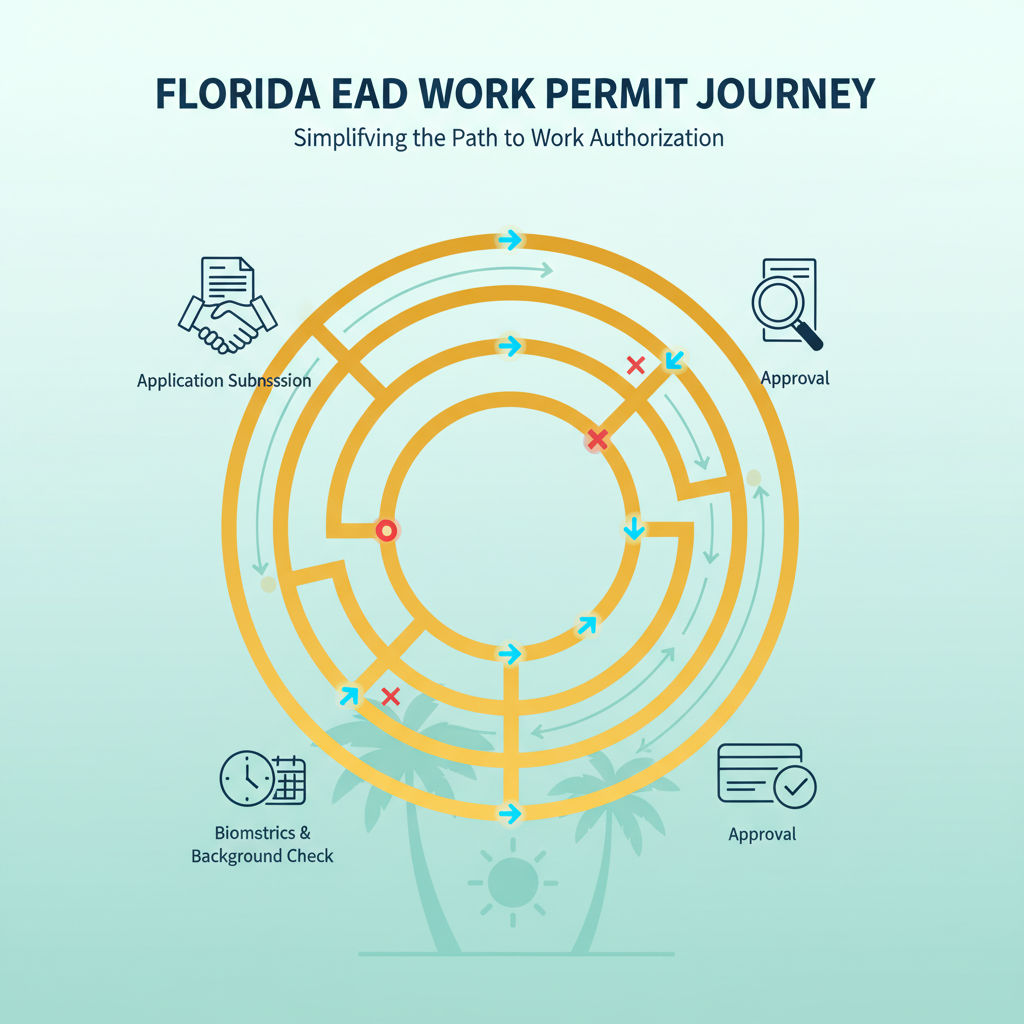
Applying for or renewing your Employment Authorization Document (EAD) involves a systematic process. Following these steps carefully will help ensure your application is complete and correctly submitted, minimizing potential delays. This guide is tailored to reflect the current environment as of 2026, including recent USCIS updates.
1) Determine Your EAD Eligibility Category
Before you even touch Form I-765, you must confirm that you are eligible for an EAD and identify the correct eligibility category. This is the most critical first step. Your eligibility is based on your current immigration status or the immigration benefit you are currently seeking.
Example Eligibility Categories:
- (c)(9): You have a pending Form I-485, Application to Register Permanent Residence or Adjust Status.
- (c)(8): You have a pending asylum application (Form I-589) and it has been pending for at least 150 days.
- (c)(33): You are a recipient of Deferred Action for Childhood Arrivals (DACA).
- (c)(3)(C): You are an F-1 student seeking Optional Practical Training (OPT) after graduation.
- (a)(12): You have been granted Temporary Protected Status (TPS).
Required Documents/Information for this step:
- Your current immigration status documents (e.g., visa, I-94, asylum application receipt, DACA approval notice).
- Receipt notices for any underlying applications (e.g., Form I-485, Form I-589).
- Consult with an immigration attorney to confirm your correct category, especially if your situation is complex.
2) Gather All Necessary Supporting Documents
Once your eligibility category is confirmed, compile all the required supporting documents. The specific documents depend heavily on your eligibility category, but there are common requirements for almost all EAD applications.
General Required Documents (always include unless specified otherwise):
- Two identical passport-style photos: Taken within 30 days of filing, with a white background, unretouched, and showing a full front view of your face. Write your name and A-number (if any) lightly on the back of each photo.
- Copy of your last EAD (front and back): If you are renewing.
- Copy of your government-issued photo identification: Such as a passport, national ID card, or driver's license.
- Copy of your most recent I-94 Arrival/Departure Record: This can be printed from CBP's website.
- Proof of eligibility for the category you selected: This is crucial.
- For (c)(9) Adjustment of Status applicants: Copy of your Form I-485 receipt notice.
- For (c)(8) asylum applicants: Copy of your Form I-589 receipt notice.
- For (c)(33) DACA recipients: Copy of your previous DACA approval notice.
- For (c)(3)(C) F-1 OPT: Copy of your I-20 with OPT recommendation, academic transcripts, and previous EAD (if any).
- Copy of birth certificate (with certified translation if not in English).
- Copy of marriage certificate (if applicable, with certified translation).
- Any other documentation specifically required by the instructions for your category.
Warning: Always provide copies, not original documents, unless USCIS specifically requests originals. Ensure all foreign language documents are accompanied by a certified English translation.
3) Complete Form I-765, Application for Employment Authorization
Download the latest version of Form I-765 from the USCIS Forms page. Read the instructions carefully before filling out the form. You can fill it out electronically and print it, or print it and fill it out neatly in black ink.
Key sections to pay close attention to:
- Part 1: Reason for Applying: Select the correct option (initial permission, renewal, replacement).
- Part 2: Information About You: Ensure all biographical information is consistent with other immigration documents.
- Item 27. Eligibility Category: Enter the correct three-character code (e.g., (c)(9), (c)(8), (c)(33)). An error here can lead to denial.
- Item 28-30 (Specific questions for certain categories): For example, DACA applicants will answer questions about their previous DACA approvals.
- Signature: Do not forget to sign the form! An unsigned form will be rejected.
Reminder: If you are applying for an EAD renewal and are eligible for the automatic extension, ensure you file your Form I-765 *before* your current EAD expires. This is critical to benefit from the 540-day extension.
4) Calculate and Prepare Your Filing Fees
As of 2026, USCIS fees are subject to change. Always verify the current fee amount on the USCIS website. The fee for Form I-765 is typically non-refundable. Some categories are exempt from the fee, such as initial applications for asylum seekers (c)(8) and certain VAWA self-petitioners.
Payment Methods:
- Personal check, cashier's check, or money order payable to "U.S. Department of Homeland Security."
- Credit card using Form G-1450, Authorization for Credit Card Transactions.
Important: Write your A-number (if you have one) on the memo line of your check or money order. Ensure the payment amount is exact. Incorrect fees are a common reason for application rejection.
5) Assemble and Mail Your Application Package
Organize your completed Form I-765 and all supporting documents. Create a cover letter listing all the contents of your package. This helps USCIS process your application more efficiently. The specific mailing address depends on your eligibility category and sometimes your state of residence.
Assembly Order (recommended):
- Cover Letter
- Payment (check/money order clipped to cover letter, or Form G-1450)
- Form I-765 (signed)
- Two passport-style photos in a small envelope labeled with your name and A-number (do not staple or clip photos directly to the form).
- Copies of all supporting documents, grouped by type.
Mailing:
- Check the "Where to File" instructions on the USCIS website for Form I-765 to find the correct service center address. This is critical, as sending to the wrong address will cause delays.
- Send your application via a traceable mail service (e.g., USPS Certified Mail with return receipt, FedEx, UPS). Keep the tracking number and a copy of the entire submitted package for your records.
6) Attend Your Biometrics Appointment (If Required)
After USCIS receives your application, they will send you a Form I-797C, Notice of Action, confirming receipt. For many EAD categories, USCIS will then send a separate appointment notice for a biometrics (fingerprinting) appointment at an Application Support Center (ASC).
- Attend this appointment as scheduled.
- Bring your appointment notice and a valid photo ID.
- Failure to attend can lead to delays or denial of your application.
Note: Some applicants, particularly those who have recently provided biometrics for another application (e.g., Form I-485), may have their biometrics reused, in which case a new appointment may not be scheduled.
7) Monitor Your Case Status and Receive Decision
You can monitor the status of your EAD application online using the receipt number from your Form I-797C notice. Visit the USCIS Processing Times page for estimated adjudication timelines.
- Online Case Status: Use the USCIS website to track your application.
- Processing Times: Understand that these are estimates and can vary significantly.
- RFEs (Requests for Evidence): If USCIS needs more information, they will send you an RFE. Respond promptly and completely.
- Approval: If approved, USCIS will mail your EAD card to the address on file. Ensure your address is current with USCIS.
- Denial: If denied, USCIS will send a denial letter explaining the reasons. You may have options to appeal or refile, depending on the reason for denial.
Important: Keep your address updated with USCIS by filing Form AR-11, Alien's Change of Address Card, online or by mail, especially if you move while your application is pending. Missing notices can jeopardize your application.
Facing a complex EAD application? Don't navigate the legal maze alone. Imigrar offers expert guidance for immigrants in Orlando and nationwide. Call +1 786-791-3106 for a free consultation. Se Habla Español.
Practical Steps You Can Take Today for a Smoother EAD Process
Proactive preparation is key to a successful and timely EAD application or renewal. Here are practical steps you can take starting today, especially important given the ongoing USCIS processing adjustments:
Actionable Checklist (5+ items)
- Confirm Your Eligibility and Category: Re-verify your exact EAD eligibility category. USCIS rules can be nuanced, and an incorrect category will lead to denial. Consult the USCIS official website or an attorney.
- Gather Core Documents Now: Start collecting copies of essential documents like your birth certificate, marriage certificate, previous EADs, I-94 records, and photo IDs. Ensure any non-English documents are translated and certified.
- Check USCIS Website for Latest Forms & Fees: Before filling out anything, download the absolute latest version of Form I-765 and verify the current filing fee. Forms and fees are updated periodically, and using an outdated version will result in rejection.
- Take New Passport Photos: Get two new, compliant passport-style photos taken within 30 days of your planned filing date. This avoids issues with outdated photos.
- Understand the Automatic Extension (for Renewals): If renewing, familiarize yourself with the 540-day automatic EAD extension rule. This applies to certain categories (e.g., (c)(9), (c)(8), (a)(12)) if you file your renewal on time. You can work for up to 540 days past your EAD expiration date with your expired EAD and the


