
U.S. Citizenship Test Changes 2026: Your Essential Guide to
The U.S. Naturalization Test is undergoing significant changes in 2026. Understand the new civics questions and requirements with Imigrar's expert guide to successfully achieve U.S. citizenship.

For many immigrants, achieving U.S. citizenship is the culmination of years of hard work, dedication, and a deep desire to fully integrate into American society. It’s a journey that symbolizes stability, belonging, and the opportunity to build a lasting future for families. As an immigration law firm rooted in Orlando, Florida, Imigrar understands the profound importance of this milestone.
Today, as we stand in late 2026, we are addressing a critical update that impacts aspiring citizens nationwide: significant changes to the U.S. Naturalization Test. These revisions, which have been anticipated and are now either newly implemented or imminently taking effect, mean that how you prepare for your citizenship interview will need to adapt. Our goal at Imigrar is to provide you with the most professional, accurate, and actionable information to navigate these new requirements successfully.
The reporting that sparked this guide:
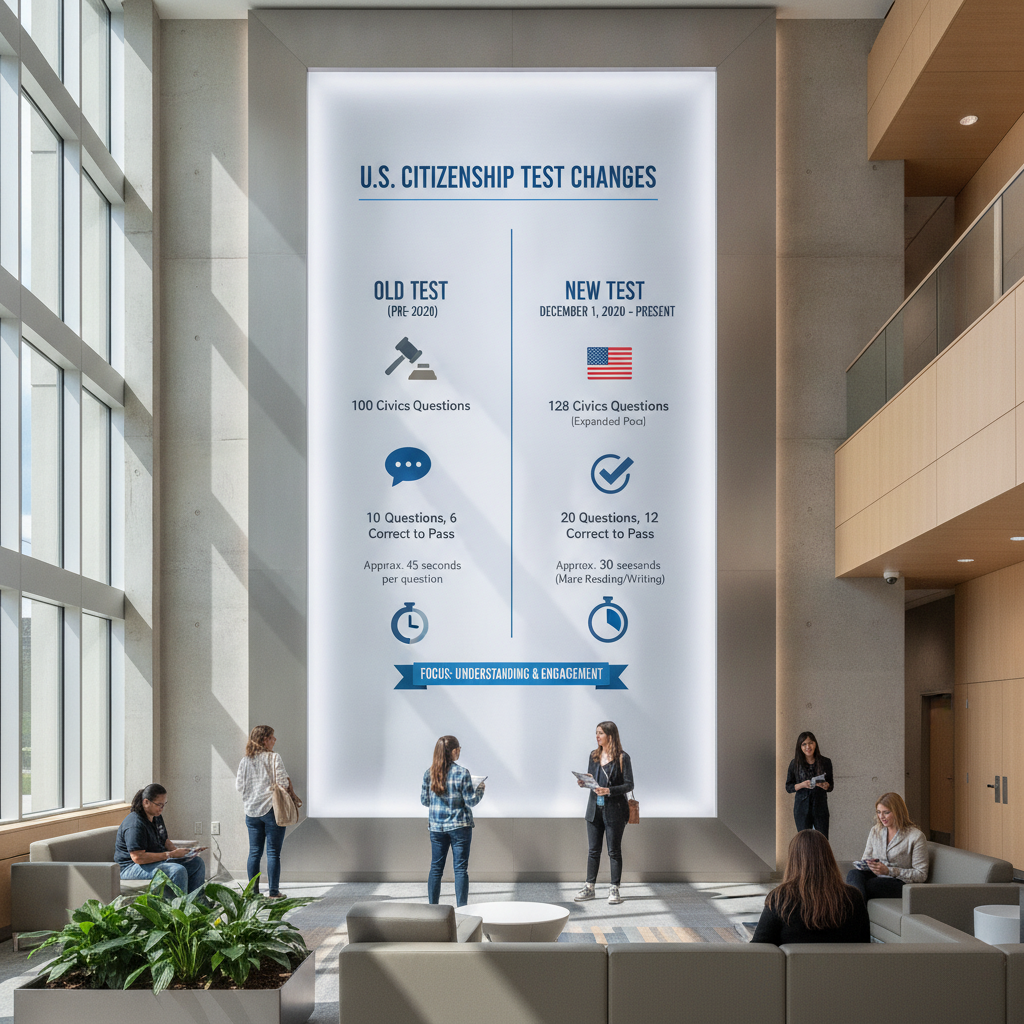
The information regarding the upcoming changes to the Naturalization Test is a significant development for immigrant communities. Our insights are informed by news and official announcements regarding these revisions.
Naturalization Test Changes Coming in 2026 (Citizenship)What This News Means for Immigrants in Orlando and Across Florida
The U.S. Citizenship and Immigration Services (USCIS) periodically updates the Naturalization Test to ensure it remains relevant and effective in assessing an applicant's knowledge of U.S. history, government, and civics. The changes coming in 2026 are particularly noteworthy, introducing new civics test questions and requirements that will affect many applicants.
Why this news is showing up now
The decision to update the Naturalization Test is part of USCIS’s ongoing commitment to maintain the integrity and relevance of the naturalization process. Historically, the civics test has been reviewed and revised to reflect current educational best practices and to ensure a comprehensive understanding of American democratic principles. The latest round of revisions for 2026 began with pilot programs and public comment periods, culminating in the formal announcement and implementation timeline. As we are now in late 2026, these changes are either freshly implemented or are going into effect in the immediate future, meaning that applicants filing their Form N-400, Application for Naturalization, from this point forward will likely face these new test components. This timing emphasizes the urgency for current and prospective applicants to understand and prepare for the updated test.
How it can affect Florida residents
Florida is home to a vibrant and diverse immigrant population, with communities across the state, from Miami to Jacksonville, and particularly in Central Florida, including Orlando, Kissimmee, and Tampa. For these residents, the Naturalization Test changes are of paramount importance. Whether you’re preparing for your interview at the Orlando USCIS Field Office or another location, the new civics test questions will be uniformly applied. This means that if you are a lawful permanent resident in Orange County, along the I-4 corridor, or anywhere in the Sunshine State, your preparation strategy needs to account for these updates. Failing to prepare for the new test could lead to delays, or even a denial, in your naturalization application. Imigrar, located in Orlando, is strategically positioned to assist Florida residents in navigating these new requirements, ensuring you have access to the most current information and resources.
Need Help? The changes to the Naturalization Test can seem daunting, but you don't have to face them alone. Our Orlando immigration team is ready to assist you in understanding the new requirements and preparing effectively. Call +1 786-791-3106 for a free consultation, or message us online. Se Habla Español.
What the 2026 Naturalization Test Changes Are (and Why They Matter)
The Naturalization Test is a critical hurdle for anyone seeking to become a U.S. citizen. It assesses an applicant's proficiency in English and their knowledge of U.S. civics. The changes implemented in 2026 specifically target the civics portion, introducing new questions and potentially a different approach to how this knowledge is evaluated.
A plain-English definition
The Naturalization Test is a two-part examination that all eligible green card holders must pass to become U.S. citizens. It consists of an English test and a civics test. The English test evaluates your ability to read, write, and speak basic English. The civics test assesses your knowledge and understanding of U.S. history, government, and geography. The 2026 changes primarily affect the civics test, meaning that the specific questions asked and the expected depth of answers may be different from previous versions. This evolution aims to ensure that new citizens possess a foundational understanding of the principles that govern the United States.
Key terms you need to know
- Naturalization: The process by which a foreign citizen or national becomes a citizen of the United States.
- U.S. Citizenship: The legal status of being a recognized member of the United States, carrying with it rights and responsibilities.
- Civics Test: One of the two components of the Naturalization Test, designed to evaluate an applicant's knowledge of U.S. history, government, and civics. This is the primary focus of the 2026 changes.
- English Test: The other component of the Naturalization Test, assessing an applicant's ability to read, write, and speak basic English. While the civics test is changing, the English test generally maintains its established format.
- USCIS (U.S. Citizenship and Immigration Services): The government agency responsible for overseeing lawful immigration to the United States, including processing naturalization applications and administering the test.
- Form N-400: The official application form for Naturalization, which must be filed with USCIS.
These changes matter because they directly impact your path to citizenship. Preparing with outdated materials could lead to a less-than-optimal performance during your interview. Understanding the new requirements is the first step towards successful naturalization.
Current Immigration Law: The Foundation of Naturalization
The process of naturalization is governed by federal law, primarily the Immigration and Nationality Act (INA). These laws establish the eligibility requirements, procedures, and standards that all applicants must meet. While the Naturalization Test itself is a procedural component, it is rooted in the statutory requirements for becoming a U.S. citizen.
Federal requirements
The INA, specifically 8 U.S.C. § 1421 et seq., outlines the comprehensive framework for naturalization. To be eligible, applicants must generally meet several key federal requirements:
- Age: Be at least 18 years old at the time of filing Form N-400.
- Lawful Permanent Residency: Have been a lawful permanent resident (Green Card holder) for at least 5 years (or 3 years if married to a U.S. citizen and meeting other specific criteria).
- Continuous Residence: Have maintained continuous residence in the U.S. for at least 5 years (or 3 years) immediately preceding the filing of Form N-400 and up to the time of naturalization.
- Physical Presence: Have been physically present in the U.S. for at least half of the required continuous residence period (e.g., 30 months for the 5-year requirement, 18 months for the 3-year requirement).
- Residence in USCIS District or State: Reside for at least 3 months in the state or USCIS district where the application is filed. For Central Florida residents, this would typically involve the Orlando USCIS Field Office jurisdiction.
- Good Moral Character: Demonstrate good moral character for the statutory period (typically 5 or 3 years) prior to filing the application and until taking the Oath of Allegiance. This is a broad requirement that considers criminal history, financial responsibility, and adherence to legal norms.
- Attachment to the Principles of the U.S. Constitution: Be willing to support the U.S. Constitution and demonstrate allegiance to the United States.
- English Language Proficiency: Be able to read, write, and speak basic English.
- Knowledge of U.S. History and Government (Civics): Demonstrate knowledge and understanding of the fundamentals of U.S. history, principles, and form of government. This is where the 2026 test changes are most relevant.
Certain exemptions exist for the English and civics requirements, such as for applicants who are older and have been green card holders for a long time (e.g., 50 years old and 20 years as a green card holder, or 55 years old and 15 years as a green card holder) or those with qualifying medical disabilities who file Form N-648, Medical Certification for Disability Exceptions.
Florida-specific considerations
While the naturalization laws are federal, the practical application often involves local USCIS field offices. For residents of Florida, particularly those in the Orlando area, the application process will be managed through the Orlando USCIS Field Office. This office serves a wide region, including Orange County and surrounding areas, meaning that competition for interview slots and processing times can sometimes be influenced by local demand. While there are no Florida-specific laws governing naturalization, understanding the local office's procedures and typical processing patterns can be beneficial. Imigrar frequently works with the Orlando Field Office and can provide insights into local practices and expectations.
For official information and forms, always refer to the USCIS official website.

How to Prepare for the New 2026 Naturalization Test: A Complete Step-by-Step Guide
Navigating the naturalization process, especially with new test requirements, can be complex. This step-by-step guide is designed to help you prepare thoroughly and confidently for U.S. citizenship.
1) Determine Your Eligibility and Gather Documents
Before you even think about the test, confirm you meet all the basic eligibility criteria. This includes your age, the duration of your lawful permanent residency, your continuous residence, and physical presence in the U.S. Ensure you meet the good moral character requirement – any past legal issues should be reviewed with an attorney. Once eligibility is confirmed, begin compiling your essential documents. This foundational step is crucial for a smooth application process.
Required Documents for Step 1:
- Your Permanent Resident Card (Green Card)
- State-issued identification (Driver's License or State ID)
- All passports (current and expired)
- Marriage certificates and divorce decrees (if applicable)
- Birth certificates of children (if applicable)
- Tax returns for the past 5 years (or 3 years if applying based on marriage to a U.S. citizen)
- Proof of selective service registration (for male applicants aged 18-26)
- Certified court dispositions for any arrests, citations, or criminal charges, even if they were dismissed or expunged.
- Documentation for any trips outside the U.S. lasting 6 months or more.
Important: Organize these documents meticulously. Make copies of everything, but always keep your originals safe. You will need to present originals at your interview.
2) File Form N-400, Application for Naturalization
Once your documents are in order and your eligibility is confirmed, the next step is to complete and file Form N-400. This form is extensive and requires accurate and detailed information about your personal history, residence, employment, and moral character. Any discrepancies or omissions can lead to delays or even denial. The filing fee for Form N-400 is significant and often includes a biometrics fee, though fee waivers are available for eligible low-income applicants via Form I-912, Request for Fee Waiver. Ensure you send your application to the correct USCIS lockbox facility based on your residence.
Required Documents for Step 2 (to submit with N-400):
- Photocopy of the front and back of your Green Card
- Two passport-style photos (if filing by mail)
- Check or money order for the correct filing fee (or approved Form I-912)
- Any supporting documents required based on your answers in the N-400 (e.g., court documents for arrests, marriage certificates, etc.)
3) Attend Your Biometrics Appointment
After USCIS accepts your Form N-400, you will receive an appointment notice for biometrics. This appointment typically takes place at an Application Support Center (ASC) near you, such as the one serving Central Florida residents. During this appointment, USCIS will collect your fingerprints, photographs, and signature. These biometrics are used for background checks to verify your identity and ensure you meet the good moral character requirements. This is a straightforward appointment, but it’s crucial to attend on time with your appointment notice and valid photo identification.
Required Documents for Step 3:
- Biometrics Appointment Notice (Form I-797C, Notice of Action)
- Valid photo identification (e.g., Green Card, state ID, passport)
4) Prepare for the English and Civics Tests (The New 2026 Requirements)
This is where the 2026 changes become central. While the English test components (reading, writing, speaking) largely remain consistent, the civics test now features new questions and requirements. You must be prepared for both.
English Test:
- Speaking: Your ability to speak English will be assessed by the USCIS officer during your interview. They will evaluate your answers to questions about your Form N-400 and general conversation.
- Reading: You will be asked to read one of three sentences correctly to demonstrate your ability to read English.
- Writing: You will be asked to write one of three sentences correctly to demonstrate your ability to write English.
New 2026 Civics Test:
The 2026 civics test introduces new questions designed to ensure a more comprehensive and perhaps analytical understanding of U.S. history, government, and civics. While the previous test often relied on rote memorization of 100 questions, the new iteration may require a deeper grasp of concepts, potentially involving more scenario-based questions or a broader range of topics within the existing categories. USCIS has published updated study materials reflecting these changes. It is absolutely essential to use the *latest* official study guide, flashcards, and online resources provided by USCIS. Do not rely on outdated materials. The test still consists of 10 questions, and you must answer 6 correctly to pass, but the pool of questions has been revised.
Warning: Begin studying immediately. Dedicate regular time to review the new civics questions. Practice speaking English, reading aloud, and writing simple sentences. Consider joining a citizenship preparation class, many of which are offered by community organizations in Orlando and across Florida. Imigrar also provides resources and guidance to help clients prepare.
For the most up-to-date study materials, visit the USCIS Study Materials for the Civics Test page.
Expert Guidance for the New Test: Don't leave your naturalization to chance. The updated 2026 Naturalization Test requires precise preparation. Imigrar's experienced attorneys in Orlando can help you understand the new civics questions and build a strong application. Call us for a free consultation at +1 786-791-3106. Se Habla Español.
5) Attend Your Naturalization Interview
This is the most critical step. You will receive an interview notice (Form I-797C) indicating the date, time, and location (e.g., the Orlando USCIS Field Office). During the interview, a USCIS officer will review your Form N-400 with you, asking questions to verify the information. They will also administer the English and civics tests. Answer truthfully and clearly. If you have an attorney from Imigrar, they will accompany you to the interview to provide support and ensure your rights are protected.
Required Documents for Step 5:
- Interview Appointment Notice
- Your Permanent Resident Card (Green Card)
- All passports (current and expired)
- State-issued identification
- The original copies of all documents submitted with your Form N-400 (e.g., marriage certificates, court documents, tax returns)
- Any updated documents since filing your application (e.g., new address, recent travel, new arrests)
6) Receive a Decision and Attend the Oath of Allegiance Ceremony
After your interview, the USCIS officer will issue a decision, which could be an approval, a request for more evidence (
Related Topics
Need Legal Assistance?
Our experienced immigration attorneys are here to help with your case. Contact Imigrar today for a free consultation and let us guide you through the legal process with confidence.
📍 Orlando, Florida • Serving clients nationwide
📧 info@imigrar.com