


The reporting that sparked this guide
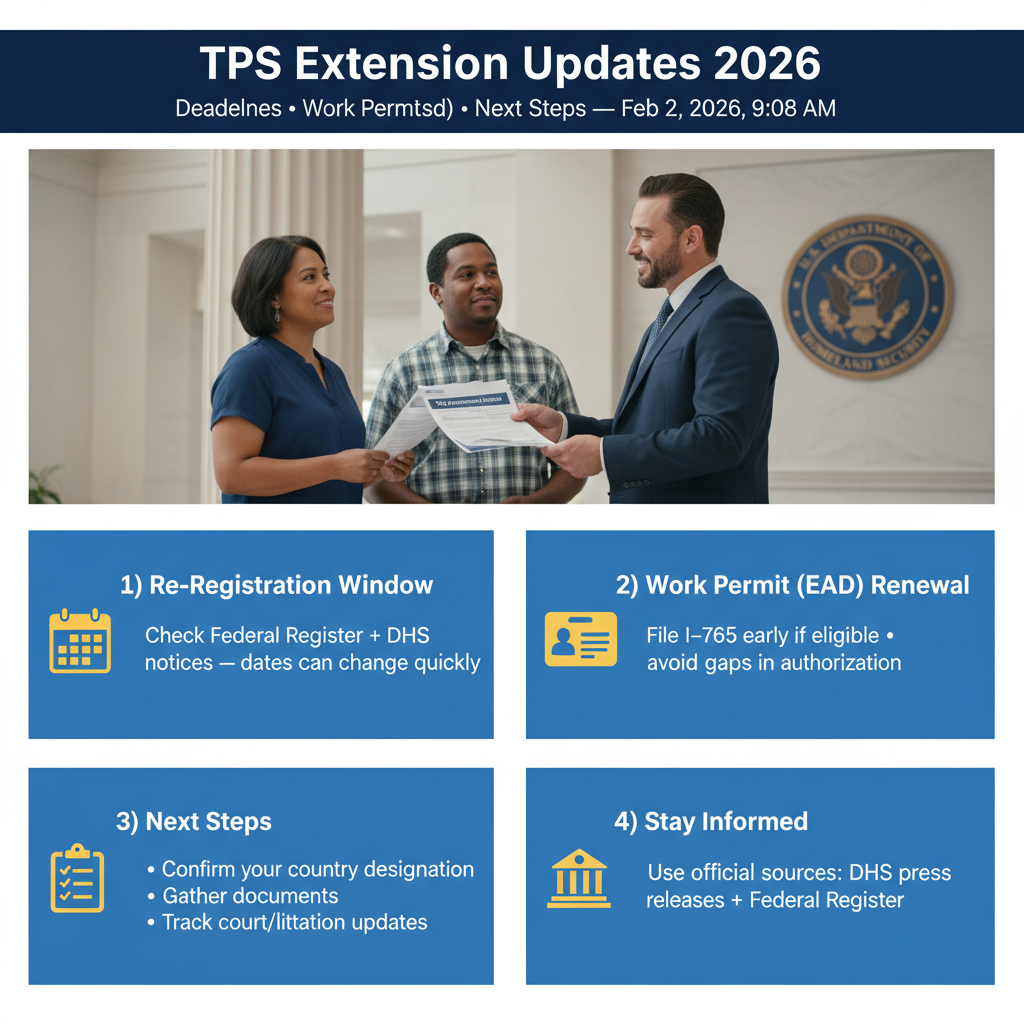
This article is informed by trending coverage and ongoing updates in immigration law reporting, including: TPS (Temporary Protected Status) Extension News (Legal News).
Important: TPS announcements can change quickly (sometimes through Federal Register notices, DHS press releases, or litigation). This guide explains how TPS extensions generally work, what to watch for, and what steps to take to protect your status, work authorization, and family plans.
Need Help? Our Orlando immigration team is ready to assist. Call +1 786-791-3106 for a free consultation, or message us online. Se Habla Español.
What This News Means for Immigrants in Orlando and Across Florida
Why this news is showing up now
TPS is designed to respond to crises—armed conflict, environmental disaster, or extraordinary temporary conditions—affecting a country. When a country is designated for TPS, people from that country who are already in the United States may be allowed to stay temporarily and apply for work authorization.
TPS “extension news” tends to trend for a few predictable reasons:
- Federal Register deadlines are approaching (re-registration windows often open for a limited time).
- DHS is required to periodically review country conditions and decide whether to extend, redesignate, or terminate TPS.
- USCIS issues guidance on automatic EAD extensions so employers can verify continued work authorization.
- Litigation can pause or change termination timelines, which affects TPS holders’ planning.
Reminder: An “extension” and a “redesignation” are not the same thing. An extension typically protects current TPS beneficiaries who already qualify; a redesignation can also allow additional people who arrived later to apply (depending on the new eligibility dates).
How it can affect Florida residents
Florida—especially Central Florida—has large communities from TPS-designated countries. For many families along the I-4 corridor, TPS is the difference between:
- Keeping a valid work permit (EAD) and a driver’s license,
- Maintaining stable housing and employment,
- Continuing school or professional licensing plans, and
- Having time to explore longer-term immigration options (family petitions, employment paths, asylum, or other relief).
If your case is in Orlando or you live in Orange County, TPS updates may also affect how you interact with local employers, DMVs, and how quickly you should schedule legal review—because missing a re-registration window can create avoidable risk.
What TPS (Temporary Protected Status) Extension News Is (and Why It Matters)
A plain-English definition
Temporary Protected Status (TPS) is a humanitarian protection that allows eligible nationals of certain designated countries (or people who last habitually resided there) to:
- Remain in the United States for a limited period,
- Apply for work authorization (an Employment Authorization Document, or EAD), and
- In some cases, request travel authorization (advance permission to travel).
TPS does not automatically lead to a green card or U.S. citizenship. However, it can create time and stability to pursue other options—especially for families who may qualify through a U.S. citizen spouse or child, or through employer sponsorship.
Key terms you need to know
- Designation: DHS adds a country to the TPS list due to qualifying conditions.
- Extension: DHS continues TPS for an existing designated country for an additional period.
- Redesignation: DHS extends TPS and may update key dates (like the required continuous residence date) so more people may qualify.
- Re-registration: Current TPS holders must typically re-register during a specific window to keep benefits.
- EAD: Employment Authorization Document; often requested using Form I-765.
- Automatic extension: USCIS may automatically extend certain EAD categories for a set time (often tied to TPS announcements) so people can keep working while the new card is processed.
- Continuous residence / continuous physical presence: TPS requires you to have been in the U.S. by certain dates and to maintain required presence.
- Inadmissibility / bars: Certain criminal issues or immigration violations can disqualify someone from TPS or other benefits.
- Adjustment of Status and Priority Date: These are not TPS concepts, but they matter if you later pursue a green card through family or employment. We include them because many TPS holders explore Adjustment of Status based on a family petition like Form I-130.
Warning: TPS is country-specific and date-specific. Two people from the same country may have different eligibility depending on when they arrived, whether there was a redesignation, and their immigration and criminal history.
Current Immigration Law: The Foundation
TPS is grounded in federal statute and implemented by DHS through regulations and Federal Register notices.
Federal requirements
The main legal authority for TPS is:
- Immigration and Nationality Act (INA) § 244 (8 U.S.C. § 1254a), which authorizes TPS designations, eligibility standards, and termination/extension procedures.
- Implementing regulations at 8 C.F.R. § 244 (and related provisions), which cover registration, re-registration, and documentation.
Common USCIS forms connected to TPS include:
- Form I-821 (Application for Temporary Protected Status)
- Form I-765 (Application for Employment Authorization)
- Form I-131 (Application for Travel Document) for certain travel requests
Many TPS holders also have family-based strategies that involve:
- Form I-130 (Petition for Alien Relative)
- Form I-485 (Application to Register Permanent Residence or Adjust Status) for Adjustment of Status, when eligible
For official updates and filings, use the USCIS official website and confirm the correct edition date on USCIS Forms.
Florida-specific considerations
TPS is federal, so eligibility rules do not change by state. But Florida residents often face practical state-level issues tied to TPS timing:
- Driver’s license renewals: Florida licensing offices may require updated proof of lawful presence and EAD validity. Automatic EAD extensions can help, but you must present the correct documentation.
- Employment verification: Employers may request updated documents when an EAD is expiring. USCIS guidance on automatic extensions can be critical.
- Local processing realities: While many TPS filings are handled by USCIS lockboxes and service centers, related benefits (like Form I-485 interviews) may involve the Orlando USCIS Field Office.
If your case is in Orlando, planning early matters—especially if you also have pending family petitions, court matters, or need to coordinate travel.
Need Help? Our Orlando immigration team is ready to assist. Call +1 786-791-3106 for a free consultation, or message us online. Se Habla Español.
How to Maintain TPS After an Extension Announcement: A Complete Step-by-Step Guide
When TPS extension news breaks, the right action depends on whether DHS announced (1) an extension with re-registration, (2) a redesignation, and/or (3) an automatic EAD extension. Below is a step-by-step framework that applies to most TPS extension cycles.
1) Confirm your country’s TPS announcement and the exact dates
Start by verifying the official details—especially:
- The new TPS validity period (start and end date)
- The 90-day window (or other stated) re-registration period
- Whether there is a redesignation (new continuous residence / presence dates)
- Whether USCIS published an automatic EAD extension and for how long (often measured in months)
Where to check:
- USCIS official website (TPS country pages and alerts)
- Federal Register (linked from USCIS TPS pages)
- USCIS Processing Times (for Form I-765 timing expectations)
Required documents to gather for this step:
- Passport or national ID (if available)
- Your current/most recent EAD card (front/back copy)
- Your last TPS approval notice (I-797) if you have it
- Any prior Form I-821 or Form I-765 receipt notices
2) Determine whether you must re-register (and whether you qualify under the new rules)
Most extensions require current TPS beneficiaries to re-register during a specific period. Missing that period can create serious problems, though late re-registration may be possible with “good cause” in some cases.
Key eligibility checks include:
- Were you previously granted TPS for the designated country?
- Have you maintained continuous physical presence and continuous residence as required?
- Do you have any arrests, charges, or convictions that could trigger ineligibility?
- Did you travel outside the U.S. without authorization?
Required documents to gather for this step:
- All immigration documents (I-94, prior notices, prior filings)
- Certified criminal dispositions for any arrest/case (even if dismissed)
- Proof of residence in the U.S. (lease, bills, school records)
- Proof of identity and nationality (passport, birth certificate, consular ID)
Warning: Do not assume an old issue “doesn’t matter.” TPS has specific criminal and security-related bars, and a careful legal screen can prevent a denial—or worse, a referral to removal proceedings.
3) Prepare and file your TPS re-registration using Form I-821
For many people, the core filing is Form I-821 (TPS). Some re-registrations may not require a fee for the I-821 portion (depending on the notice and your age), but you must follow the country-specific instructions.
Required documents to gather for this step:
- Completed Form I-821 (correct edition date)
- Two passport-style photos (if required by filing method/instructions)
- Copies of prior TPS approval/receipts (I-797 notices)
- Identity and nationality evidence (if requested)
- Any explanatory statements for late filing (if applicable)
Important: Always confirm the filing address and whether USCIS requires online filing or mail filing for your specific TPS country and situation. Instructions can change with each notice.
4) Apply for or renew your work permit with Form I-765 (EAD)
Even when TPS is extended, you may still need to file Form I-765 to receive an updated EAD. Some announcements provide an automatic extension of existing EADs for a limited time, but that does not always replace the need to file for a new card.
Required documents to gather for this step:
- Completed Form I-765
- Copy of your current EAD (front/back)
- Copy of your TPS receipt/approval notices
- Government-issued photo ID
- Fee payment or fee waiver request (if eligible)
Reminder: If your employer asks about your expiring EAD, the automatic extension policy (if announced) may allow you to continue working with the expired card plus the Federal Register notice and/or your receipt notice—depending on the category and USCIS guidance. Get individualized advice for your I-9 situation.
5) Track your case, respond to RFEs, and keep proof for employers/DMV
After filing, you should track receipts and be ready for a Request for Evidence (RFE). You should also keep a clean “TPS proof packet” for real-life needs like work, housing, and driver’s license renewals.
Required documents to gather for this step:
- USCIS receipt notices for Form I-821 and Form I-765
- Copy of the Federal Register notice showing extension/automatic EAD extension
- Any biometrics appointment notices (if issued)
- A folder of identity/residence documents for DMV/employer requests
To estimate timelines, check USCIS Processing Times, but understand that TPS surges can cause delays.
6) Evaluate longer-term options beyond TPS (family, employment, court, asylum)
TPS is temporary by design. Many people use extension periods to pursue stable solutions, such as:
- Family sponsorship through Form I-130 (with a Priority Date)
- Adjustment of Status through Form I-485 if eligible
- Consular processing (through the U.S. Department of State)
- Immigration court strategy if you are in proceedings (see Executive Office for Immigration Review)
Important: TPS does not automatically cure prior unlawful entry or other barriers to Adjustment of Status. Travel and re-entry issues can be complex; get legal advice before leaving the U.S.
Need Help? Our Orlando immigration team is ready to assist. Call +1 786-791-3106 for a free consultation, or message us online. Se Habla Español.
Practical Steps You Can Take Today
TPS extension periods can feel stressful because deadlines move fast and misinformation spreads faster. Here’s an actionable checklist you can start today.
Actionable checklist (do these now)
- 1) Save the official notice: Download/print the USCIS TPS country page and Federal Register notice and keep it with your immigration documents.
- 2) Calendar the re-registration deadline: Put reminders at 30, 14, and 7 days before the end of the 90-day window (or the exact window stated).
- 3) Make a “TPS evidence folder”: Receipts, approvals, EAD copies, passport/ID, proof of residence, and any court documents.
- 4) Screen for risks: If you had any arrest—even without conviction—get certified dispositions and speak with counsel before filing.
- 5) Plan for work authorization gaps: If your EAD expires soon, file Form I-765 early and ask your employer what they need for I-9 updates.
- 6) Avoid travel until you confirm eligibility: International travel can create re-entry or inadmissibility issues if not handled correctly.
- 7) Review long-term paths: If you have a U.S. citizen spouse/child (21+), or an employer sponsor, ask about Form I-130, Form I-485, and your Priority Date strategy.
Document preparation guidance
Before you file, gather and scan (PDF) the following:
- Current and prior EADs (front/back)
- All I-797 notices for TPS and EAD
- I-94 record (if you have one)
- Passport biographic page and any U.S. entry stamps
- Proof of residence in Florida (lease, utility bills, school/medical records)
- Any name-change documents (marriage certificate, court order)
Timeline expectations
While every TPS cycle is different, these are realistic planning ranges:
- TPS re-registration window: often announced as a 90-day window, but always follow the country-specific notice.
- EAD delivery: can take months depending on volume; check USCIS Processing Times.
- Automatic EAD extension: if granted, it may bridge the gap while USCIS processes your new card—read the exact dates carefully.
Warning: Waiting until the last weeks of the re-registration period increases the chance of delays, missing biometrics requests, or problems fixing a rejected filing.
How Imigrar Helps Immigrants in Orlando
At Imigrar, we help TPS holders and their families protect their ability to live and work in the U.S. and plan for the future. Our team supports clients in Orlando, Orange County, and throughout Central Florida—and we also serve clients nationwide.
How we can help with TPS extension updates:
- Confirm whether an announcement is an extension vs. redesignation and what it means for your exact history
- Prepare and file TPS re-registration and EAD renewals (Form I-821, Form I-765)
- Address complications like prior denials, missed deadlines, or “good cause” late filings
- Evaluate longer-term options: family petitions (Form I-130), Adjustment of Status (Form I-485), consular processing, or court strategy
- Coordinate documentation for employers and DMV needs in Florida
Se Habla Español. We know how urgent TPS timelines can be, and we focus on clear, practical guidance.
Need Help? Our Orlando immigration team is ready to assist. Call +1 786-791-3106 for a free consultation, or message us online. Se Habla Español.
Frequently Asked Questions
Q: If TPS is extended for my country, do I automatically keep TPS?
A: Not always. Many extensions require you to re-register during a specific period (often described as a 90-day window). If you do not re-register, USCIS may consider you out of status for TPS purposes. Review the USCIS TPS page for your country on the USCIS official website and confirm whether re-registration is required and how to file Form I-821.
Q: Can I renew my work permit even if my TPS re-registration is still pending?
A: In many cases, yes. TPS beneficiaries commonly file Form I-765 with or after Form I-821. USCIS may also announce an automatic EAD extension for certain categories and dates. Keep copies of your receipts and the Federal Register notice to show employers. If your case is in Orlando and you need help explaining documents to an employer, we can help you assemble a compliant I-9 documentation packet.
Q: Does TPS give me a path to a green card or citizenship?
A: TPS by itself is temporary and does not automatically lead to permanent residence. However, many TPS holders qualify for other immigration benefits. Common paths include a family petition through Form I-130 and, if eligible, Adjustment of Status using Form I-485. Your Priority Date and how you entered the U.S. can matter. Speak with an immigration attorney before filing to avoid triggering problems.
Q: What documents do I need to re-register for TPS?
A: It depends on your situation and the country notice, but generally you should prepare: proof of identity and nationality, copies of prior TPS approvals/receipts, your current EAD, and any documents USCIS requests for eligibility. If you have any criminal history, obtain certified dispositions. Use the correct forms and instructions from USCIS Forms.
Q: How much does it cost to re-register for TPS and renew my EAD?
A: Fees can vary by age and by what you file (TPS re-registration vs. EAD). Often, the cost issue is primarily tied to Form I-765 and biometrics requirements, but TPS notices can change fee instructions. Always confirm current fees directly on USCIS. If cost is a concern, ask about fee waiver eligibility where permitted and about payment options. We can review your household situation and help you avoid paying the wrong fee (which can cause a rejection and lost time).
Q: What happens if my TPS re-registration or EAD renewal is denied?
A: A denial can have serious consequences, including loss of work authorization and possible referral to removal proceedings in some cases. Next steps depend on why you were denied—missed deadline, alleged ineligibility, criminal bar, insufficient evidence, or a filing error. If you receive a denial, act quickly: gather the decision notice, identify deadlines, and consult counsel. If you are in immigration court, your strategy may also involve EOIR—see Executive Office for Immigration Review.
Q: Can I travel outside the U.S. while on TPS after an extension?
A: Travel is risky without proper authorization and a clear legal plan. Many people must apply for travel permission (often using Form I-131) and should not depart until it is approved and they understand re-entry consequences. Travel can also affect future Adjustment of Status strategies. Before making plans, review your full immigration history and consult an attorney.
Common Mistakes (and How to Avoid Them)
Mistake #1: Missing the re-registration deadline and assuming “extension means automatic”
TPS extensions frequently require action from the beneficiary. Avoid this by calendaring the re-registration period immediately and filing early in the window. Keep proof of delivery and receipts.
Mistake #2: Filing the wrong forms, wrong fees, or using outdated editions
USCIS rejects many applications for preventable technical reasons. Always confirm the correct edition date and instructions on USCIS Forms, and verify filing addresses and fee requirements in the country-specific TPS notice.
Mistake #3: Ignoring arrests or prior immigration issues until after filing
Even dismissed cases can require documentation, and some outcomes can create TPS ineligibility. Get certified dispositions before you file and get legal advice on how to present the record accurately. Warning: Misstatements on immigration forms can create additional problems beyond TPS.
Additional Official Resources (Bookmark These)
Use these authoritative sources to verify TPS updates, forms, and timelines:
- USCIS official website
- USCIS Forms
- USCIS Processing Times
- U.S. Department of State (for consular processing and visa information)
- Executive Office for Immigration Review (if you are in immigration court)
Reminder: News articles can summarize policy changes, but your filing decisions should be based on the official DHS/USCIS notice and your individual eligibility.
Florida and Orlando Notes: Real-World Scenarios We See
If your case is in Orlando, you may be dealing with multiple immigration processes at once—TPS plus a family petition, a pending asylum claim, or a court case. These overlaps can create timing and strategy issues.
For Central Florida residents, common TPS-related pressure points include:
- Employer deadlines: Employers along the I-4 corridor may set internal deadlines for updated documents even when USCIS provides automatic extensions. Knowing what documents are legally acceptable can reduce job risk.
- DMV timing: Driver’s license renewal often depends on EAD validity and system updates. Bring printed USCIS guidance and receipts.
- Field office interactions: While TPS itself is often processed outside the field office, related filings like Form I-485 for Adjustment of Status may involve the Orlando USCIS Field Office for interviews.
Important: Keep your address updated with USCIS to avoid missing notices. If you move within Orange County or elsewhere in Florida, update USCIS promptly so biometrics or RFE notices do not get lost.
Planning Beyond TPS: Building a Long-Term Immigration Strategy
TPS extension news is often a relief—but it should also be a planning trigger. If TPS ends in the future, you want to be ready with a lawful alternative if possible.
Some long-term options to discuss with counsel include:
- Family-based immigration: A U.S. citizen spouse or adult child (21+) may file Form I-130. Whether you can file Form I-485 for Adjustment of Status depends on your entry history and other factors.
- Employment-based paths: Some workers may qualify for sponsorship; timelines depend on category and Priority Date.
- Humanitarian options: Asylum (if timely/eligible), VAWA, U visas, T visas, or other protections.
- Immigration court strategy: If you are in proceedings, coordinate filings and timing carefully with EOIR procedures (see Executive Office for Immigration Review).
Warning: Avoid notario or unlicensed “consultant” advice. TPS filings seem simple, but small errors can have large consequences.
Need Help? Our Orlando immigration team is ready to assist. Call +1 786-791-3106 for a free consultation, or message us online. Se Habla Español.

Closing: Protect Your TPS, Your Work, and Your Family
TPS extension news can be the time you need—but only if you take the right steps on time. Confirm the official dates, file your re-registration correctly, renew your work permit, and use the extension period to explore permanent options when available.
Important: Every TPS case is personal. One missed deadline, one misunderstanding about an automatic extension, or one unaddressed criminal or immigration issue can change the outcome.
Need help now? Call Imigrar at +1 786-791-3106 for a free consultation, or message us online. Se Habla Español. Our Orlando team is here to help you Keep Families Together.


