
Navigating the 2026 Naturalization Test Changes: Your Guide to
Major changes to the U.S. Naturalization Test are coming in 2026. Learn what this means for your path to citizenship, how to prepare, and what to expect with Imigrar.

The journey to U.S. citizenship is a significant milestone for many immigrants, symbolizing a deep commitment to a new home and a future filled with opportunity. As of late 2026, major changes to the naturalization test are being implemented, and staying informed is crucial for anyone on this path. At Imigrar, we believe in keeping families together and empowering our clients with the knowledge and support they need to navigate complex immigration processes.
Need Help? Our Orlando immigration team is ready to assist. Call +1 786-791-3106 for a free consultation, or message us online. Se Habla Español.
NEWS SOURCE REFERENCE SECTION
The reporting that sparked this guide: Naturalization Test Changes Coming in 2026 (Citizenship)
What This News Means for Immigrants in Orlando and Across Florida
For individuals and families living in Orlando, Central Florida, and throughout the Sunshine State, the upcoming changes to the Naturalization Test are more than just a headline; they represent a significant update to a critical step in becoming a U.S. citizen. Understanding these modifications is vital for anyone planning to apply for naturalization in the coming months and years.
Why this news is showing up now
United States Citizenship and Immigration Services (USCIS) periodically reviews and updates its processes to ensure they remain relevant, effective, and fair. The Naturalization Test, specifically the civics portion, has been a subject of review in recent years. While the core purpose of the test—to assess an applicant's knowledge of U.S. history and government—remains unchanged, the method of assessment is evolving. The changes coming in 2026 are the culmination of a pilot program and extensive research by USCIS, aiming to create a more standardized, meaningful, and secure test experience. This isn't the first time the test has been updated; a significant revision occurred in 2020 under a previous administration, which was later reverted in 2021. The current changes are designed to address perceived shortcomings in previous iterations and enhance the overall integrity and educational value of the civics component.
The push for these updates often stems from a desire to ensure that new citizens have a deeper, more conceptual understanding of American civics, rather than just rote memorization of facts. USCIS is continually seeking ways to improve the test's effectiveness in measuring an applicant's civic knowledge and their commitment to the principles of the U.S. Constitution. These periodic adjustments are a normal part of how federal agencies adapt to changing educational best practices and administrative goals. As of October 2026, the implementation date is either imminent or has just begun, meaning applicants need to be aware of the new format and content immediately.
How it can affect Florida residents
Florida, a state with a vibrant and diverse immigrant population, will feel the impact of these changes directly. Whether you reside in Orlando, Miami, Tampa, or any other part of the state, if you plan to apply for naturalization in 2026 or beyond, you will likely encounter the revised test. Here’s how it can affect you:
- New Study Materials: USCIS will release updated study guides and resources. Florida residents will need to ensure they are using the most current materials to prepare. Simply relying on older versions of the "100 Civics Questions" might not be sufficient.
- Increased Preparation Time: The new test format, potentially including more interactive or scenario-based questions, might require a different study approach and potentially more preparation time than the previous format. This is especially true for those who have been studying for the older version of the test.
- Impact on Application Timelines: While the test changes don't directly alter application processing times, a potential initial surge in applications from those hoping to take the "old" test before the transition, or a period of adjustment for USCIS officers administering the new test, could indirectly influence local processing times at the Orlando USCIS Field Office and other locations.
- Local Resources: Community organizations and adult education centers across Florida, including those in Orange County and along the I-4 corridor, that offer citizenship classes will need to update their curricula. Applicants should verify that any preparatory courses they attend are aligned with the new test requirements.
- Anxiety and Uncertainty: Any change to a critical process like naturalization can cause anxiety. Our goal at Imigrar is to provide clarity and support, ensuring Florida families can navigate these updates with confidence.
Important: Do not delay your naturalization application out of fear of the new test. It is crucial to meet all eligibility requirements and apply when you are ready. Our team at Imigrar can help you understand how these changes apply to your specific situation.
What Naturalization Test Changes Are (and Why It Matters)
The Naturalization Test is a cornerstone of the U.S. citizenship process, designed to ensure that applicants demonstrate a basic understanding of English and a foundational knowledge of U.S. history and government. The upcoming changes in 2026 are significant because they aim to evolve how this understanding is assessed, making it critical for future citizens to prepare effectively.
A plain-English definition
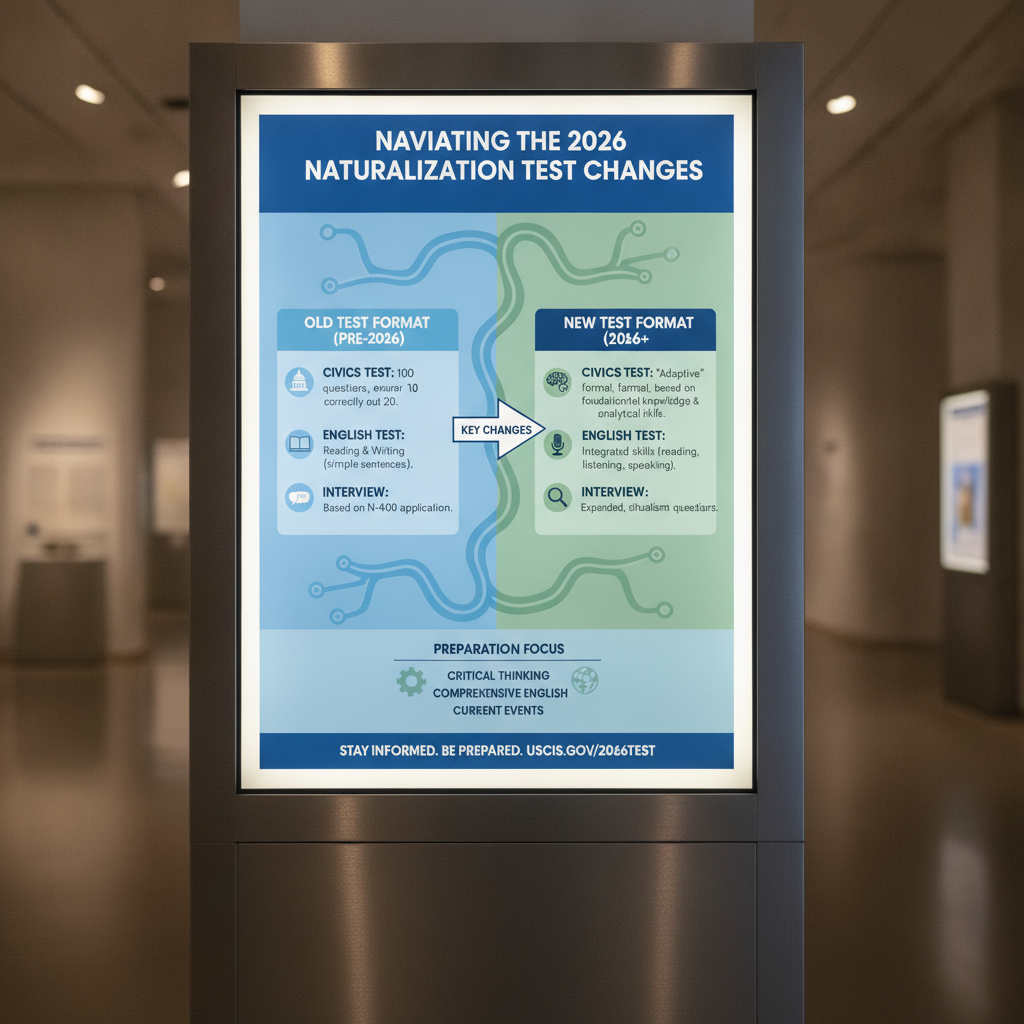
At its core, the Naturalization Test is part of the interview process for individuals seeking to become U.S. citizens. It has two main components: an English test and a civics test. The English test assesses your ability to read, write, and speak basic English. The civics test evaluates your knowledge of U.S. history and government. The "changes" coming in 2026 primarily refer to modifications in the civics portion, and potentially subtle shifts in the English assessment, designed to be more comprehensive and interactive. Instead of just memorizing a list of facts, the new test is expected to encourage a deeper understanding of civic principles and how government functions.
These changes matter because they directly impact how you prepare and what you will be expected to demonstrate during your naturalization interview. A well-prepared applicant is a confident applicant, and understanding these updates is the first step towards success.
Key terms you need to know
Navigating the naturalization process involves understanding specific terminology. Here are some key terms:
- Naturalization: The process by which U.S. citizenship is granted to a foreign citizen or national after he or she has fulfilled the requirements established by Congress in the Immigration and Nationality Act (INA).
- U.S. Citizenship and Immigration Services (USCIS): The government agency that oversees lawful immigration to the United States. They administer the naturalization process, including the test.
- Form N-400: The official application form for naturalization. This is the primary document you will file to begin your journey.
- Civics Test: The portion of the naturalization test that evaluates your knowledge of U.S. history and government. This is the component undergoing the most significant changes in 2026.
- English Test: The portion of the naturalization test that assesses your ability to read, write, and speak basic English.
- Good Moral Character: A legal requirement for naturalization, meaning an applicant must demonstrate adherence to certain moral standards during the statutory period prior to applying for citizenship.
- Lawful Permanent Resident (LPR): Often referred to as a "Green Card holder," this is the status typically required before applying for naturalization.
- Oath of Allegiance: The final step in the naturalization process, where an applicant formally pledges loyalty to the United States.
- Statutory Period: The specific period (usually 3 or 5 years) during which an applicant must demonstrate continuous residence and good moral character before filing for naturalization.
Need Help? Our Orlando immigration team is ready to assist. Call +1 786-791-3106 for a free consultation, or message us online. Se Habla Español.
Current Immigration Law: The Foundation for Naturalization
The framework for naturalization is established primarily by federal law, specifically the Immigration and Nationality Act (INA). Understanding these foundational legal requirements is critical before even considering the naturalization test itself.
Federal requirements
The INA outlines the general eligibility requirements for naturalization. Most applicants must meet these criteria:
- Age: Be at least 18 years old at the time of filing Form N-400.
- Lawful Permanent Resident Status: Be a Lawful Permanent Resident (Green Card holder).
- Continuous Residence:
- Have been a lawful permanent resident for at least 5 years immediately preceding the date of filing Form N-400.
- Alternatively, if married to a U.S. citizen, this period can be reduced to 3 years, provided you have been living in marital union with your U.S. citizen spouse for the entire 3-year period and your spouse has been a U.S. citizen for that entire period.
- Important: You must have resided for at least 3 months in the state or USCIS district where you apply. For Central Florida residents, this means the Orlando USCIS Field Office district.
- Physical Presence: Have been physically present in the United States for at least half of the required continuous residence period (e.g., 30 months for the 5-year requirement, 18 months for the 3-year requirement).
- Good Moral Character: Demonstrate good moral character for the statutory period (typically 3 or 5 years) leading up to your application and until you take the Oath of Allegiance. This is a broad legal concept that considers an applicant's honesty, integrity, and adherence to U.S. laws. Certain criminal convictions can bar an applicant from meeting this requirement.
- Attachment to the U.S. Constitution: Be able to demonstrate attachment to the principles of the U.S. Constitution and well-disposed to the good order and happiness of the United States.
- English Language Proficiency: Be able to read, write, and speak basic English. There are exceptions for age and length of permanent residency (e.g., the "50/20" and "55/15" rules, or for those with certain medical disabilities).
- Knowledge of U.S. History and Government (Civics): Pass the civics test. This is the component undergoing changes in 2026.
These requirements are codified under INA Section 316 and INA Section 319. All applicants must meet these federal standards, regardless of where they live in the U.S.
Florida-specific considerations
While the core naturalization requirements are federal, certain aspects of the process are influenced by your location. For immigrants in Florida, particularly those in Orlando and the surrounding areas, here are some considerations:
- USCIS Field Office: Your naturalization interview will typically be conducted at the USCIS Field Office with jurisdiction over your residence. For most of Central Florida, this is the Orlando USCIS Field Office located at 6650 TPC Blvd, Orlando, FL 32822. Understanding the local office's procedures and typical interview environment can be beneficial.
- Community Resources: Florida has numerous non-profit organizations and educational institutions, especially in major metropolitan areas like Orlando, that offer citizenship classes and assistance with the naturalization process. These resources are invaluable for preparing for both the English and civics tests, particularly with the upcoming changes.
- Legal Support: The Orlando legal community, including Imigrar, is well-versed in federal immigration law and local USCIS practices. Having local counsel who understands the specific nuances of the Orlando Field Office can be a significant advantage.
- Demographic Considerations: Florida's diverse population means that many applicants may benefit from services offered in multiple languages, such as our "Se Habla Español" service at Imigrar.
For more detailed information on all forms and requirements, always refer to the USCIS official website.
How to Prepare for the Naturalization Test Changes: A Complete Step-by-Step Guide
Preparing for U.S. citizenship is a journey that requires careful attention to detail, adherence to legal requirements, and diligent study. With the Naturalization Test changes coming in 2026, a proactive and informed approach is more critical than ever. This guide outlines the essential steps to navigate the process effectively.
1) Understand the Current Test vs. Upcoming Changes
Before diving into intense study, it's crucial to understand what's changing. The "old" civics test (the 2008 version) consists of 100 questions, from which the USCIS officer asks up to 10, and you must answer 6 correctly to pass. The 2020 test, which was briefly implemented, was longer and more complex. The 2026 changes are expected to build on the 2008 framework but with a new approach to the civics section, possibly including more scenario-based questions that require analytical thinking rather than just memorization. The English test will likely remain similar, assessing your ability to read, write, and speak basic English.
- Action: Monitor the USCIS Naturalization Test page for official announcements, updated study materials, and sample questions as they are released.
- Documents/Resources:
- Official USCIS study guide for the 2008 civics test (as a baseline).
- Any new study guides or resources released by USCIS for the 2026 test.
- Information on the pilot program that informed the 2026 changes (if available).
2) Meet Naturalization Eligibility Requirements
The test is just one component. You must first ensure you meet all other federal eligibility criteria for naturalization, which are outlined in the "Current Immigration Law" section above. This includes age, lawful permanent resident status, continuous residence, physical presence, and good moral character.
- Action: Review your personal history and immigration records carefully. Calculate your continuous residence and physical presence. Consult with an attorney if you have any doubts about your eligibility, especially regarding criminal history or extended absences from the U.S.
- Documents/Records:
- Your Green Card (Form I-551).
- Travel records (entry/exit stamps, airline tickets, passport details).
- Court dispositions or police records for any arrests or convictions, no matter how minor.
- Marriage certificate (if applying under the 3-year rule).
3) File Form N-400, Application for Naturalization
Once you've confirmed your eligibility, the next step is to accurately complete and submit Form N-400. This form is extensive and requires detailed personal information, residency history, marital history, employment history, and answers to questions about your good moral character. Errors or omissions can lead to delays or even denial.
- Action: Gather all necessary personal and historical information. Fill out Form N-400 completely and accurately. Pay the correct filing fee (or apply for a fee waiver using Form I-912 if eligible). Make copies of everything you send.
- Required Documents (to be submitted with N-400):
- Copy of your Green Card (front and back).
- Two passport-style photos (if filing by mail).
- Check or money order for the filing fee (and biometric services fee, if applicable).
- Copies of any documents related to name changes (marriage certificate, court order).
- If applying under the 3-year rule, copies of marriage certificate, spouse's proof of U.S. citizenship, and evidence of marital union.
- Certified court dispositions for any arrests or convictions (even if expunged or dismissed).
- Evidence of selective service registration (for males 18-26).
Need Help? Our Orlando immigration team is ready to assist. Call +1 786-791-3106 for a free consultation, or Call Us Now: +1 786-791-3106. Se Habla Español.
4) Attend Your Biometrics Appointment
After USCIS accepts your Form N-400, you will receive an appointment notice for biometrics (fingerprints, photograph, and signature). This appointment is usually at an Application Support Center (ASC) near you, such as the one in Orlando.
- Action: Attend your appointment on time with the appointment notice and a valid photo ID (e.g., Green Card, passport).
- Required Documents:
- Appointment notice (Form I-797C, Notice of Action).
- Photo identification (Green Card, passport, state ID).
5) Prepare for the Interview (English & Civics Test)
This is where the 2026 changes will be most impactful. You will be interviewed by a USCIS officer who will review your Form N-400, ask questions about your eligibility, and administer the English and civics tests. For the civics test, you will need to study the updated materials from USCIS carefully.
- Action:
- English Test: Practice reading and writing simple English sentences. Be prepared to answer questions about your N-400 application orally.
- Civics Test: Study the *new* USCIS civics materials as soon as they are released. Focus on understanding concepts rather than just memorizing answers. Practice explaining answers in your own words. Many community centers in Orlando and Central Florida offer preparation classes.
- Review N-400: Go over your submitted Form N-400 thoroughly. The officer will ask questions directly from it.
- Gather Documents: Collect all original documents that you submitted copies of with your N-400, plus any other documents USCIS requested.
- Required Documents (for interview):
- Appointment notice.
- Your Green Card (original).
- Your passport and any other travel documents.
- State-issued identification (driver's license).
- All original documents that you submitted copies of with your N-400 (e.g., marriage certificates, birth certificates, divorce decrees, court dispositions).
- Tax returns for the past 3-5 years (especially if you have traveled extensively or have financial issues).
- Proof of ongoing marital union (if applicable, e.g., joint bank statements, utility bills, leases).
- Any updated information since you filed your N-400 (e.g., new address, new job, new travel).
6) Receive a Decision and Attend the Oath Ceremony
After your interview, the officer will either make a decision on the spot, continue your case for further review (N-14 notice), or deny your application. If approved, you will receive a notice for your Oath of Allegiance ceremony.
- Action: If approved, attend the Oath Ceremony. This is the final step where you officially become a U.S. citizen. You will surrender your Green Card at this ceremony.
- Documents:
- Oath Ceremony notice (Form N-445).
- Your Green Card.
- Any travel documents, passports.
Practical Steps You Can Take Today
Even with the impending changes, there are many concrete actions you can take right now to prepare for your naturalization journey and the revised test.
- Review Your Eligibility: Start by thoroughly reviewing all naturalization eligibility requirements. This includes your continuous residence, physical presence, and good moral character. Address any potential issues early, especially past criminal history or extended absences from the U.S.
- Gather Essential Documents: Begin collecting all necessary documents. This includes your Green Card, passports, travel records, marriage/divorce certificates, birth certificates, and any court or police records. Organizing these now will save time and reduce stress later.
- Start Studying the English Language: The English portion of the test is unlikely to change drastically. Focus on improving your basic reading, writing, and speaking skills. Practice conversations, read English newspapers, and write simple sentences.
- Stay Informed on Civics Test Updates: Regularly check the USCIS official website for announcements regarding the new test materials. As soon as new study guides or sample questions are released, begin incorporating them into your study routine. Don't rely solely on outdated materials.
- Connect with Local Resources: Explore citizenship classes offered by community organizations, libraries, or adult education centers in Orlando and Central Florida. Many of these institutions will quickly adapt their curricula to the new test format.
- Consult with an Immigration Attorney: This is perhaps the most crucial step. An experienced immigration lawyer, like those at Imigrar, can assess your specific situation, identify potential challenges, help you prepare Form N-400 accurately, and provide guidance on preparing for the interview, including the new civics test.
- Practice Interview Questions: Familiarize yourself with common interview questions that USCIS officers ask. These questions often relate to your N-400 application and your eligibility. Practicing your answers aloud will build confidence.
Document Preparation Guidance
- Originals vs. Copies: Always submit copies of supporting documents with your Form N-400. Keep the originals for your interview.
- Translations: Any document not in English must be accompanied by a certified English translation.
- Organization: Keep all your documents organized in a folder. Create a checklist to ensure nothing is missed.
- Criminal Records: If you have any arrests or convictions, no matter how old or minor, you *must* obtain certified court dispositions and police records. Failure to disclose these can lead to serious immigration consequences.
Timeline Expectations
The naturalization process can take time. Current USCIS Processing Times for Form N-400 vary by field office. For the Orlando USCIS Field Office, processing times can range from 8 to 18 months, sometimes longer. These times include:
- Form N-400 Submission to Biometrics: Typically 3-6 weeks.
- Biometrics to Interview: Can be several months, depending on the field office workload.
- Interview to Decision/Oath Ceremony: Usually within a few weeks, but can be longer if your case is "continued" (meaning the officer needs more information or review).
Reminder: The 2026 test changes might cause temporary fluctuations in processing times as USCIS officers and applicants adjust to the new format. Plan accordingly and apply well in advance of any critical deadlines.

How Imigrar Helps Immigrants in Orlando Navigate Naturalization
The path to U.S. citizenship is a significant journey, and with the upcoming changes to the Naturalization Test in 2026, having expert legal guidance is more important than ever. At Imigrar, based right here in Orlando, Florida, we are dedicated to "Keeping Families Together" by providing comprehensive, compassionate, and effective immigration legal services.
Our experience and expertise
Our team of experienced immigration attorneys possesses an in-depth understanding of U.S. immigration law, including the intricacies of the naturalization process. We have successfully guided countless individuals and families from Orlando, across Florida, and nationwide through their citizenship applications. Our expertise includes:
- Navigating Complex Eligibility: We can assess your unique situation, identify any potential challenges (such as issues with continuous residence, good moral character, or past immigration history), and advise you on the best course of action.
- Accurate Form Preparation: We meticulously prepare and review Form N-400, ensuring all information is accurate, complete, and properly supported with documentation, minimizing the risk of delays or denials.
- Interview Preparation: We provide thorough preparation for your natural
Related Topics
Need Legal Assistance?
Our experienced immigration attorneys are here to help with your case. Contact Imigrar today for a free consultation and let us guide you through the legal process with confidence.
📍 Orlando, Florida • Serving clients nationwide
📧 info@imigrar.com