

The journey to U.S. citizenship is a profound step for many immigrants, symbolizing dedication, opportunity, and a desire to fully integrate into American society. For those residing in Orlando, across Florida, and throughout the nation, this path is often marked by diligence, patience, and careful preparation, culminating in the Naturalization Interview and the Civics Test. As we look towards 2026, significant updates are anticipated for this crucial test, prompting many aspiring citizens to seek clarity and guidance.
The reporting that sparked this guide
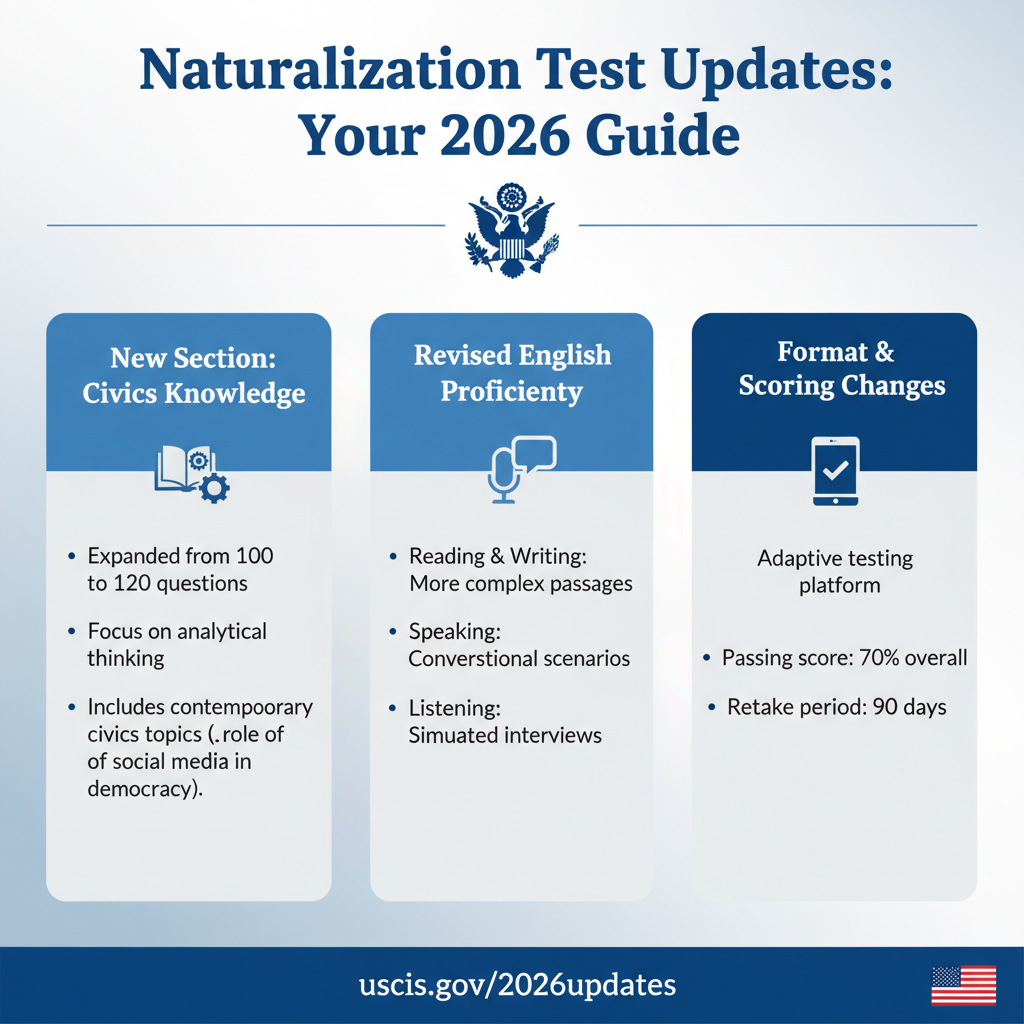
The news regarding upcoming changes to the Naturalization Test is a critical development for countless individuals and families. Staying informed is the first step towards a successful application. For more details, you can refer to the original reporting that highlights these important updates:
Naturalization Test Changes Coming in 2026 (Citizenship)
What This News Means for Immigrants in Orlando and Across Florida
Understanding the implications of these changes is paramount for anyone planning to apply for U.S. citizenship. At Imigrar, we believe in keeping our community informed and empowered, especially when it comes to pivotal moments like naturalization.
Why this news is showing up now
The U.S. Citizenship and Immigration Services (USCIS) regularly reviews and updates its processes to ensure they are fair, efficient, and effectively assess an applicant's knowledge and commitment to the principles of the U.S. Constitution. While the specific details for the 2026 changes are still being finalized, the announcement of upcoming modifications is part of USCIS's ongoing commitment to refining the naturalization process. Historically, USCIS has revised the civics test to ensure it accurately reflects current educational standards and adequately measures an applicant's understanding of U.S. history and government. The most recent significant revision attempt occurred in late 2020, which involved a more complex and expanded civics test. Although that version was ultimately reverted to the 2008 test in 2021 due to concerns about its difficulty and implementation, the current discussions around 2026 indicate a renewed effort to potentially introduce a more interactive or updated version of the civics portion. This proactive announcement serves to give applicants ample time to prepare for any new formats or questions.
For immigrants in Orlando and throughout Florida, this news serves as a **Warning:** to begin or intensify their preparation now. The specific nature of the changes might involve a shift from rote memorization to a more scenario-based approach, testing a deeper understanding of civics concepts rather than just factual recall. This could also mean potential adjustments to the English language portion of the test, though the civics component is typically the primary focus of such revisions. The exact scope will become clearer closer to the implementation date, but the message is clear: expect changes and prepare accordingly.
How it can affect Florida residents
Florida is home to a vibrant and diverse immigrant community, with significant populations in major metropolitan areas like Orlando, Miami, Tampa, and Jacksonville. For residents of Central Florida, including those in Orange County and along the I-4 corridor, these changes will directly impact their journey to citizenship. The Orlando USCIS Field Office, along with others across the state, will be implementing these new test requirements. This means:
- Preparation Strategy Shift: Aspiring citizens in Florida will need to adapt their study methods to any new formats, which may require focusing on conceptual understanding over simple memorization.
- Increased Demand for Resources: There might be a heightened demand for updated study materials, English language courses, and legal assistance in the lead-up to 2026.
- Potential for Delays: While USCIS strives for smooth transitions, any significant procedural or test content changes can sometimes lead to temporary processing adjustments or longer wait times as staff adapt. Applicants should monitor USCIS Processing Times closely.
- Local Support Networks: Community organizations, libraries, and legal firms like Imigrar in Orlando will play an even more crucial role in providing support and resources tailored to the new requirements.
Important: Regardless of the changes, the fundamental requirements for naturalization, such as continuous residency, good moral character, and attachment to the U.S. Constitution, will remain constant. The test changes primarily focus on *how* an applicant's knowledge of U.S. civics and English proficiency is assessed, not the underlying eligibility criteria.
Need Help? Our Orlando immigration team is ready to assist. Call +1 786-791-3106 for a free consultation, or message us online. Se Habla Español.
What Naturalization Test Changes Are (and Why It Matters)
To fully grasp the impact of the upcoming modifications, it's essential to understand what the Naturalization Test entails and the significance of any changes.
A plain-English definition
Naturalization is the process by which a foreign citizen or national can voluntarily become a U.S. citizen. A key part of this process is passing the Naturalization Test, which consists of two main components: an English test and a civics test. The English test assesses your ability to read, write, and speak basic English. The civics test evaluates your knowledge of U.S. history and government.
The "Naturalization Test Changes Coming in 2026" refers to anticipated revisions primarily to the *civics portion* of this test. These changes might involve new questions, a different format for asking questions (e.g., more interactive or scenario-based rather than direct Q&A), or a shift in the topics covered. The goal is often to ensure the test remains relevant and accurately measures an applicant's understanding of civic duties and rights, as well as the foundational principles of the U.S. government.
Why does it matter? Because these changes directly affect how you prepare and what you need to know to pass. If the test becomes more nuanced or requires a deeper understanding of concepts, simple memorization might no longer be sufficient. This could make the path to citizenship more challenging for some, while for others, it might encourage a more thorough and meaningful engagement with U.S. history and civics.
Key terms you need to know
Navigating the naturalization process requires familiarity with specific terminology. Here are some key terms:
- Naturalization: The process by which a lawful permanent resident (green card holder) becomes a U.S. citizen.
- USCIS (U.S. Citizenship and Immigration Services): The federal agency responsible for administering the country's lawful immigration system, including naturalization applications. Visit the USCIS official website for all official information.
- Form N-400: The Application for Naturalization, which is the primary form you must file to begin the naturalization process.
- Civics Test: The portion of the Naturalization Test that assesses an applicant's knowledge of U.S. history and government. This is the part most likely to see changes in 2026.
- English Test: The portion of the Naturalization Test that assesses an applicant's ability to read, write, and speak basic English.
- Oath of Allegiance: The final step in the naturalization process, where an applicant formally pledges loyalty to the United States.
- Lawful Permanent Resident (LPR): Also known as a "green card holder," an individual who has been granted the privilege of permanently residing in the United States.
- Good Moral Character: A legal requirement for naturalization, generally meaning you have not committed certain crimes and have demonstrated respect for U.S. law.
- Continuous Residence: Another key requirement, meaning you have maintained your status as an LPR in the U.S. for a specified period (typically 5 years, or 3 years if married to a U.S. citizen).
Understanding these terms will help you comprehend the requirements and procedures for naturalization, especially as they evolve with the upcoming test changes.
Current Naturalization Law: The Foundation
Even with impending changes to the test, the underlying legal framework for naturalization remains consistent. U.S. immigration law is complex, but the requirements for citizenship are clearly outlined in federal statutes.
Federal requirements
The legal basis for naturalization is found primarily in the Immigration and Nationality Act (INA), specifically in Chapter 2, Part I, beginning with INA § 310. The core federal requirements for naturalization include:
- Age: You must be at least 18 years old at the time of filing your Form N-400.
- Lawful Permanent Residency: You must be a lawful permanent resident (green card holder) for a certain period. Generally, this is 5 years, but it can be 3 years if you are married to and living with a U.S. citizen and meet other eligibility requirements.
- Continuous Residence: You must have resided continuously in the U.S. for at least 5 years (or 3 years if married to a U.S. citizen) immediately preceding the date you file your Form N-400.
- Physical Presence: You must have been physically present in the U.S. for at least half of the required continuous residence period (e.g., 30 months out of 5 years, or 18 months out of 3 years).
- Residence in District/State: You must have resided for at least 3 months in the state or USCIS district where you file your Form N-400. For Central Florida residents, this means residing in the jurisdiction covered by the Orlando USCIS Field Office.
- Good Moral Character: You must demonstrate good moral character for the statutory period (5 or 3 years) leading up to your application and until you take the Oath of Allegiance. This involves disclosing any criminal history, even minor offenses.
- Attachment to the U.S. Constitution: You must show an attachment to the principles of the U.S. Constitution and be willing to take the Oath of Allegiance.
- English Language Proficiency: You must be able to read, write, and speak basic English. This is assessed during your naturalization interview.
- Knowledge of U.S. History and Government (Civics): You must pass the civics test, demonstrating your understanding of U.S. history and government. This is the component most likely to change in 2026.
Certain individuals may be exempt from the English language requirement or receive special accommodations for the civics test, such as those who are over a certain age and have been LPRs for a specific number of years (e.g., 50/20 rule or 55/15 rule) or those with qualifying medical disabilities. More information can be found on the USCIS Forms page.
Florida-specific considerations
While naturalization requirements are federal, the experience of applying can have a local flavor. For those in Florida, particularly in Orlando and surrounding areas:
- USCIS Field Offices: Your naturalization interview will typically take place at the USCIS field office closest to your residence. For many in Central Florida, this is the Orlando USCIS Field Office. Other major offices in Florida include Hialeah (serving South Florida), Tampa, and Jacksonville.
- Local Resources: Florida has numerous community organizations, non-profits, and educational institutions that offer English as a Second Language (ESL) classes and civics preparation courses. These resources will be invaluable as you prepare for the updated test.
- Attorney Access: The presence of many experienced immigration attorneys, like those at Imigrar in Orlando, means you have ready access to legal guidance specific to your local context and the evolving test requirements.
- Cultural Diversity: Florida's diverse population means that USCIS officers are accustomed to working with applicants from various backgrounds, but clear communication and proper documentation are always key.
There are no Florida-specific laws that govern naturalization; it is purely federal. However, understanding the local operational aspects of USCIS and the available support networks is crucial for a smooth process.
Need Help? Our Orlando immigration team is ready to assist. Call +1 786-791-3106 for a free consultation, or message us online. Se Habla Español.
How to Prepare for the Naturalization Test Changes: A Complete Step-by-Step Guide
Given the anticipated changes in 2026, a proactive and strategic approach to preparation is essential. This guide focuses on preparing for the *changes* themselves, building on the foundation of current requirements.
1) Understand the Current vs. Future Test Landscape
Before diving into study, know what you're up against. The current civics test involves answering 6 out of 10 questions correctly from a list of 100 possible questions. The English test involves reading one out of three sentences correctly, writing one out of three sentences correctly, and demonstrating basic conversational ability during the interview.
For 2026, the civics test is the primary focus of change. While the exact details are pending, USCIS has previously explored a more interactive, scenario-based format. This could mean:
- Conceptual Questions: Questions that require you to explain *why* certain principles are important or *how* government functions, rather than just naming facts.
- Visual Aids: The interviewer might use images, maps, or charts to ask questions, requiring you to interpret information.
- Expanded Topics: While core U.S. history and government will remain, the scope of questions might broaden slightly to include more modern civic responsibilities or current events.
Action: Stay updated. Regularly check the USCIS official website and reliable immigration news sources for official announcements regarding the 2026 test changes. Imigrar will also provide updates as soon as they are confirmed.
Required Documents (for staying updated): None directly, but keeping a dedicated folder for all naturalization-related information is a good practice.
2) Master the Existing Civics Questions and Study Materials
Even with changes coming, the fundamental knowledge of U.S. history and government will remain crucial. The 2008 civics test (the one currently in use) covers essential topics. Mastering these now will provide a strong foundation, regardless of how the test evolves.
Action:
- Download the official "100 Civics Questions and Answers" from the USCIS website.
- Study the questions and answers thoroughly. Don't just memorize; try to understand the context behind each answer.
- Utilize flashcards, online quizzes, and study groups. Many apps and websites offer practice tests based on the current 100 questions.
- Pay special attention to questions about the Constitution, the three branches of government, important historical events, and key figures.
Required Documents:
- Printed copy of "100 Civics Questions and Answers" (English and your native language, if available).
- Any personal study notes or flashcards.
3) Enhance Your English Language Skills
The English test is a critical component that assesses your ability to read, write, and speak basic English. While changes are primarily expected for the civics portion, strong English skills are indispensable for understanding the interview, the civics questions, and for explaining your answers clearly, especially if the test becomes more interactive.
Action:
- Speaking: Practice speaking English daily. Engage in conversations with native speakers, join English conversation groups, or watch English-language TV and movies. Focus on clarity and pronunciation.
- Reading: Read simple English texts, such as newspapers, online articles, or children's books. Practice reading aloud to improve fluency. USCIS provides reading vocabulary lists on their website.
- Writing: Practice writing simple sentences. You might be asked to write a sentence dictated by the officer. Focus on basic grammar, spelling, and punctuation. USCIS provides writing vocabulary lists.
- Listening: Pay attention during conversations and news reports. Being able to understand the interviewer's questions is paramount.
Required Documents:
- English vocabulary lists from USCIS.
- Any certificates from English language courses (if applicable).
4) Gather and Organize All Required Documents for Form N-400
The application itself, Form N-400, requires a significant amount of supporting documentation. Beginning this process early ensures you have everything ready when you apply, reducing stress and potential delays. The document requirements are unlikely to change significantly due to the test modifications.
Action:
- Personal Documents: Birth certificate (of yourself, spouse, children), marriage certificate, divorce decrees, death certificates (if applicable).
- Immigration Documents: Your Permanent Resident Card (green card), passports (current and expired), re-entry permits.
- Proof of Residence: Leases, utility bills, bank statements, tax returns showing your address for the entire statutory period (5 or 3 years).
- Proof of Employment/Income: Tax returns for the last 5 years (or 3 years), W-2 forms, pay stubs.
- Travel History: A detailed list of all trips outside the U.S. since becoming an LPR, including dates of departure and return.
- Selective Service Registration: If you are a male applicant between ages 18 and 26, proof of Selective Service registration.
- Criminal Records: If you have ever been arrested or cited, even if charges were dropped or expunged, you *must* provide certified court dispositions and police reports. This is critical for demonstrating Good Moral Character.
- Child Support/Alimony: Proof of payment if applicable.
- Translations: Any document not in English must be accompanied by a certified English translation.
Reminder: Keep original documents safe and only send copies unless USCIS specifically requests originals. Make sure all copies are legible.
Required Documents:
- Form N-400 (blank copy for review).
- Your Permanent Resident Card (front and back).
- Your birth certificate.
- Marriage certificate (if applicable).
- Travel records.
- Tax transcripts for the past 5 years.
- Certified court dispositions (if applicable).
5) Seek Professional Legal Guidance from Imigrar
Navigating immigration law, especially with impending changes, can be complex. An experienced immigration attorney can provide invaluable support, ensuring your application is complete, accurate, and strategically prepared for any new test formats.
Action:
- Schedule a free consultation with Imigrar. Our Orlando-based team is well-versed in naturalization processes and stays abreast of all USCIS updates.
- Discuss your specific eligibility, any potential issues (e.g., criminal history, extensive travel), and how the 2026 test changes might affect you.
- An attorney can help you review your Form N-400, organize your documents, and prepare for the interview, including practicing for the civics and English tests.
- They can also advise on any waivers you might be eligible for (e.g., medical disability waiver for the English or civics test).
Required Documents:
- All documents gathered in Step 4 for attorney review.
- A list of any questions or concerns you have.
6) Practice, Practice, Practice and Stay Mentally Prepared
Preparation isn't just about studying; it's also about building confidence and reducing anxiety. The more familiar you are with the material and the interview process, the more comfortable you will feel.
Action:
- Mock Interviews: Practice mock interviews with friends, family, or your attorney. Simulate the actual interview environment, including the civics and English test portions.
- Active Learning: Instead of just reading, try teaching the civics material to someone else. This active recall strengthens your understanding.
- Scenario Practice: If the 2026 test is indeed more scenario-based, practice thinking critically about how U.S. governmental principles apply to hypothetical situations.
- Stress Management: Develop techniques to manage stress, such as deep breathing or visualization. A calm demeanor can help you perform better.
Reminder: The naturalization process can be lengthy. Maintain a positive outlook and continue to refine your knowledge and skills throughout the waiting period.
Need Help? Our Orlando immigration team is ready to assist. Call +1 786-791-3106 for a free consultation, or message us online. Se Habla Español.
Practical Steps You Can Take Today
Don't wait until 2026 to start preparing. There are many actionable steps you can take right now to set yourself up for success, regardless of the precise nature of the upcoming changes.
Actionable Checklist:
- ✅ **Download the Current Civics Test Materials:** Get the official "100 Civics Questions and Answers" from USCIS Study Materials. Start studying them thoroughly.
- ✅ **Improve Your English:** Enroll in an ESL class in Orlando, join a conversation club, or commit to daily practice in reading, writing, and speaking English.
- ✅ **Review Your Eligibility:** Confirm you meet all the federal requirements for naturalization (age, residency, good moral character, etc.). Be honest about any past issues.
- ✅ **Gather All Documents:** Start compiling every document required for your Form N-400 application, including old passports, tax returns, and travel records.
- ✅ **Consult an Attorney:** Contact Imigrar for a free consultation to discuss your case and understand how the 2026 changes might affect you.
- ✅ **Check Your Travel History:** Create a detailed list of all your trips outside the U.S. since becoming an LPR. This is critical for the continuous residency requirement.
- ✅ **Stay Informed:** Bookmark the USCIS official website and regularly check for updates on the 2026 test changes.
- ✅ **Practice Basic Computer Skills:** If the new test format includes interactive digital elements, basic computer literacy could be beneficial.
Document preparation guidance
The importance of meticulous document preparation cannot be overstated. An incomplete or inaccurate application is one of the leading causes of delays or denials.
- Accuracy: Ensure all information on your Form N-400 matches your supporting documents exactly. Discrepancies can raise red flags.
- Completeness: Double-check that you have included every required document. Use the checklist provided by USCIS with the Form N-400 instructions.
- Organization: Arrange your documents logically. A common method is to organize them by the order of items listed in the Form N-400 instructions.
- Copies vs. Originals: Always make copies of everything you send to USCIS. Only submit original documents if specifically requested. Keep your own set of originals and copies.
- Translations: Any document not in English must be accompanied by a complete and accurate English translation, certified by the translator. The certification must include a statement that the translator is competent to translate and that the translation is accurate.
- Criminal Records: For any arrests, citations, or convictions, even if they occurred long ago or were dismissed, you *must* provide certified court dispositions and police reports. Failure to disclose can lead to a finding of lack of Good Moral Character and denial.
Timeline expectations
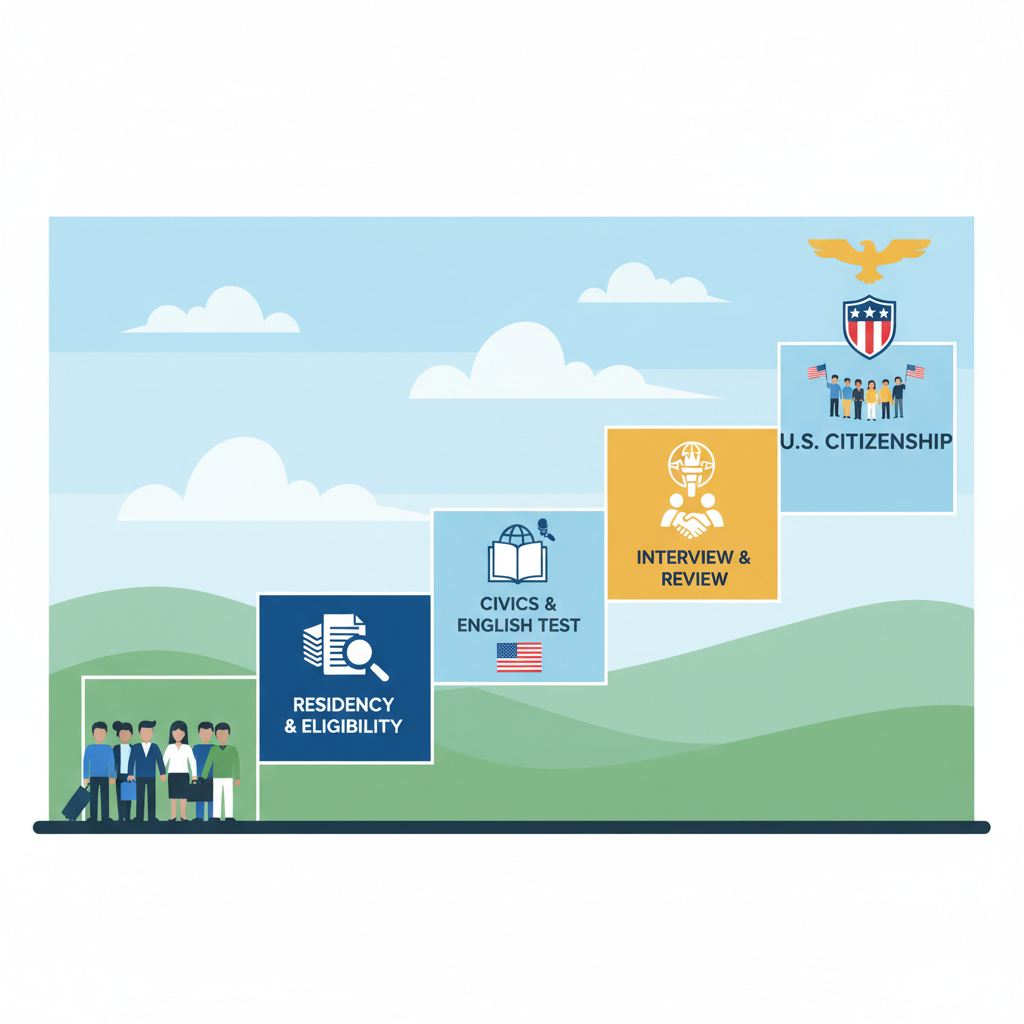
The naturalization process involves several stages, and each has its own timeline. While the test changes are set for 2026, the overall processing time can vary.
- Application Filing to Interview: After you file Form N-400, it can take several months to over a year to receive your interview notice. You can check current processing times for the Orlando USCIS Field Office on the USCIS Processing Times website.
- Interview to Oath Ceremony: If you pass your interview, the Oath of Allegiance ceremony might be scheduled on the same day or a few weeks later.
- Impact of Changes: The introduction of new test requirements in 2026 *could* initially lead to some processing adjustments as USCIS officers and applicants adapt. It's impossible to predict exact delays, but being prepared early is the best defense.
- Pre-2026 Application: If you are eligible now and well-prepared, applying before the 2026 changes take effect might allow you to take the current version of the test. However, USCIS will apply the test version that is current on the day of your interview, not the day you filed. If your interview falls after the implementation date, you will take the new test.


