


The journey to U.S. citizenship is a significant milestone for many families in Orlando, across Florida, and throughout the nation. It represents stability, opportunity, and the realization of the American dream. A crucial part of this journey is the naturalization test, which assesses an applicant's knowledge of U.S. history and government, as well as their English language proficiency.
As an expert legal content writer for Imigrar, an immigration law firm dedicated to keeping families together, we understand the importance of staying informed about changes that could impact your path to citizenship. Today, we delve into significant updates on the horizon for the naturalization test in 2026.
Preparing for Citizenship? Don't navigate the naturalization process alone, especially with upcoming changes. Our Orlando immigration team is ready to assist. Call +1 786-791-3106 for a free consultation, or message us online. Se Habla Español.
The reporting that sparked this guide:
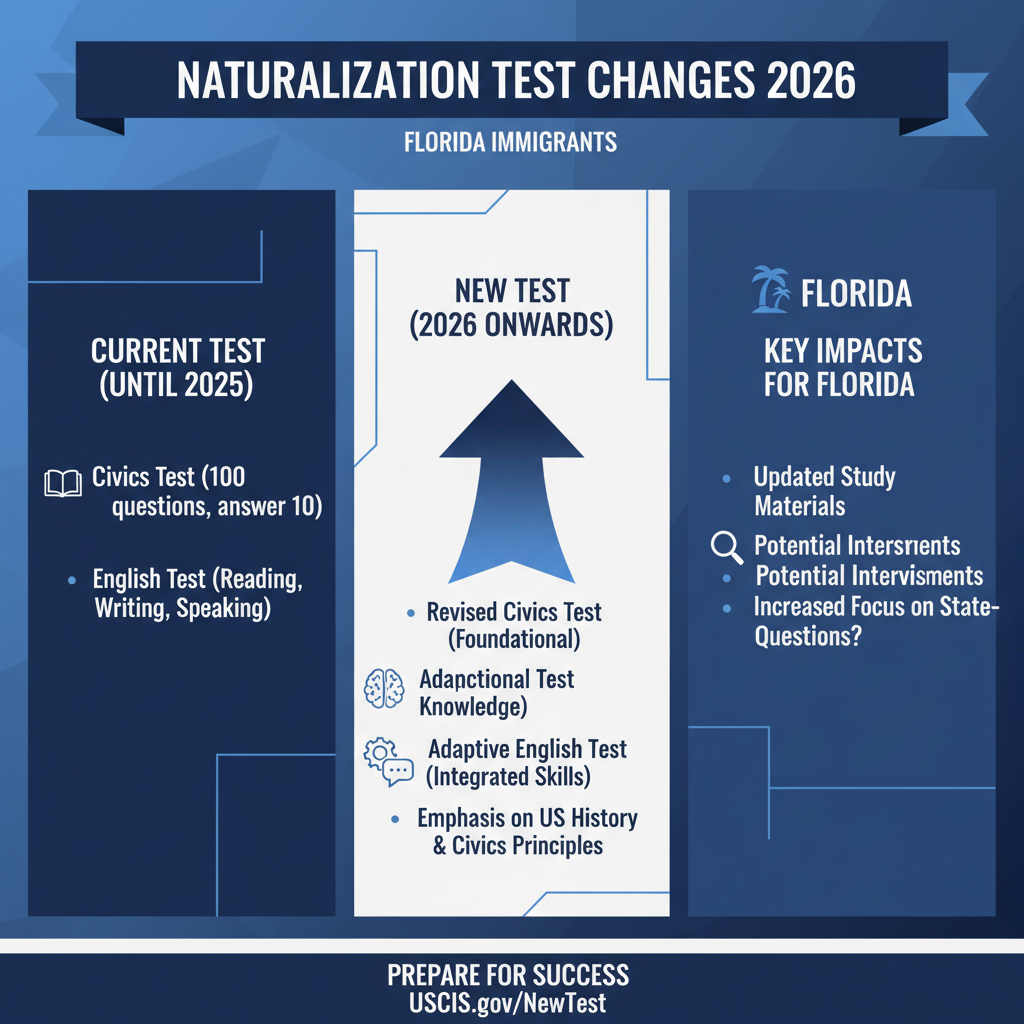
Naturalization Test Changes Coming in 2026 (Citizenship)
What This News Means for Immigrants in Orlando and Across Florida
The news of impending changes to the U.S. naturalization test in 2026 is a critical development for anyone planning to apply for citizenship. While the exact details of the new test are still being finalized by U.S. Citizenship and Immigration Services (USCIS), the reports indicate a shift in the format and content of the civics portion. For prospective citizens, particularly those in Florida, understanding these changes early is paramount for effective preparation.
Why this news is showing up now
The idea of updating the naturalization test is not new. USCIS regularly reviews its procedures to ensure they are fair, effective, and reflect current educational standards. The recent discussion around changes stems from a pilot program conducted by USCIS in late 2022 and early 2023. This pilot tested a revised civics section that included multiple-choice questions with visual aids, a departure from the current oral questioning format. The goal was to evaluate if these changes would make the test more standardized and accessible, while still accurately assessing an applicant's knowledge of U.S. civics. Following the pilot, USCIS gathered feedback from stakeholders, including educators, immigrant advocacy groups, and the public. This ongoing review process is standard for significant policy adjustments, and the announcement of changes coming in 2026 signals that USCIS is moving forward with an updated version based on these evaluations. This proactive approach by USCIS is intended to give applicants ample time to prepare for the new format once it's officially rolled out.
How it can affect Florida residents
For the vibrant immigrant communities in Florida, from the bustling streets of Orlando to the diverse neighborhoods of Miami and Tampa, these changes will directly impact the journey to citizenship. Florida has one of the largest immigrant populations in the country, and thousands of residents apply for naturalization each year. If you reside in Central Florida, including Orlando, Kissimmee, or communities along the I-4 corridor, your naturalization interview will typically be conducted at the Orlando USCIS Field Office. Regardless of where you live in the Sunshine State, the core impact will be the need to adapt your study methods and preparation strategies to the new test format. Instead of memorizing specific answers to 100 civics questions for an oral exam, you might need to understand concepts more deeply to select the correct answer from multiple choices, potentially with the aid of pictures or scenarios. This requires a different kind of critical thinking and knowledge application. It also means that current study materials, while still valuable for foundational knowledge, may need to be supplemented or updated once the new official study guide is released. Imigrar is committed to providing up-to-date resources and guidance to ensure our Florida clients are fully prepared for these evolving requirements.
What Naturalization Test Changes Are (and Why They Matter)
Understanding the naturalization test and the proposed changes is crucial for anyone on the path to becoming a U.S. citizen. It’s more than just a test; it’s a demonstration of your commitment to and understanding of American civic life.
A plain-English definition
Naturalization is the process by which a foreign citizen or national becomes a citizen of the United States. The naturalization test is a mandatory part of this process for most applicants. It consists of two main components: an English test and a civics test. The English test evaluates your ability to read, write, and speak basic English. The civics test assesses your knowledge of U.S. history, government, and civics. The reported changes for 2026 primarily focus on the civics portion. Instead of the current format where an immigration officer orally asks 10 questions from a list of 100, and you must answer 6 correctly, the new test is expected to incorporate multiple-choice questions and potentially visual aids, requiring a more conceptual understanding rather than rote memorization. These changes matter because they will alter how you need to prepare and how your knowledge will be assessed, potentially making the test more challenging for some if not properly prepared for.
Key terms you need to know
- Naturalization: The process by which a lawful permanent resident (green card holder) becomes a U.S. citizen.
- Naturalization Test: The two-part examination (English and Civics) required for most naturalization applicants.
- Civics Test: The portion of the naturalization test that assesses an applicant's knowledge of U.S. history, government, and civics. This is the part experiencing the most significant changes.
- English Test: The portion of the naturalization test that assesses an applicant's ability to read, write, and speak basic English.
- USCIS (U.S. Citizenship and Immigration Services): The government agency responsible for overseeing lawful immigration to the United States, including processing naturalization applications and administering the test.
- Oath of Allegiance: The final step in the naturalization process, where applicants swear allegiance to the United States.
- Form N-400: The official application form for naturalization.
These terms are foundational to understanding the naturalization process. The upcoming changes to the civics test emphasize the importance of a strong grasp of American governmental principles and historical context, rather than simply memorizing facts. Imigrar believes that a deeper understanding will ultimately lead to more engaged and informed citizens, but it also means preparation strategies must evolve.
Current Immigration Law: The Foundation of U.S. Citizenship
The naturalization process, including the test, is governed by specific U.S. immigration laws, primarily the Immigration and Nationality Act (INA). Understanding these foundational laws helps put the upcoming changes into perspective.
Federal requirements
The authority for naturalization and its requirements stems from the U.S. Constitution and is codified in the Immigration and Nationality Act (INA). Specifically, Section 312 of the INA outlines the general requirements for naturalization concerning English language proficiency and knowledge of U.S. history and government (civics). To be eligible for naturalization, applicants must generally:
- Be at least 18 years old at the time of filing Form N-400.
- Be a lawful permanent resident (green card holder) for at least 5 years (or 3 years if married to a U.S. citizen).
- Have resided continuously in the U.S. for at least 5 years (or 3 years) as a lawful permanent resident.
- Be physically present in the U.S. for at least half of that time (e.g., 30 months out of 5 years).
- Reside for at least 3 months in the state or USCIS district where they apply. For those in Orlando, this means living in the Orlando USCIS district for 3 months.
- Demonstrate good moral character for the statutory period (5 or 3 years).
- Be able to read, write, and speak basic English.
- Have a knowledge and understanding of U.S. history and government.
- Demonstrate an attachment to the principles and ideals of the U.S. Constitution.
The English and civics test requirements are integral to Section 312. Currently, the English test involves demonstrating the ability to read one out of three sentences correctly, write one out of three sentences correctly, and answer questions about your Form N-400 application orally. The civics test involves answering 6 out of 10 questions correctly from a predetermined list of 100 questions. These are the federal standards that the new 2026 test will adapt to, albeit with a modified format for the civics portion. Certain exemptions exist for the English and/or civics test based on age, length of permanent residency, or medical conditions. For instance, applicants who are 50 years old and have lived in the U.S. as a green card holder for 20 years (50/20 rule) or are 55 years old and have lived in the U.S. for 15 years (55/15 rule) are exempt from the English test but must still take the civics test in their native language. Individuals with qualifying medical impairments may be exempt from both tests, requiring a Form N-648, Medical Certification for Disability Exceptions.
For more detailed information on eligibility and requirements, always refer to the USCIS official website.
Florida-specific considerations
While naturalization requirements are federal, the application process involves interaction with local USCIS field offices. For residents of Central Florida, including Orlando, Kissimmee, and the surrounding counties like Orange, Seminole, Osceola, and Volusia, your naturalization interview will be scheduled at the Orlando USCIS Field Office. This office serves a vast and diverse population, and understanding local procedures can be beneficial. While the test content itself is uniform nationwide, factors like interview wait times and specific officer approaches can vary. Knowing your local office's practices, such as how they conduct interviews or schedule appointments, can help you feel more prepared. Imigrar, being based in Orlando, has extensive experience working with the local USCIS office and can provide insights specific to the Central Florida region. We understand the nuances of the local process and can guide you through every step, ensuring your application is complete and you are well-prepared for your interview, regardless of the test format.
How to Prepare for the Naturalization Test Changes: A Complete Step-by-Step Guide
Even with changes on the horizon, proactive preparation is your best strategy. This guide focuses on steps you can take now to build a strong foundation for the new naturalization test in 2026.
1) Understand the Current Test (and What's Changing)
Before you can prepare for what’s new, it’s essential to know what the current test entails. The existing civics test involves answering 6 out of 10 questions selected by the interviewing officer from a list of 100 official questions. The English test has three parts: reading, writing, and speaking. The upcoming changes, as indicated by the USCIS pilot program, will likely transform the civics test into a multiple-choice format, possibly incorporating picture-based questions. This means a shift from rote memorization to a deeper understanding of concepts. The English test is not expected to change significantly. Start by familiarizing yourself with the current 100 civics questions and their answers, as the core content of U.S. history and government will remain relevant. Then, stay alert for official announcements from USCIS regarding the specific format of the new test. The sooner you understand the new structure, the better you can tailor your study plan.
- Required Documents/Resources:
- USCIS 100 Civics Questions and Answers (current test)
- Information on English Test Requirements
2) Master the English Language Requirements
The English test component is expected to remain largely the same. It evaluates your ability to understand, speak, read, and write basic English. This is tested through:
- Speaking: Your ability to respond to the USCIS officer's questions during the interview about your Form N-400 application.
- Reading: Reading aloud one out of three sentences correctly.
- Writing: Writing one out of three sentences correctly.
Start practicing these skills now. Read English newspapers, books, or online articles. Watch English news and TV shows. Practice writing simple sentences. Engage in conversations with English speakers. If English is not your first language, consider enrolling in ESL (English as a Second Language) classes in Orlando or online. Strong English proficiency will not only help you pass this portion but also aid in understanding the potentially more complex phrasing of the new civics questions.
- Required Documents/Resources:
- English language learning materials (books, apps, classes)
- Practice reading and writing sentences provided by USCIS
3) Dive Deep into American Civics
Even with a new format, the fundamental content of the civics test—U.S. history, government, and geography—will not change. Focus on understanding key concepts rather than just memorizing facts. For example, instead of just knowing the names of the three branches of government, understand their roles, how they interact, and their checks and balances. Learn about important historical events, foundational documents like the Constitution and the Declaration of Independence, and the rights and responsibilities of citizens. The new multiple-choice format will likely require a deeper comprehension to distinguish between plausible answers. Study the current 100 civics questions as a starting point, but then expand your knowledge beyond simple answers to truly grasp the underlying principles. This deeper understanding will serve you well regardless of the specific question format.
- Required Documents/Resources:
- Official USCIS Civics Test Study Guide (current version)
- U.S. history textbooks or online courses
- Flashcards and study apps
4) Utilize Official USCIS Resources
The most reliable source for information and study materials will always be USCIS.gov. USCIS provides free study materials, including the 100 civics questions and answers, English reading and writing vocabulary lists, and links to educational videos. As the 2026 changes approach, USCIS will undoubtedly release updated study guides and practice tests for the new format. Make it a habit to regularly check the USCIS citizenship page for official announcements, new study materials, and any changes to policies or procedures. Be wary of unofficial sources that may provide outdated or inaccurate information. Imigrar will also monitor these updates closely and inform our clients immediately of any new official resources.
- Required Documents/Resources:
- USCIS Study Materials
- Regular checks of USCIS official website for updates
5) Practice, Practice, Practice
Preparation isn't just about reading; it's about active learning and practice. Once new sample questions are released, practice with them extensively. For the English portion, practice speaking by having mock interviews with friends, family, or an attorney. Read sentences aloud and write them down. For the civics portion, use flashcards, take online quizzes, and discuss topics with others. If the new test format includes multiple-choice questions with visuals, practice interpreting images and selecting the best answer. Consider joining a citizenship study group in your local Orlando community or online. The more you practice, the more confident you will become, reducing anxiety on the day of your interview. Remember, consistent, focused practice is key to success.
- Required Documents/Resources:
- Practice tests (online, app-based)
- Mock interview scripts
- Study group materials
6) Seek Professional Legal Guidance
Navigating the naturalization process, especially with impending changes, can be complex. An experienced immigration attorney can provide invaluable support. They can assess your eligibility, help you prepare and file your Form N-400 accurately, ensure you meet all requirements, and advise on any potential issues (like criminal history or prolonged absences from the U.S.). For the test itself, an attorney can offer personalized study advice, conduct mock interviews, and clarify complex legal or historical concepts. If you have unique circumstances, such as medical exemptions (requiring Form N-648), or past immigration issues, legal counsel is essential. An attorney from Imigrar can help you understand how the new test changes might specifically affect your case and ensure you are fully prepared for your interview at the Orlando USCIS Field Office or any other location.
- Required Documents/Resources:
- All previous immigration documents (green card, previous applications, travel history)
- Any documents related to criminal history, tax issues, or other potential eligibility concerns
- Medical documentation if seeking an N-648 exemption
Concerned About the 2026 Naturalization Test Changes? Imigrar is here to guide you. Our knowledgeable team in Orlando specializes in naturalization and citizenship cases, helping clients nationwide. Call us at +1 786-791-3106 for a free consultation. Se Habla Español.
Practical Steps You Can Take Today to Prepare
Don't wait for the official rollout of the new test to begin your preparation. There are many actionable steps you can take right now to set yourself up for success.
Actionable Checklist (Start Today!):
- Review Current Civics Questions: Download the official USCIS 100 Civics Questions and Answers. While the format may change, the core content remains fundamental. Aim for a deep understanding, not just memorization.
- Improve Your English Skills: Practice reading, writing, and speaking English daily. Read local Orlando news, watch English-language TV, and engage in conversations. This will benefit both the English and civics portions of the test.
- Utilize Online Resources: Explore the USCIS Citizenship Resource Center. It offers study guides, flashcards, and practice tests. Bookmark it and check regularly for updates regarding the 2026 changes.
- Gather Your Documents: Start compiling all documents needed for your Form N-400 application. This includes your Green Card, passports, marriage certificates, birth certificates, tax returns for the past 5 years (or 3 years), and any court records. Getting these organized early will save time and stress later.
- Consult an Immigration Attorney: Schedule a free consultation with Imigrar. An attorney can assess your eligibility, identify potential issues, and advise on the best way to prepare for the upcoming test changes. This is especially important if your case has any complexities.
- Stay Informed: Subscribe to USCIS email updates or follow reputable immigration news sources. The official announcement of the new test format and study materials will be critical.
Document Preparation Guidance
Beyond studying for the test, gathering your supporting documents for the Form N-400 is a crucial part of the naturalization process. Here's what you'll typically need:
- Your Permanent Resident Card (Green Card).
- Your current and expired passports.
- Your marriage certificate (if applicable).
- Birth certificates of your children (if applicable).
- Proof of marital status changes (divorce decrees, death certificates, etc.).
- Tax returns for the past 3 to 5 years, depending on your eligibility category.
- Records of all trips outside the U.S. since becoming a permanent resident.
- Documentation for any arrests, citations, or criminal records, even if charges were dropped or expunged.
- Proof of selective service registration (for males aged 18-26).
- If applying for disability exemption, Form N-648 completed by a medical professional.
- Two passport-style photos.
Important: Ensure all foreign language documents are accompanied by a certified English translation.
Timeline Expectations
The naturalization process can take time, typically ranging from 8 to 24 months, sometimes longer. Here’s a general timeline:
- Preparation and Filing (1-3 months): Gathering documents, completing Form N-400, and submitting it to USCIS.
- Receipt and Biometrics (1-2 months after filing): USCIS sends a receipt notice, followed by an appointment notice for biometrics (fingerprints, photos, signature) at an Application Support Center (ASC), such as the one serving the Orlando area.
- Interview Scheduling (6-18 months after biometrics): USCIS reviews your application. Once reviewed, an interview is scheduled at your local field office (e.g., Orlando USCIS Field Office). This is where you will take the English and civics test.
- Decision and Oath Ceremony (1-4 months after interview): If approved, you will receive a notice for the Oath of Allegiance ceremony.
Reminder: USCIS processing times can vary significantly based on the field office workload and national backlogs. The 2026 test changes might also cause temporary fluctuations. It's crucial to check the USCIS website for the most current processing times for Form N-400.
How Imigrar Helps Immigrants in Orlando and Beyond
At Imigrar, we understand that the path to U.S. citizenship is a deeply personal and often complex journey. Our mission, "Keep Families Together," drives every aspect of our practice, especially when it comes to helping individuals achieve the stability and security of naturalization. With upcoming changes to the naturalization test in 2026, our expertise becomes even more critical for immigrants in Orlando, across Florida, and throughout the nation.
Our Experience and Expertise
Our firm specializes exclusively in immigration law, giving us a focused and in-depth understanding of the ever-evolving legal landscape. Our team of dedicated attorneys possesses extensive experience in naturalization cases, including:
- Eligibility Assessment: We meticulously review your immigration history, residency requirements, good moral character, and any potential complexities to ensure you meet all naturalization criteria before filing.
- Application Preparation: We assist with the accurate and thorough completion of Form N-400, ensuring all supporting documents are correctly compiled and submitted. This includes complex situations involving criminal records, tax issues, or extended absences from the U.S.
- Test Preparation Guidance: We provide comprehensive resources and personalized coaching for both the English and civics tests. With the 2026 changes, we will be at the forefront of understanding the new format and developing effective study strategies for our clients. We conduct mock interviews to help you feel confident and prepared for your interaction with the USCIS officer at the Orlando Field Office or any other location.
- Waivers and Exemptions: If you qualify for any waivers or exemptions (e.g., medical disability waiver with Form N-648, or age/residency exemptions for the English test), we guide you through the process of obtaining and submitting the necessary documentation.
- Interview Representation: While not always necessary, an attorney can attend your naturalization interview with you, providing reassurance and ensuring fair treatment.
- Post-Interview Support: Whether your application is approved, delayed, or denied, we are there to advise you on the next steps, including responding to Requests for Evidence (RFEs) or appealing a denial.
Our Orlando-based firm is intimately familiar with the procedures and expectations of the local USCIS Field Office, which serves clients from Orange County, Seminole County, Osceola County, and beyond. This local insight, combined with our nationwide service, provides our clients with both tailored and broad-reaching support.
Free Consultation Offer
We believe that everyone deserves access to expert legal advice. That's why Imigrar offers a free consultation to discuss your naturalization case. This initial meeting allows us to understand your unique situation, explain the naturalization process, discuss the upcoming test changes, and outline how we can help you achieve your citizenship goals. There's no obligation, just clear, professional guidance from a team that cares.
Se Hab


