
Naturalization Test 2026: Orlando Immigrants Prepare for Changes
The U.S. naturalization test is changing in 2026. Learn what these new civics questions and requirements mean for your path to U.S. citizenship, especially if you're in Orlando, Florida, and how to prepare.
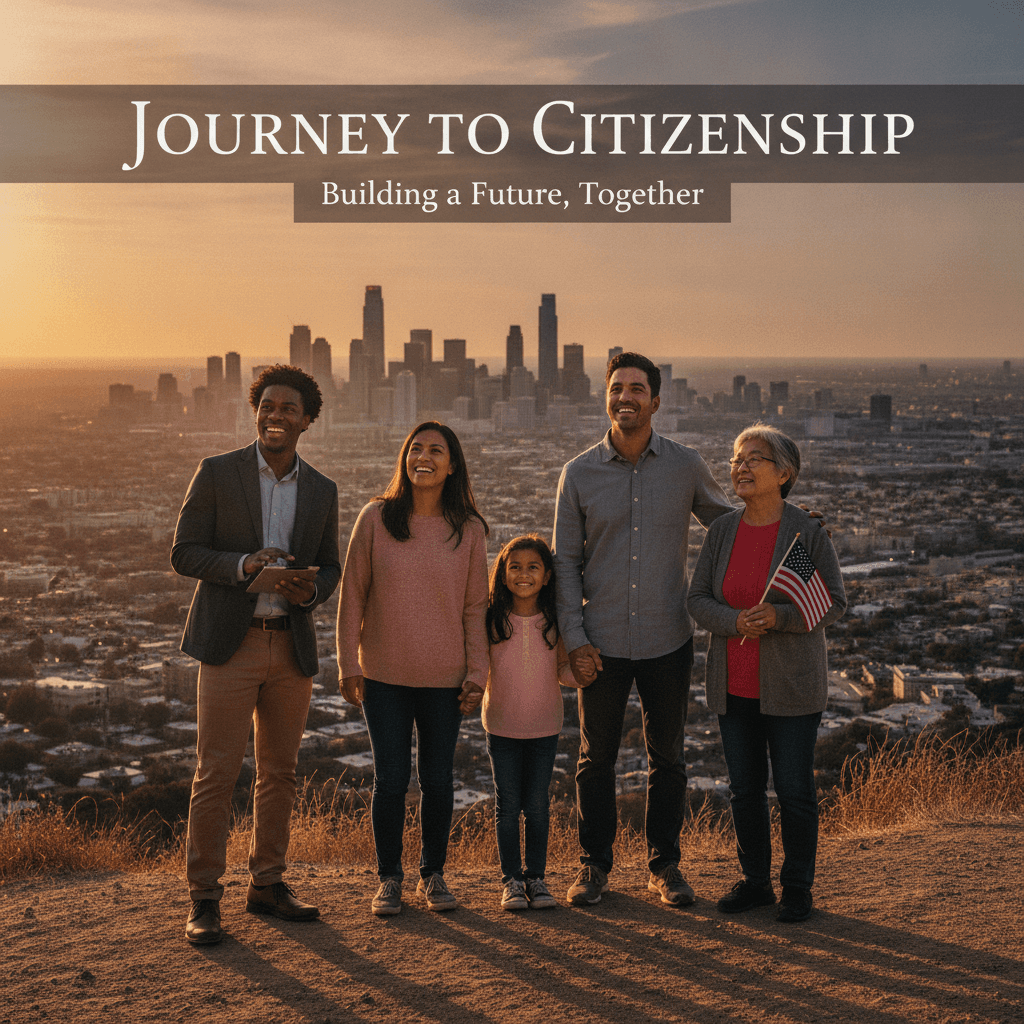
As an immigrant on the path to U.S. citizenship, staying informed about changes to the naturalization process is crucial. Today, October 11, 2026, we're focusing on significant updates that will impact aspiring citizens nationwide, particularly those residing in Orlando and across Florida. The U.S. Citizenship and Immigration Services (USCIS) is set to implement substantial changes to the naturalization civics test, a development that requires careful attention and proactive preparation.
Need Help? Our Orlando immigration team is ready to assist. Call +1 786-791-3106 for a free consultation, or message us online. Se Habla Español.
The reporting that sparked this guide
The news of impending changes to the naturalization test has been a significant topic in immigration circles. Our insights are informed by widespread reporting, including: Naturalization Test Changes Coming in 2026 (Citizenship). This news highlights the importance of understanding the updated requirements and how they might affect your journey to becoming a U.S. citizen.
What This News Means for Immigrants in Orlando and Across Florida
For individuals and families in Orlando, Central Florida, and throughout the Sunshine State who are working towards U.S. citizenship, these upcoming changes are more than just bureaucratic adjustments; they represent a critical update to a pivotal moment in your immigration journey. Imigrar is here to help you navigate every step.
Why this news is showing up now
USCIS, the federal agency responsible for processing naturalization applications, periodically reviews and updates its policies and tests to ensure they remain relevant and effective. This isn't the first time the naturalization test has seen revisions. Historically, there have been various iterations, including the significant changes implemented in 2020, which were later reverted to the 2008 version following public feedback and a change in administration. These past experiences underscore USCIS's commitment to refining the test, often through pilot programs and public comment periods, to better assess an applicant's knowledge of U.S. history and government.
The current updates slated for 2026 are the culmination of another such review process. USCIS has likely been piloting new test formats and questions, gathering data, and soliciting expert opinions to create a more comprehensive and perhaps more interactive assessment. The goal is to ensure that new citizens possess a foundational understanding not just of facts, but of the principles and values that underpin American democracy. This proactive approach by USCIS is a common practice in federal agencies, aiming for continuous improvement and adaptation to contemporary educational standards and societal needs. Therefore, this news is surfacing now because the agency is moving towards the final stages of implementation for these carefully planned revisions.
How it can affect Florida residents
While the naturalization test is a federal requirement, its impact is deeply felt at the local level, including right here in Florida. For residents of Orlando, Kissimmee, Sanford, and other communities along the I-4 corridor, these changes mean that your preparation strategy for the civics test must evolve. The Orlando USCIS Field Office, located at 5449 South Semoran Boulevard, will be the site where many Central Florida residents will undertake their naturalization interview, including the revised civics test.
Here’s how these changes can specifically affect you:
- Updated Study Materials: USCIS will eventually release new official study guides and resources. Florida residents will need to ensure they are using the most current materials, not outdated versions, to prepare for the 2026 test. Relying on unofficial or old resources could lead to inadequate preparation.
- Preparation Time: Depending on the extent of the changes – whether they involve new questions, different formats, or a shift in focus – you may need to allocate more time for studying. Early preparation is always key, but with a new test on the horizon, starting early becomes even more critical.
- Local Support: Community organizations, libraries, and legal aid services in Orange County and surrounding areas often offer citizenship classes. These programs will need to update their curricula, and it's essential to confirm that any class you attend is teaching the most current information for the 2026 test.
- Legal Guidance: An experienced immigration law firm like Imigrar, with a strong presence in Orlando, can provide invaluable guidance. We stay abreast of all USCIS updates and can advise you on the specifics of the new test, help you understand eligibility, and ensure your application is robust. This is particularly important if you have a complex case or are concerned about the impact of the new requirements.
- Interview Experience: The interview process itself might be subtly affected. While the core purpose remains the same – to verify your application details and assess your English and civics knowledge – the introduction of new question types could alter the dynamic. Being mentally prepared for potential changes in question style is important.
In essence, for Florida residents, especially those in the vibrant and diverse Orlando metropolitan area, the 2026 Naturalization Test changes underscore the need for vigilance, thorough preparation, and access to reliable information and legal support. Don't wait until the last minute; begin strategizing your approach now.
Concerned about the 2026 Naturalization Test changes? Our knowledgeable team at Imigrar can help you understand the new requirements and prepare effectively. Call us at +1 786-791-3106 for a free consultation. Se Habla Español.
What Naturalization Test Changes Are (and Why They Matter)
Understanding the naturalization test and its upcoming changes is paramount for anyone aspiring to become a U.S. citizen. It's not just a formality; it's a demonstration of your commitment to and understanding of your new country.
A plain-English definition
Naturalization is the process by which a foreign citizen or national can voluntarily become a U.S. citizen. It's the legal path to full citizenship, granting you all the rights and responsibilities of someone born in the U.S., including the right to vote, hold a U.S. passport, and petition for certain relatives to immigrate.
The **Naturalization Test** is a key component of this process. It consists of two main parts:
- English Test: This assesses your ability to read, write, and speak basic English. During your interview, an officer will evaluate your speaking ability, and you'll be asked to read and write simple sentences.
- Civics Test: This is an oral test on U.S. history and government. You are asked a series of questions from a predetermined list.
The "changes" coming in 2026 primarily refer to updates in the civics test questions and requirements. While the exact details are still being finalized and will be officially released by USCIS, it's anticipated that the new civics test might move beyond simple memorization. Instead, it could incorporate more interactive elements, scenario-based questions, or require a deeper understanding of constitutional principles rather than just factual recall. For example, instead of just naming the three branches of government, you might be asked to explain their functions or give an example of checks and balances. The aim is to ensure new citizens have a more practical and nuanced comprehension of American governance.
Key terms you need to know
Navigating the naturalization process involves understanding specific terminology. Here are some key terms:
- Naturalization: The process of becoming a U.S. citizen after birth.
- U.S. Citizenship and Immigration Services (USCIS): The federal agency that oversees lawful immigration to the United States. All naturalization applications are processed by USCIS.
- Form N-400, Application for Naturalization: The primary form you must file to apply for U.S. citizenship.
- Lawful Permanent Resident (LPR) / Green Card Holder: An individual who has been granted the privilege of permanently residing in the United States. This is generally a prerequisite for naturalization.
- Continuous Residence: The requirement that an applicant for naturalization maintain residency in the U.S. for a specified period (e.g., 5 years for most, 3 years for spouses of U.S. citizens) immediately preceding the filing of **Form N-400** and up to the time of naturalization. Absences from the U.S. can break continuous residence.
- Physical Presence: The requirement that an applicant for naturalization be physically present in the U.S. for a certain cumulative period during their continuous residence (e.g., at least half the continuous residence period).
- Good Moral Character: A legal standard that USCIS uses to determine if an applicant is worthy of citizenship. This involves a review of your criminal record, tax compliance, and other aspects of your personal conduct during the statutory period.
- Civics Test: The oral test on U.S. history and government. This is the part of the naturalization test that is undergoing changes in 2026.
- English Test: The assessment of an applicant's ability to read, write, and speak basic English.
- Oath of Allegiance: The final step in the naturalization process, where an applicant formally pledges loyalty to the United States and renounces allegiance to any foreign state.
- Certificate of Naturalization: The document issued by USCIS after the Oath of Allegiance ceremony, serving as proof of U.S. citizenship.
These changes matter because they directly impact your ability to pass the naturalization test, which is a mandatory step toward citizenship. A more challenging or differently structured test means your preparation needs to be more strategic and comprehensive. For immigrants and their families in Florida, understanding these terms and the nature of the upcoming changes is the first step towards a successful naturalization application. Imigrar is dedicated to simplifying this complex information and guiding you through every nuance.
Current Immigration Law: The Foundation of Naturalization
The naturalization process is governed by federal law, primarily the Immigration and Nationality Act (INA). Understanding the legal framework is essential before delving into the specifics of the naturalization test changes.
Federal requirements
The fundamental requirements for naturalization are set forth in the Immigration and Nationality Act (INA), specifically in Sections 312 and 316. These laws establish the core eligibility criteria that all applicants must meet:
- Age: You must be at least 18 years old at the time of filing **Form N-400**.
- Lawful Permanent Resident Status: You must be a lawful permanent resident (Green Card holder) for a specified period, typically 5 years. This period is reduced to 3 years if you are married to a U.S. citizen and meet other specific requirements.
-
Continuous Residence and Physical Presence:
- Continuous Residence: You must have resided continuously in the U.S. as an LPR for at least 5 years (or 3 years if married to a U.S. citizen) immediately preceding the date of filing your application. Absences from the U.S. of 6 months or more can break continuous residence. An absence of one year or more automatically breaks continuous residence.
- Physical Presence: You must have been physically present in the U.S. for at least half of your continuous residence period (e.g., 30 months out of 5 years, or 18 months out of 3 years).
- Residence in District or State: You must have resided for at least 3 months in the state or USCIS district where you file your application. For those in Orlando, this means living in Florida for at least 3 months.
- Good Moral Character: You must demonstrate **good moral character** for the statutory period (typically 5 or 3 years) immediately preceding your application and up to the time of naturalization. This is a critical and often complex requirement, looking at your entire record, including criminal history, tax compliance, child support payments, and other legal and ethical considerations. Certain crimes, even minor ones, can be a bar to naturalization.
- Attachment to the Principles of the U.S. Constitution: You must show that you understand and are committed to the principles and ideals of the U.S. Constitution. This is often assessed through your interview and civics test.
- English Language Proficiency: As mandated by INA Section 312(a)(1), you must be able to read, write, and speak basic English. There are certain exceptions for older applicants who have been LPRs for a long time (e.g., 50/20 or 55/15 rules) and for those with qualifying medical disabilities who file **Form N-648**, Medical Certification for Disability Exceptions.
- Knowledge of U.S. History and Government (Civics): As mandated by INA Section 312(a)(2), you must demonstrate knowledge and understanding of the fundamentals of U.S. history and government. This is the part of the test undergoing changes in 2026.
The primary form used for this process is Form N-400, Application for Naturalization. This extensive form requires detailed personal, residential, employment, and legal history. Accuracy and completeness are paramount when filling out this form. You can find more information and download the form directly from the USCIS Forms page.
Florida-specific considerations
While the requirements for naturalization are federal, the practical aspects of the process are experienced locally. For Florida residents, particularly those in the Orlando area, there are several localized considerations:
- USCIS Field Office: Your naturalization interview will typically take place at the Orlando USCIS Field Office. Familiarizing yourself with its location and understanding local traffic patterns (especially on I-4 or Semoran Blvd) is wise for interview day.
- Community Resources: Central Florida is home to numerous organizations that offer free or low-cost citizenship preparation classes. These resources can be invaluable for studying for the English and civics tests. It's important to verify that any program you join is updating its curriculum to reflect the 2026 changes.
- Legal Landscape: While Florida doesn't have state-specific naturalization laws, its diverse population means a high volume of immigration cases. This has led to a strong network of immigration attorneys and support services, like Imigrar, who are well-versed in handling complex naturalization issues, including those related to good moral character, past criminal history, or extended absences from the U.S.
- Processing Times: Processing times for **Form N-400** can vary by field office. For the Orlando USCIS Field Office, you can check current estimates on the USCIS Processing Times page. These times are estimates and can fluctuate significantly.
Understanding these federal laws and local nuances is the bedrock of a successful naturalization application. Imigrar specializes in guiding clients through these intricate legal requirements, ensuring that every aspect of your application adheres to federal law and is tailored to your specific circumstances in Florida. We encourage you to visit the USCIS official website for all official guidelines and updates.
How to Prepare for the New Naturalization Test: A Complete Step-by-Step Guide
The journey to U.S. citizenship through naturalization is a multi-step process. With the 2026 changes to the civics test on the horizon, proactive and thorough preparation is more important than ever. Here’s a complete step-by-step guide to help you navigate this path successfully.
1) Determine Your Eligibility and Gather Initial Documents
Before you even begin filling out forms, the first crucial step is to confirm you meet all the eligibility criteria for naturalization. This self-assessment can save you time and money. Carefully review the requirements for age, continuous residence, physical presence, and good moral character. Consider any potential issues, such as extended trips outside the U.S., minor arrests, or tax non-compliance, as these could impact your eligibility.
Required Documents (Initial Assessment & Gathering):
- Your **Green Card** (Form I-551)
- All current and expired passports
- Marriage certificate (if applying under the 3-year rule)
- Divorce decrees or death certificates for previous marriages (if applicable)
- Children's birth certificates
- Tax transcripts for the past 5 years (or 3 years if applicable)
- Certified court dispositions for any arrests or citations, even if expunged or dismissed. This is **Important:** Do not assume minor incidents are irrelevant.
- Evidence of Selective Service registration (for males aged 18-26 residing in the U.S. at that time)
- Proof of payment of child support/alimony (if applicable)
Practical Tip: Create a dedicated folder for all your naturalization documents. Make copies of everything, but keep your originals safe. If you have any doubts about your eligibility, consult with an immigration attorney at Imigrar before proceeding.
2) Complete and File Form N-400, Application for Naturalization
Once you've confirmed eligibility and gathered your initial documents, the next step is to meticulously complete **Form N-400**. This
Related Topics
Need Legal Assistance?
Our experienced immigration attorneys are here to help with your case. Contact Imigrar today for a free consultation and let us guide you through the legal process with confidence.
📍 Orlando, Florida • Serving clients nationwide
📧 info@imigrar.com