

![Federal Judge Keeps Haitian TPS in Place: What You Need to Know [2026]](/_next/image?url=https%3A%2F%2Fgbuudiafismgbqpzulue.supabase.co%2Fstorage%2Fv1%2Fobject%2Fpublic%2Fblog-images%2Fimmigration-header-1771955669343.png&w=3840&q=75)
The reporting that sparked this guide: NYC Immigration Attorney Navigating a Shifting Landscape in U.S. Immigration - The Clarion-Ledger (News Source)
What This News Means for Immigrants in Orlando and Across Florida
The recent federal judge ruling regarding Haitian Temporary Protected Status (TPS) is a significant development for thousands of families. This decision offers a measure of stability and hope, particularly for those who have lived in the United States for many years under TPS protection. Understanding the implications of this ruling is crucial for affected individuals.
At Imigrar, we understand the anxiety and uncertainty that immigration policy changes can cause. Our mission is to Keep Families Together, and we are committed to providing clear, accurate information and dedicated legal support to our community in Orlando, Central Florida, and nationwide.
Why this news is showing up now
This news stems from ongoing legal challenges to previous administrations' attempts to terminate TPS designations for several countries, including Haiti. While a federal judge previously blocked the termination, legal proceedings can be lengthy and complex. This latest development confirms that the protections remain in place, pushing back against efforts to end the program for Haitians.
The legal system is designed to provide checks and balances, and this ruling is an example of a federal judge exercising that authority. It underscores the importance of judicial review in safeguarding immigration protections. For many, this decision means a continued ability to live and work in the U.S. legally.
How it can affect Florida residents
Florida is home to a large Haitian community, making this federal judge ruling especially relevant for residents across the state, including those in Orlando. The continued availability of Haitian TPS means that eligible individuals can maintain their legal status, employment authorization, and protection from deportation.
For Central Florida families, this stability is invaluable. It allows individuals to continue contributing to our local economy and communities without the immediate fear of being uprooted. If you or a family member holds Haitian TPS, this news provides a critical reprieve and a chance to plan for the future with greater certainty.
Need Help? Our Orlando immigration team is ready to assist. Call +1 786-791-3106 for a free consultation, or message us online. Se Habla Español.
What Federal Judge Keeps Haitian TPS in Place Is (and Why It Matters)
The phrase "federal judge keeps Haitian TPS in place" refers to a court order that prevents the U.S. government from ending the Temporary Protected Status designation for Haiti. This means that eligible Haitian nationals who have been granted TPS can continue to live and work in the United States legally, protected from deportation.
This judicial intervention is a critical lifeline for many, as it maintains a vital immigration protection. Without this ruling, thousands could face the loss of their status and the threat of removal from the country. The decision by a federal judge ensures that the status quo of protection remains.
A plain-English definition
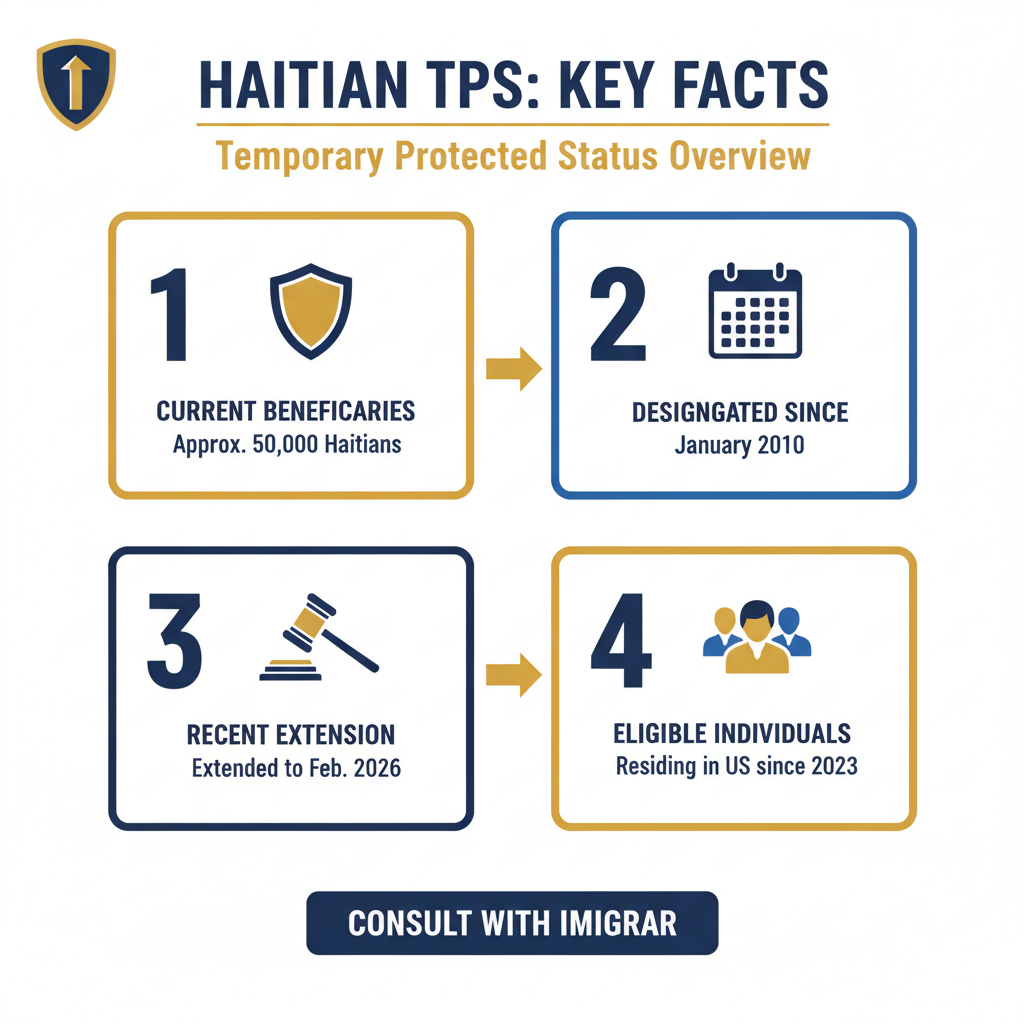
Temporary Protected Status, or TPS, is a temporary immigration benefit granted by the Secretary of Homeland Security to eligible nationals of certain countries. These countries are designated due to conditions that make it unsafe for their citizens to return, such as armed conflict, environmental disaster, or other extraordinary and temporary conditions. For Haiti, TPS was initially designated after the devastating 2010 earthquake.
When a federal judge keeps Haitian TPS in place, it means that despite efforts by a previous administration to terminate it, the court has ordered that the protection must continue. This ruling overrides executive decisions, ensuring that the TPS designation for Haiti remains active for now. It provides a legal block against immediate termination.
Key terms you need to know
- Temporary Protected Status (TPS): A temporary immigration status that allows eligible foreign nationals from designated countries to live and work in the U.S. and protects them from deportation.
- Designated Country: A country whose citizens are eligible for TPS due to unsafe conditions, as determined by the Secretary of Homeland Security. Haiti is a designated country.
- Federal Judge: A judge appointed to a federal court, responsible for interpreting and applying U.S. law. In this context, a federal judge issued the order to keep Haitian TPS in place.
- Denying Trump Administration's Motion: This refers to the judge's decision to reject the former administration's request to proceed with terminating TPS for Haiti. The judge's action effectively acts as a block.
- Extension: The act of continuing a TPS designation for a specific period. The current ruling effectively mandates an extension of protections.
- Re-registration: The process by which current TPS beneficiaries apply to maintain their status during an extension period. USCIS immigration Haitian TPS renewal is a key part of this.
- Employment Authorization Document (EAD): Also known as a work permit, this document allows TPS beneficiaries to legally work in the U.S.
- Deportation Protection: The primary benefit of TPS, shielding individuals from being removed from the United States.
Current Immigration Law: The Foundation
The authority for Temporary Protected Status is found in Section 244 of the Immigration and Nationality Act (INA), specifically 8 U.S.C. section 1254a. This statute outlines the criteria for designating a country for TPS, as well as the eligibility requirements for individuals seeking the status. The Secretary of Homeland Security has the discretion to designate or extend TPS for a period of 6 to 18 months, which can be further extended.
The legal challenge that led to the federal judge keeping Haitian TPS in place centered on whether the previous administration's decision to terminate TPS was lawful. Courts often review such decisions to ensure they align with the statutory framework and administrative law principles. This particular ruling ensures ongoing adherence to the spirit of the law.
Federal requirements
To be eligible for TPS, an individual must generally:
- Be a national of a country designated for TPS, or a person without nationality who last habitually resided in that country.
- Have been continuously physically present in the U.S. since the effective date of the most recent designation.
- Have continuously resided in the U.S. since the date specified for the country's designation.
- Meet other general immigration eligibility requirements, including passing security and background checks.
When there is a TPS Haiti extension 2026 or TPS Haiti extension 2027, eligible individuals must re-register with USCIS within the specified window. Failure to do so can result in the loss of TPS benefits. For the latest details, always check the USCIS official website and the Federal Register TPS Haiti notices.
Florida-specific considerations
For Florida residents, especially those in Orlando and the surrounding areas, understanding the specific procedures for re-registration is key. While TPS is a federal program, local resources and legal counsel can be invaluable. The Orlando USCIS Field Office may handle certain aspects, but most applications are processed centrally.
It's important to keep abreast of any DHS TPS Haiti announcements that might affect processing times or local requirements. Imigrar is deeply familiar with the nuances of immigration law affecting Florida's diverse communities, and we are here to assist with USCIS immigration Haitian TPS renewal and related matters.
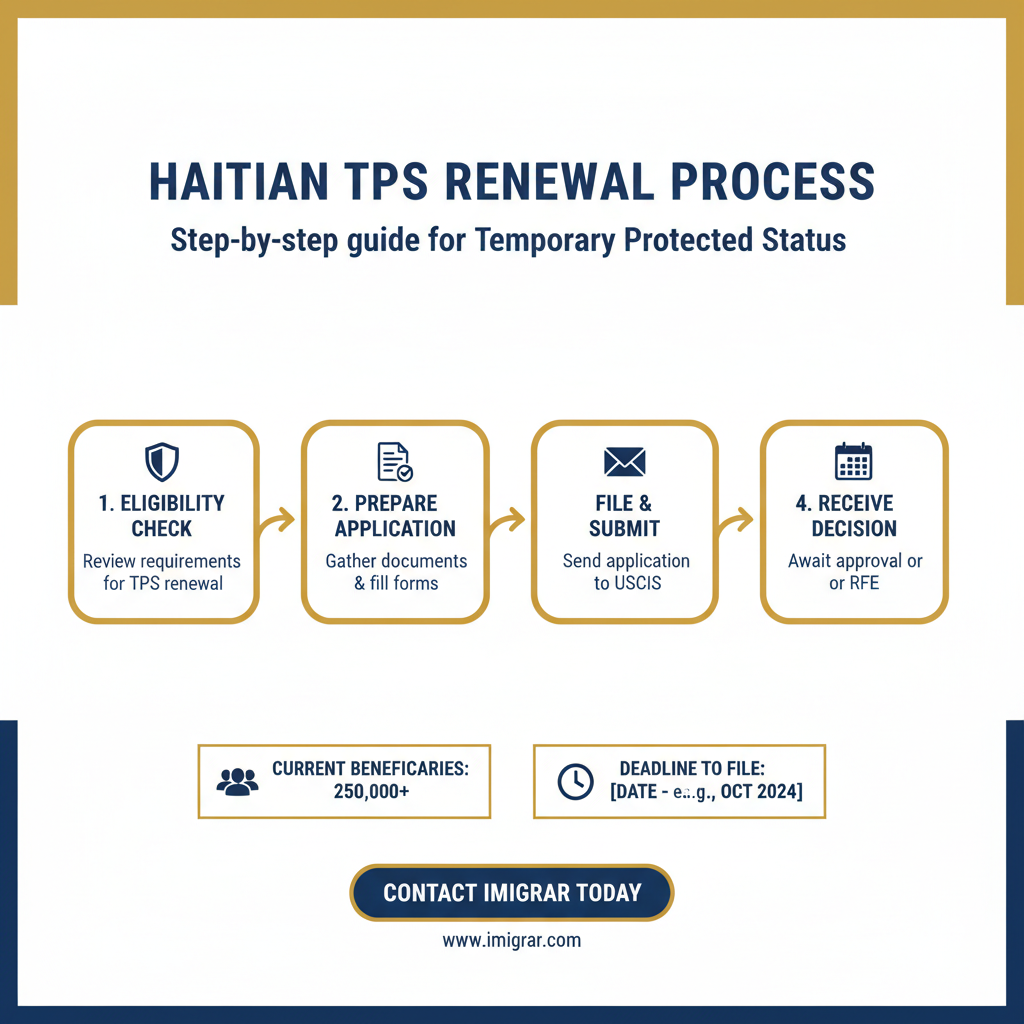
When applying or re-registering for TPS, you will typically need to file Form I-821, Application for Temporary Protected Status, and Form I-765, Application for Employment Authorization, if you desire a work permit. You can find these and other USCIS Forms on the official website.
How to Re-Register for Haitian TPS: A Complete Step-by-Step Guide
Given the federal judge ruling keeping Haitian TPS in place, eligible individuals will need to re-register to maintain their status. This process is critical to ensure continued protection and employment authorization. Here's a detailed guide:
1) Stay Informed About the Official Announcement
Important: The first step is to monitor official announcements from the Department of Homeland Security (DHS) and USCIS. While a federal judge keeps Haitian TPS in place, DHS must still publish an official notice in the Federal Register detailing the extension period and re-registration window. This notice will confirm the TPS Haiti extension 2026 or TPS Haiti extension 2027 dates.
- Action: Regularly check the USCIS official website and subscribe to their email updates. Consult the Federal Register for the official notice.
- Documents: Keep records of any official announcements or legal updates, such as the judge ana reyes tps haiti ruling.
2) Gather Necessary Documents for Re-registration
Before you begin filling out forms, compile all required supporting documentation. This typically includes proof of identity, nationality, and continuous residence in the U.S. since the initial designation date for Haiti.
- Required Documents:
- Copy of your last Form I-797, Approval Notice for TPS.
- Copy of your most recent Employment Authorization Document (EAD).
- Proof of identity and nationality (e.g., passport, birth certificate with photo ID).
- Proof of continuous residence in the U.S. (e.g., utility bills, school records, employment records, tax returns for the relevant period).
- Marriage certificate (if applicable, for name changes).
3) Complete and File Form I-821, Application for Temporary Protected Status
This is the primary form for TPS re-registration. Ensure all sections are filled out accurately and completely. Any errors or omissions can lead to delays or even denial.
- Form: Form I-821, Application for Temporary Protected Status.
- Guidance: Follow the instructions meticulously. If you have any criminal history, consult with an attorney before filing.
4) Complete and File Form I-765, Application for Employment Authorization (Optional but Recommended)
If you wish to continue working legally in the U.S., you must file Form I-765 along with your I-821. This will allow you to receive a new Employment Authorization Document (EAD).
- Form: Form I-765, Application for Employment Authorization.
- Important: Indicate your eligibility category as (c)(19) for TPS.
5) Pay the Required Fees or Request a Fee Waiver
There are typically fees associated with filing Form I-821 and Form I-765. Check the current fee schedule on the USCIS website. If you cannot afford the fees, you may be eligible for a fee waiver.
- Fees: Check USCIS Forms for current fees.
- Fee Waiver: If eligible, file Form I-912, Request for Fee Waiver, with supporting documentation.
6) Submit Your Application Package to USCIS
Once all forms are completed, signed, and all supporting documents are gathered, mail your application package to the correct USCIS lockbox facility. The address will be specified in the Federal Register notice for Haitian TPS re-registration.
- Submission: Use certified mail with return receipt requested to track your package.
- Reminder: Keep a complete copy of your entire submission package for your records.
7) Attend Biometrics Appointment (If Required)
After filing, USCIS will send you an appointment notice for biometrics (fingerprints, photograph, and signature). This is a mandatory step for background checks.
- Action: Attend the appointment promptly. Bring the appointment notice and a valid photo ID.
Practical Steps You Can Take Today
With the news that a federal judge keeps Haitian TPS in place, it's wise to be proactive. Here are actionable steps you can take to prepare for re-registration and protect your status:
- Review Your Current TPS Documents: Check the expiration date on your current EAD and TPS approval notice. Ensure all your personal information is accurate.
- Organize Your Records: Gather all documents related to your TPS application and continuous residence. This includes previous I-821 and I-765 filings, receipts, and approval notices.
- Verify Personal Information: Make sure your name, date of birth, and other identifying information are consistent across all your documents. If there have been any changes, prepare documentation to explain them.
- Monitor Official USCIS Updates: Regularly check the USCIS official website and the Federal Register for the official re-registration period and instructions. This is critical for TPS Haiti update uscis.
- Consult an Immigration Attorney: Even if you've re-registered before, changes in law or your personal circumstances might warrant legal advice. An attorney can help you understand the judge ana reyes tps haiti ruling specifics and ensure a smooth process.
- Budget for Fees: Anticipate the filing fees for Form I-821 and Form I-765. If you plan to apply for a fee waiver, start gathering the necessary financial documentation now.
- Understand the Timeline: While a federal judge keeps Haitian TPS in place, the re-registration window is typically limited (e.g., a 90-day window). Missing this deadline can have serious consequences. Expect USCIS processing times to vary, so file as early as possible within the window. You can check USCIS Processing Times for general estimates.
Don't navigate immigration alone. Our experienced team at Imigrar in Orlando is here to help you through the Haitian TPS re-registration process. Call +1 786-791-3106 for expert guidance. Se Habla Español.
How Imigrar Helps Immigrants in Orlando
At Imigrar, we are dedicated to supporting immigrants and their families in Orlando, Central Florida, and across the nation. The news that a federal judge keeps Haitian TPS in place is a moment for relief, but it also highlights the ongoing need for vigilant legal counsel. Our firm specializes exclusively in immigration law, offering comprehensive services to navigate complex regulations.
Our experienced legal team understands the intricacies of TPS and other immigration benefits. We can assist with every step of the re-registration process, from gathering documents to preparing and submitting your application. We pride ourselves on clear communication and personalized attention, ensuring you feel supported and informed.
We offer a free consultation to discuss your specific situation, answer your questions, and outline the best course of action for your Haitian TPS renewal. Our goal is to alleviate your stress and help you secure your immigration future, always striving to Keep Families Together. Se Habla Español, ensuring that language is never a barrier to quality legal representation.
Frequently Asked Questions
Q: Did the judge block Trump administration's early termination of TPS for Haitians?
A: Yes, a federal judge did block the Trump administration's early termination of TPS for Haitians, along with several other nationalities. This ruling is part of a larger legal battle that has kept these protections in place. The recent news confirms the ongoing effect of this injunction, preventing the termination from moving forward.
Q: Did the Supreme Court cancel TPS?
A: No, the Supreme Court did not cancel TPS. While the Supreme Court has reviewed cases related to TPS, particularly regarding the ability to adjust status from TPS, it has not issued a ruling that cancels the entire TPS program. The current federal judge ruling specifically keeps Haitian TPS in place, unaffected by any Supreme Court decisions on related, but distinct, matters.
Q: Can the president remove TPS status?
A: The President, through the Secretary of Homeland Security, has the authority to designate or terminate TPS for countries. However, such decisions can be, and often are, challenged in federal courts. As seen with the federal judge ruling, judicial orders can block or temporarily halt a president's or administration's attempts to remove TPS status if those decisions are found to be unlawful or arbitrary.
Q: Are people with TPS going to be deported?
A: As long as the federal judge keeps Haitian TPS in place, eligible individuals who maintain their status are protected from deportation. TPS provides a stay of removal. However, if TPS were to be terminated in the future without a subsequent legal block, beneficiaries could then become subject to deportation proceedings if they do not have another form of legal status.
Q: What is the timeline for Haitian TPS re-registration in 2026?
A: The exact timeline for Haitian TPS re-registration in 2026 will be announced by USCIS in a Federal Register notice. While a federal judge keeps Haitian TPS in place, the specific re-registration window typically opens shortly after the official announcement and lasts for a defined period, often 60 or 90 days. It is crucial to file within this window. We anticipate a TPS Haiti extension 2026 or TPS Haiti extension 2027 to be detailed soon.
Q: What documents are needed for USCIS immigration Haitian TPS renewal?
A: For USCIS immigration Haitian TPS renewal, you will generally need your current Form I-797 approval notice for TPS, your most recent EAD, proof of identity and nationality (e.g., passport), and proof of continuous residence in the U.S. since the last designation date. You will also need to file Form I-821 and Form I-765.
Q: How much does it cost to re-register for Haitian TPS?
A: The cost to re-register for Haitian TPS typically includes the filing fee for Form I-821 and the fee for Form I-765 (if applying for an EAD), plus biometrics fees. These fees can change, so always check the USCIS Forms page for the most current fee schedule. Fee waivers (Form I-912) are available for eligible individuals.
Common Mistakes (and How to Avoid Them)
Navigating immigration processes can be challenging, and even small errors can lead to significant delays or denials. When dealing with Haitian TPS, especially in light of the federal judge ruling, it's essential to be meticulous.
Mistake #1: Missing the Re-registration Deadline
Description: Even though a federal judge keeps Haitian TPS in place, you must still re-register within the specified window. Many individuals assume that because TPS is extended, they don't need to take action, or they simply miss the deadline announced in the Federal Register. Missing this deadline can lead to loss of status and potential deportation.
How to Avoid: Actively monitor the USCIS official website and the Federal Register for the official re-registration period for TPS Haiti. Set reminders and start preparing your documents well in advance of the anticipated announcement. Consult with Imigrar for timely updates and assistance.
Mistake #2: Incomplete or Inaccurate Forms
Description: Filing forms with missing information, incorrect dates, or inconsistent personal details is a common pitfall. USCIS requires absolute accuracy, and errors can result in a Request for Evidence (RFE), delays, or even a denial. This applies to Form I-821 and Form I-765.
How to Avoid: Double-check every field on your forms. Review all supporting documents to ensure they match the information provided. If you have had any name changes or other significant life events, provide supporting documentation. Consider having an attorney at Imigrar review your application before submission.
Mistake #3: Not Providing Sufficient Supporting Documentation
Description: While re-registration may seem simpler than an initial application, you still need to prove your eligibility, especially regarding continuous residence and physical presence. Failing to provide adequate evidence can jeopardize your renewal.
How to Avoid: Keep thorough records of your time in the U.S. This includes utility bills, rent receipts, employment records, school transcripts, medical records, and tax returns. The more evidence you can provide, the stronger your application will be. Organize your documents clearly before mailing them.
Mistake #4: Ignoring Adverse Information
Description: Some individuals may have had minor legal issues or travel outside the U.S. since their initial TPS grant. Failing to disclose this information or assuming it won't impact their renewal can be a critical error. Certain criminal offenses or prolonged absences can disqualify you from TPS.
How to Avoid: Always be truthful on your application. If you have any concerns about past legal issues or travel, consult with an experienced immigration attorney at Imigrar immediately. They can assess your situation and advise on the best course of action, including whether you might need a waiver or if your eligibility is affected.
Ready to secure your future? Imigrar is here to help keep families together. Contact our Orlando office at +1 786-791-3106 or reach out online for dedicated immigration support. Se Habla Español.

Take the Next Step with Imigrar
The decision by a federal judge to keep Haitian TPS in place offers crucial relief and stability for thousands of individuals and families across the United States, including our vibrant communities in Orlando and Central Florida. This news is a testament to the ongoing legal efforts to protect vulnerable populations and ensure due process in immigration matters.
At Imigrar, we understand that immigration law is constantly evolving, and staying informed can be a challenge. Our dedicated team of immigration attorneys is here to provide clarity, guidance, and unwavering support. Whether you need assistance with your Haitian TPS re-registration, have questions about your eligibility, or are exploring other immigration pathways, we are ready to help.
Don't navigate this complex landscape alone. Let Imigrar be your trusted partner. We are committed to our mission to Keep Families Together. Contact us today for a free, confidential consultation. Se Habla Español.
Call us at +1 786-791-3106 or visit our website at https://www.imigrar.com/contact to schedule your appointment. Your peace of mind is our priority.
![Federal Judge Orders Parole Restoration for CBP One Migrants [2026]](/_next/image?url=https%3A%2F%2Fgbuudiafismgbqpzulue.supabase.co%2Fstorage%2Fv1%2Fobject%2Fpublic%2Fblog-images%2Fimmigration-header-1774980085612.png&w=3840&q=75)
![ICE Agents Stationed Outside Marine Corps Graduation Events [2026]](/_next/image?url=https%3A%2F%2Fgbuudiafismgbqpzulue.supabase.co%2Fstorage%2Fv1%2Fobject%2Fpublic%2Fblog-images%2Fimmigration-header-1774967342581.png&w=3840&q=75)
