What This News Means for Immigrants in Orlando and Across Florida
Why this news is showing up now
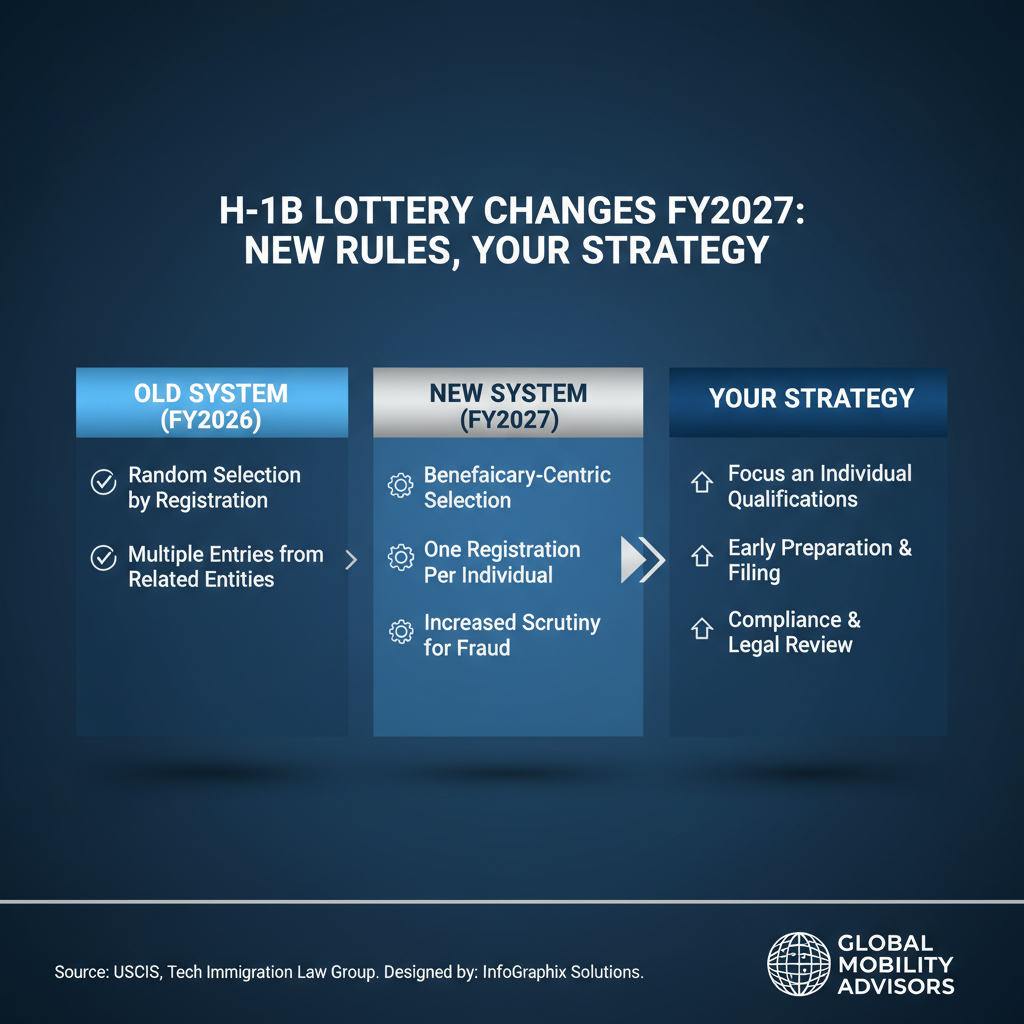
The H-1B visa program operates on a fiscal year basis. The cap-subject H-1B lottery registration period typically opens in early March for the fiscal year that begins on October 1st of that same calendar year. Therefore, for **FY2027**, which starts on **October 1, 2026**, the electronic registration period is anticipated to open in **March 2026**. This timing makes the news about new rules for FY2027 highly relevant right now, as companies and individuals need to begin preparing immediately. The "new rules" we refer to primarily stem from USCIS's recent final rule on the H-1B program, which aimed to modernize the program and combat fraud. A key component of this rule, particularly relevant for the FY2027 lottery, is the **beneficiary-centric selection process**. This fundamental shift was designed to prevent multiple registrations from being submitted for the same individual by different employers, a practice that previously inflated selection rates and gave an unfair advantage. USCIS has also been working on increasing the integrity of the registration process and improving the overall efficiency of the H-1B program. These ongoing efforts and their implementation are why this news is at the forefront of immigration discussions as we approach the FY2027 registration period.How it can affect Florida residents
Florida, with its booming economy, diverse industries, and growing tech sector, is a significant hub for H-1B visa applicants and employers. Major metropolitan areas like Orlando, Tampa, and Miami attract talent in fields such as information technology, healthcare, aerospace, tourism, and engineering. Many companies along the **I-4 corridor** and throughout Central Florida rely on the H-1B program to fill critical skill gaps and remain competitive. For **Florida residents** who are prospective H-1B beneficiaries (e.g., international students on OPT, individuals on other non-immigrant visas, or those abroad seeking employment in Florida), these changes mean: * **Increased Scrutiny:** The beneficiary-centric approach places greater responsibility on individuals to ensure only one registration is submitted on their behalf. Any misstep could lead to disqualification. * **Strategic Employer Engagement:** It's more crucial than ever to work with employers who understand the new rules and are committed to a compliant registration process. * **Early Preparation is Key:** With potentially higher competition for legitimate slots, having all your documentation and eligibility confirmed well in advance is paramount. * **Local Impact:** The **Orlando USCIS Field Office** handles many immigration matters for Central Florida, and while H-1B petitions are processed at service centers, understanding the local context and legal support available in Orlando is vital. For **Florida employers**, the new rules mean: * **Enhanced Compliance:** Employers must be diligent in ensuring they adhere to the single registration rule per beneficiary, collaborating closely with their prospective employees. * **Anti-Fraud Measures:** USCIS is increasing its ability to detect and deter fraud, meaning employers must maintain robust records and be prepared for potential audits. * **Competitive Advantage through Diligence:** Employers who navigate these changes effectively, with the help of experienced legal counsel, will be better positioned to secure top international talent.Navigating these new H-1B rules can be complex. Don't risk your future or your company's talent acquisition strategy. Our Orlando immigration team at Imigrar is ready to assist. Call +1 786-791-3106 for a free consultation, or message us online. Se Habla Español.
What the H-1B Visa Is (and Why It Matters)
The **H-1B visa** is a non-immigrant visa that allows U.S. employers to temporarily employ foreign workers in **specialty occupations**. It's a critical pathway for highly skilled individuals from around the world to contribute to the American economy and for U.S. businesses to access specialized talent.A plain-English definition
Think of the H-1B visa as a temporary work permit for professionals. If you have at least a bachelor's degree (or its equivalent in work experience) in a specialized field like engineering, IT, medicine, or finance, and a U.S. company wants to hire you for a job that specifically requires that degree, the H-1B visa allows you to work for them in the U.S. for up to six years. Because there are more applicants than available visas each year, USCIS uses a lottery system to select who gets to apply.Key terms you need to know
Understanding the following terms is essential for anyone involved in the H-1B process, especially with the **FY2027 lottery changes**: * **Specialty Occupation:** This is a job that requires a theoretical and practical application of a body of highly specialized knowledge, and a minimum of a bachelor's degree or its equivalent in a specific field as a minimum for entry into the occupation. Examples include software engineers, financial analysts, architects, and certain medical professionals. * **Cap-Subject:** Most H-1B visas are subject to an annual numerical limit, or "cap." Currently, this cap is 65,000 for the regular category and an additional 20,000 for those with a U.S. master's degree or higher (the "U.S. Master's Cap"). * **Cap-Exempt:** Certain employers are exempt from the annual H-1B cap. These typically include institutions of higher education, non-profit organizations affiliated with institutions of higher education, and non-profit research organizations or governmental research organizations. H-1B workers already counted against the cap in the past six years are also generally cap-exempt. * **Beneficiary:** This is the foreign worker who is seeking the H-1B visa. Under the new rules, the **beneficiary** is the central figure in the lottery process. * **Petitioner:** This is the U.S. employer who sponsors the foreign worker for the H-1B visa. The petitioner files the necessary forms with USCIS. * **LCA (Labor Condition Application):** Before an employer can file an H-1B petition, they must obtain a certified LCA from the U.S. Department of Labor (DOL). This document attests that the employer will pay the H-1B worker the prevailing wage for their occupation in the geographic area of employment and provide working conditions that will not adversely affect other workers. * **Registration Period:** This is the specific timeframe, usually in March, when employers submit electronic registrations for prospective H-1B beneficiaries to be included in the annual lottery. * **Selection Process (Beneficiary-Centric):** This is the core of the FY2027 changes. Previously, employers could submit multiple registrations for the *same beneficiary*, significantly increasing that individual's chances of selection. The new rule dictates that each **unique beneficiary** can only have **one registration submitted on their behalf** in the lottery, regardless of how many employers offer them a job. If multiple registrations are submitted for the *same beneficiary* by *different employers*, all registrations for that beneficiary will be deemed invalid and denied. This is a crucial anti-fraud measure. * **Premium Processing:** An optional service offered by USCIS that guarantees expedited processing of certain petitions (including H-1B) within 15 calendar days for an additional fee.Current Immigration Law: The Foundation
The H-1B visa program is governed by specific provisions within the **Immigration and Nationality Act (INA)**, which is the body of law that covers all immigration to the United States. Understanding these foundational laws is crucial for compliance.Federal requirements
The authority for the H-1B visa is primarily found in **INA §101(a)(15)(H)(i)(b)**, which defines the H-1B nonimmigrant classification, and **INA §214(g)**, which establishes the annual numerical cap. Key federal requirements include: * **Specialty Occupation Requirement:** The job offered must meet the definition of a **specialty occupation**, meaning it requires a bachelor's degree or higher in a specific field. The beneficiary must also possess that required degree or its equivalent through a combination of education and experience. * **Employer-Employee Relationship:** A valid employer-employee relationship must exist between the petitioner (U.S. employer) and the beneficiary (foreign worker). * **Certified Labor Condition Application (LCA):** As mandated by the **Immigration and Nationality Act**, an employer must obtain a certified LCA from the U.S. Department of Labor (DOL) before filing an H-1B petition. The LCA ensures that the employer will pay the H-1B worker at least the prevailing wage or the actual wage paid to similarly qualified workers, whichever is higher, and provide adequate working conditions. * **Annual Cap:** The H-1B program is subject to an annual cap of 65,000 visas for the regular category, plus an additional 20,000 visas for beneficiaries who hold a U.S. master's degree or higher. This cap resets each fiscal year on October 1st. * **Electronic Registration Process:** Since FY2021, USCIS has implemented an electronic registration process for cap-subject H-1B petitions. Employers, or their authorized representatives, must submit a registration for each prospective beneficiary. Only selected registrants are eligible to file a full **Form I-129, Petition for a Nonimmigrant Worker**. * **Beneficiary-Centric Selection:** For **FY2027**, USCIS will continue to implement the **beneficiary-centric selection process**. This means that selection in the lottery is based on the unique beneficiary, not on the number of registrations submitted on their behalf. If USCIS finds that multiple registrations were submitted for the same beneficiary by different petitioners, **all registrations submitted for that beneficiary will be deemed invalid and denied**. This rule is outlined in **8 CFR 214.2(h)(8)(i)(A)(4)** and is a critical anti-fraud measure. All H-1B petitions are filed using **Form I-129, Petition for a Nonimmigrant Worker**, along with various supplements and supporting documentation. You can find more information and official forms on the USCIS official website.Florida-specific considerations
While H-1B laws are federal, their impact and application have unique considerations in Florida. The state's diverse economy means a wide array of industries actively seek H-1B talent. * **High Demand Sectors:** Florida's vibrant tourism and hospitality industry, burgeoning tech hubs in Orlando and South Florida, advanced manufacturing, and a robust healthcare sector mean there's consistently high demand for skilled foreign workers. Companies along the **I-4 corridor** are particularly active in H-1B sponsorship. * **Competitive Landscape:** The sheer volume of companies seeking H-1B talent in Florida contributes to the overall competitiveness of the lottery. This underscores the need for meticulous preparation and strategic legal guidance. * **Local Legal Expertise:** For employers and beneficiaries in Central Florida, having an immigration law firm like Imigrar, with local roots in Orlando, provides invaluable insight into regional employer needs and the specific challenges faced by local applicants. We understand the nuances of the Florida job market and how they intersect with federal immigration regulations. * **Prevailing Wage Determinations:** The specific prevailing wage for an occupation can vary significantly based on the geographic area. For positions in Orlando, Miami, or Tampa, the prevailing wage will be determined by the U.S. Department of Labor based on the specific Metropolitan Statistical Area (MSA), which impacts the LCA and the wages an employer must commit to paying.Concerned about H-1B compliance or how the new rules affect your Florida business? Imigrar offers expert guidance. Contact us at +1 786-791-3106 for a free consultation. Se Habla Español.