


The reporting that sparked this guide
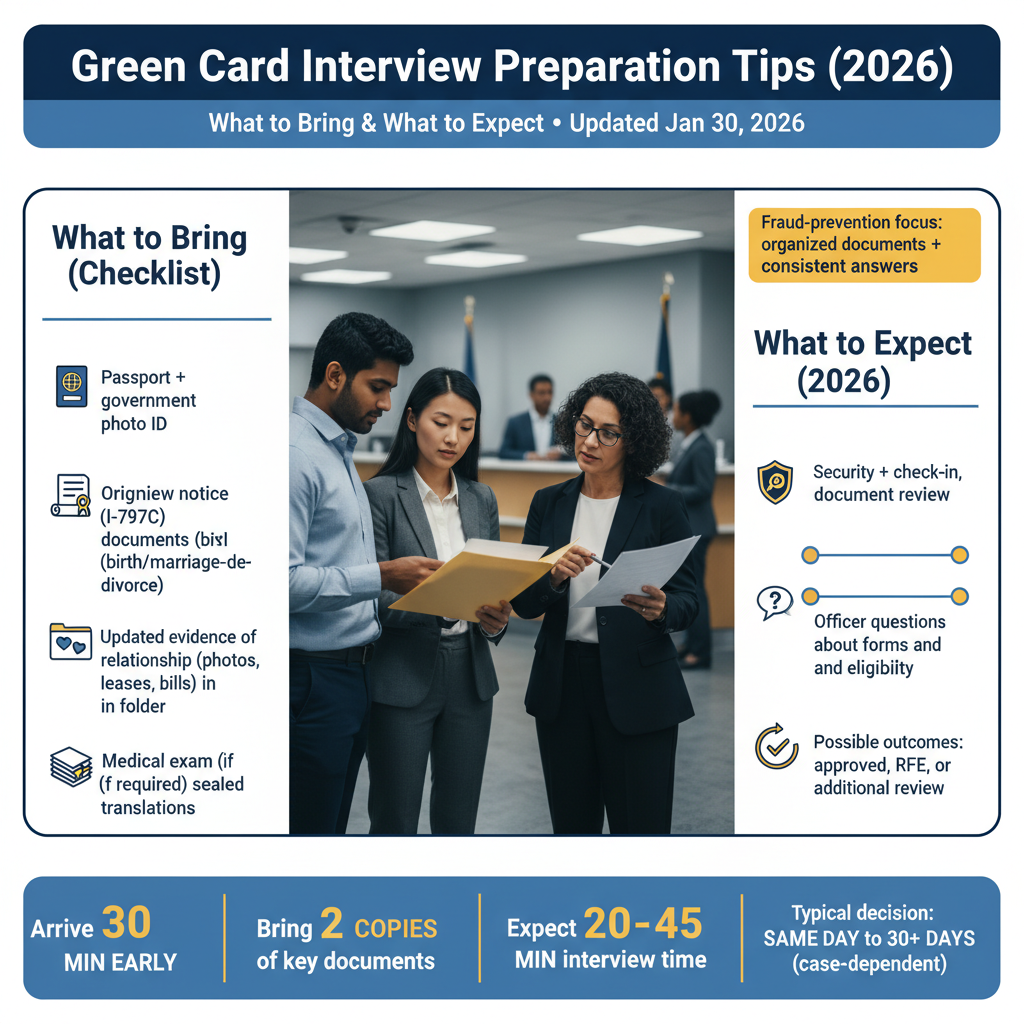
Immigration interview requirements and outcomes can shift based on enforcement priorities, fraud-prevention initiatives, and case backlogs. This guide was inspired by ongoing coverage and discussion in immigration law news, including:
Need Help? Our Orlando immigration team is ready to assist. Call +1 786-791-3106 for a free consultation, or message us online. Se Habla Español.
What This News Means for Immigrants in Orlando and Across Florida
Why this news is showing up now
Green card interviews have been a consistent focus in immigration law news because USCIS continues to balance two priorities at the same time: (1) moving cases faster to reduce backlogs, and (2) strengthening fraud-detection and identity verification. When these priorities collide, applicants feel it most at the interview stage—where a case can be approved quickly, delayed for more evidence, or referred for further review.
In practical terms, interview preparation is “trending” because:
- USCIS processing times fluctuate, and interviews can be scheduled with limited notice—especially after biometrics or when a field office has an opening. Check USCIS Processing Times regularly.
- USCIS has expanded use of electronic systems and data matching, which increases the chance that a small inconsistency (old address, outdated employment history, prior visa overstay) gets flagged.
- Marriage-based and family-based cases remain a top interview category, and officers are trained to test credibility and documentation.
- Many applicants rely on online checklists—but the “right” documents depend on your category, your history, and whether you’re filing through Adjustment of Status or consular processing.
Reminder: Even if your case is straightforward, the interview is not just a formality. It’s your chance to confirm eligibility, correct errors, and prevent avoidable delays.
How it can affect Florida residents
Florida is one of the most diverse states in the country, with large immigrant communities across the I-4 corridor, including Orlando, Kissimmee, Sanford, and throughout Orange County and Osceola County. That means local USCIS resources can be in high demand.
If your case is in Orlando, your interview will typically be scheduled through the Orlando USCIS Field Office (unless USCIS transfers it). Field-office volume can affect timing, rescheduling options, and how quickly you receive a decision.
For Central Florida residents, interview preparation matters because:
- Rescheduling can add months to your case and may require explaining why you missed the appointment.
- Any prior immigration history (visa overstays, prior petitions, entries/exits, prior addresses) is commonly examined closely.
- Florida applicants often have multi-state moves; address history mistakes can create inconsistencies across forms and prior filings.
Important: If you have any arrests, charges, or prior immigration violations—even if dismissed—talk to a lawyer before the interview. The interview is not the time to “hope it doesn’t come up.”
What Green Card Interview Preparation Tips Is (and Why It Matters)
A plain-English definition
“Green card interview preparation” means getting ready for your USCIS in-person (or occasionally remote) interview where an immigration officer verifies your identity, reviews your application, checks eligibility, and decides whether to approve lawful permanent residence.
Most applicants encounter a green card interview in one of these pathways:
- Adjustment of Status inside the U.S. (commonly filed with Form I-485).
- Consular processing abroad (interview at a U.S. consulate after the National Visa Center stage; not a USCIS field office interview, but preparation principles still overlap).
Preparation is not about memorizing “perfect answers.” It’s about ensuring your forms, documents, and life facts match—and that you can clearly explain anything unusual.
Key terms you need to know
- Adjustment of Status: Applying for a green card from inside the U.S., typically using Form I-485.
- Priority Date: Your place in line for certain family- and employment-based categories; it can determine when you can file or when a visa is available.
- Form I-130: Family petition filed by a U.S. citizen or lawful permanent resident to establish a qualifying relationship.
- Form I-485: Application to register permanent residence or adjust status.
- Form I-864: Affidavit of Support showing the petitioner (and possibly a joint sponsor) meets financial requirements.
- RFE (Request for Evidence): USCIS asks for missing or additional documents. Responding late can lead to denial.
- NOID (Notice of Intent to Deny): USCIS is leaning toward denial and gives a chance to respond.
- Administrative processing / further review: The officer does not approve immediately; the case requires additional checks or supervisor review.
Warning: Inconsistencies can be interpreted as credibility issues. Many denials and delays happen not because the applicant is ineligible, but because the record is incomplete, inconsistent, or unclear.
Current Immigration Law: The Foundation
Green card interviews are guided by federal immigration law, USCIS regulations, and policy guidance. While news cycles change, the legal foundation remains consistent.
Federal requirements
At the interview, USCIS is generally verifying:
- Identity (who you are)
- Eligibility (you qualify for the category you applied under)
- Admissibility (no legal bars to a green card)
- Truthfulness (no fraud or misrepresentation)
Key federal authorities include:
- Immigration and Nationality Act (INA) provisions governing family-based immigration, adjustment of status, and inadmissibility grounds (including fraud, unlawful presence, certain crimes, and health-related grounds).
- 8 C.F.R. regulations on adjustment of status procedures and interview requirements.
- USCIS policy guidance and the USCIS Adjudicator’s Field Manual legacy concepts (many incorporated into the USCIS Policy Manual).
Common forms tied to interview-based cases include Form I-130, Form I-485, Form I-864, Form I-693 (medical exam), and sometimes Form I-765 (work permit) and Form I-131 (advance parole).
Use the USCIS official website for official instructions and updates, and confirm the latest editions at USCIS Forms.
Florida-specific considerations
Immigration law is federal, but Florida-specific realities can affect your case logistics and evidence:
- High mobility across the I-4 corridor: Frequent address changes between Orange County, Seminole County, Osceola County, and Tampa can create inconsistent address histories across forms, IDs, leases, and tax returns.
- Tourism and short-term housing: Applicants may have lived in hotels or short-term rentals; you may need extra documentation to show shared residence.
- DMV/ID timing: State ID/driver license updates can lag behind moves, creating mismatches. Bring proof of current address.
- Local field office scheduling: The Orlando USCIS Field Office caseload can affect interview timing and reschedule options.
Important: If you moved, file your change of address promptly. USCIS requires updates typically within 10 days of moving (AR-11 requirement). Missing an interview notice because of an old address can derail your case.
Need Help? Our Orlando immigration team is ready to assist. Call +1 786-791-3106 for a free consultation, or message us online. Se Habla Español.
How to Prepare for Your Green Card Interview: A Complete Step-by-Step Guide
1) Confirm your interview type, location, and deadlines
Start by reading your interview notice carefully. USCIS interview notices include the date, time, location, and what to bring. If your case is in Orlando, confirm the address for the Orlando USCIS Field Office and plan your travel time (traffic on I-4 can be unpredictable).
- Documents to gather for this step:
- Interview notice (original)
- Government-issued photo IDs (passport, driver license/state ID)
- Any USCIS online account printouts showing case status
- Proof of any address changes submitted to USCIS
Reminder: If you cannot attend, request rescheduling immediately and keep proof. Missing an interview without proper action can lead to denial for abandonment.
2) Build a “master file” of everything you submitted to USCIS
USCIS officers often ask questions directly from your forms. You should review a complete copy of what you filed—especially Form I-130 and Form I-485. Many interview problems come from applicants forgetting what was written months ago.
- Documents to gather for this step:
- Full copy of your filed packet(s): Form I-130, Form I-485, and all supplements
- Receipt notices (I-797C) for each form
- Biometrics appointment notice (if applicable)
- Prior RFEs/NOIDs and your responses
- Copies of prior immigration filings (if any): prior petitions, extensions, asylum, TPS, DACA, etc.
Warning: If your forms contain mistakes (wrong dates, missing prior address, incorrect marital history), do not “wing it” at the interview. Prepare a correction plan and bring supporting documents.
3) Prepare identity, entry, and status documents (the “admissibility basics”)
Most interviews begin with identity verification and a review of how you entered and maintained status. The officer will likely verify your passport, entry record, and current status (if applicable).
- Documents to gather for this step:
- Current and expired passports (all pages if possible)
- Birth certificate (with certified English translation if not in English)
- Government-issued ID(s)
- I-94 record (print from CBP if available) and/or entry stamps
- Visa pages and approval notices (e.g., F-1, H-1B, B-2)
- Employment Authorization Document (EAD) and Advance Parole (if issued)
- Any prior removal/deportation documents, if applicable
Important: If you entered without inspection (EWI), had prior removal orders, or have unlawful presence issues, interview strategy can be complex. Get legal advice before you appear.
4) Prepare relationship evidence (especially for marriage-based cases)
For marriage-based green cards, USCIS is evaluating whether the marriage is bona fide (real) and not entered into for immigration benefits. The best evidence is consistent, long-term, and shows a shared life.
- Documents to gather for this step (bring originals + copies):
- Marriage certificate
- Divorce decrees/annulments/death certificates for all prior marriages (both spouses)
- Joint lease/mortgage and proof of shared residence
- Joint bank statements (several months, not just one)
- Joint insurance (health, auto, renters/homeowners, life)
- Joint utility bills (electric, water, internet) showing same address
- Joint tax returns or IRS transcripts (if available)
- Children’s birth certificates (if any)
- Photos together over time with family/friends (labeled with dates/locations)
- Travel itineraries, hotel bookings, event tickets
- Affidavits from friends/family (helpful but usually secondary)
Reminder: Quality beats quantity. Ten well-organized documents across time can be stronger than a random stack of papers.
5) Prepare financial sponsorship evidence (Affidavit of Support)
Many cases are delayed because the financial sponsorship is incomplete, outdated, or inconsistent. USCIS may ask for updated income proof if the interview occurs long after filing.
- Documents to gather for this step:
- Copy of Form I-864 (and joint sponsor I-864, if used)
- Most recent federal tax return(s) and W-2/1099s
- Recent pay stubs (last 1–3 months)
- Employment verification letter
- Proof of U.S. citizenship or LPR status for sponsor (passport, naturalization certificate, green card)
- If using assets: bank statements, property appraisals, proof of ownership, and calculations
Important: If income dropped or employment changed, plan how you will show current ability to support. A joint sponsor may be necessary.
6) Review the “yes/no” eligibility questions and prepare truthful explanations
Form I-485 includes many security and admissibility questions (e.g., arrests, immigration violations, membership in certain groups, prior misrepresentation). Officers often go through these line-by-line.
- Documents to gather for this step:
- Certified court dispositions for any arrests/charges (even if dismissed)
- Police reports (if available/needed)
- Proof of sentence completion (probation completion letters, payment receipts)
- Immigration records related to prior issues (overstay, prior denials, prior removal proceedings)
- If applicable: waiver filings and approvals
Warning: Never guess. If you don’t understand a question, ask the officer to repeat or clarify. If you need an interpreter, bring one if allowed/required, or follow USCIS instructions for interpretation at the interview.
7) Organize your interview day plan and practice answering consistently
Preparation includes logistics and communication. Plan to arrive early, dress professionally, and bring your documents in a clear binder or folder system. Practice answering key questions out loud—especially dates, addresses, and employment history.
- Documents to gather for this step:
- Interview notice + IDs (again)
- Document binder with tabs (identity, forms, relationship, financial, medical)
- Any updated documents since filing (new lease, new job letter, new baby’s birth certificate)
- Medical exam in sealed envelope if required (often Form I-693)
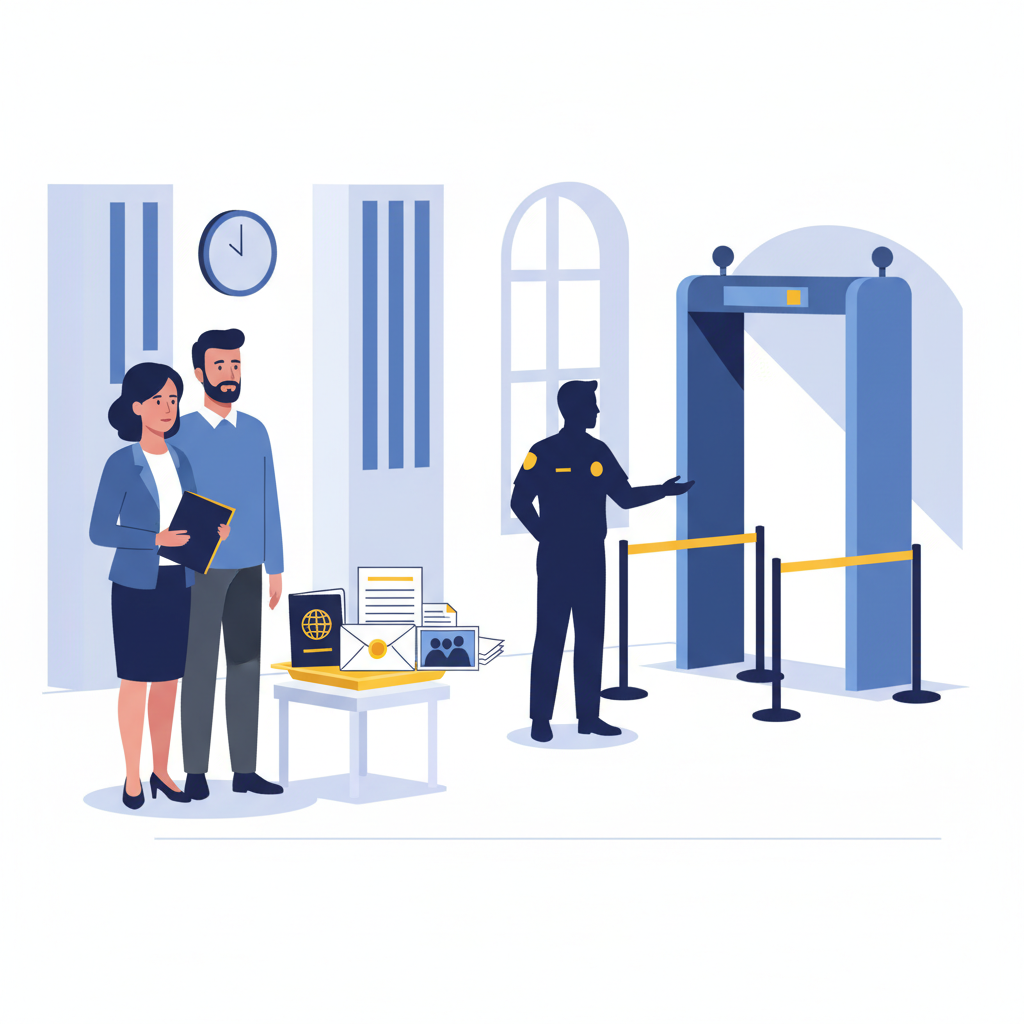
Reminder: Don’t bring prohibited items. Security screening at federal buildings can be strict, and delays can cause missed check-in windows.
Need Help? Our Orlando immigration team is ready to assist. Call +1 786-791-3106 for a free consultation, or message us online. Se Habla Español.
Practical Steps You Can Take Today
Below is a practical, do-it-now checklist that helps most applicants reduce interview stress and avoid common delays.
- 1) Print and review your entire filing packet (especially Form I-130 and Form I-485). Highlight dates, addresses, and prior travel.
- 2) Create a relationship timeline (for marriage cases): when you met, started dating, moved in, got engaged, married, trips, major family events.
- 3) Update evidence up to the interview date: add recent joint bank statements, new lease renewal, updated insurance cards, and new photos.
- 4) Check your medical exam validity: confirm whether your Form I-693 is still usable under current USCIS policy and that it’s properly completed by a USCIS-designated civil surgeon.
- 5) Verify sponsor income: gather the most recent pay stubs and an employment letter; plan for a joint sponsor if needed.
- 6) Prepare for corrections: if you find errors, write a clear list of corrections with supporting proof (do not alter your prior filed copy).
- 7) Plan transportation and timing: for Central Florida residents driving to the Orlando office, plan for I-4 traffic and parking; arrive 30–45 minutes early.
Timeline expectations: After the interview, outcomes vary:
- Same-day approval: sometimes the officer approves at the end or within days.
- Request for Evidence (RFE): you’ll receive a notice asking for specific documents; respond by the deadline listed. Missing it can lead to denial.
- Further review: background checks, supervisory review, or additional verification can take weeks to months.
Important: If you receive an RFE, respond with a complete, organized packet. Many RFEs are denied because applicants send partial responses.
How Imigrar Helps Immigrants in Orlando
At Imigrar, our mission is to Keep Families Together. We help clients in Orlando and nationwide prepare for green card interviews with a detailed, case-specific approach—not generic checklists.
Our support typically includes:
- Interview readiness review of Form I-130, Form I-485, and supporting evidence to catch inconsistencies before USCIS does.
- Custom document checklist based on your category and history (prior marriages, prior petitions, travel patterns, name changes, etc.).
- Preparation for likely officer questions, including the “yes/no” admissibility section.
- Guidance on how to present updated evidence and corrections appropriately.
- Support for complex cases involving prior denials, RFEs, criminal issues, or status complications.
Se Habla Español. We offer a free consultation so you can understand your options before your interview.
Frequently Asked Questions
Q: I’m worried I’m not eligible—should I still go to my green card interview?
A: In most cases, yes—you should not skip your interview without legal guidance. Missing the interview can result in denial for abandonment. If you have potential ineligibility issues (prior immigration violations, arrests, misrepresentation concerns), speak with an attorney immediately to evaluate risk and plan a strategy. Warning: Some issues can trigger removal proceedings depending on the facts, so get advice before attending if you believe there is a serious inadmissibility problem.
Q: Does the green card interview affect my current immigration status?
A: It can. If you are in valid nonimmigrant status, USCIS may confirm you maintained it. If you are applying through Adjustment of Status based on an immediate relative of a U.S. citizen, certain overstays may be forgiven—but not all issues are forgiven (for example, fraud/misrepresentation). Bring proof of lawful entry and any approval notices. If you are unsure, consult counsel before the interview.
Q: How long after the interview will I get a decision?
A: Some applicants receive approval quickly (same day to a few weeks). Others receive an RFE or “case must be reviewed.” Processing varies by field office and case complexity. Track general timing at USCIS Processing Times, but remember that interview-to-decision timelines are not always published and can differ widely.
Q: What documents are required for a marriage-based green card interview?
A: Commonly required documents include passports/IDs, the interview notice, marriage certificate, divorce decrees for any prior marriages, and strong evidence of a shared life (joint lease, joint bank statements, joint insurance, joint taxes, photos across time). If your case is in Orlando, bring updated proof of shared residence in Orange County or your current county, especially if you moved recently.
Q: How much does the green card interview process cost?
A: USCIS filing fees depend on the forms and category and can change. Costs may include the medical exam (Form I-693), obtaining certified records, translations, and attorney fees if you hire counsel. Always verify current filing fees and form editions on USCIS Forms and the USCIS official website.
Q: What happens if my green card is denied after the interview?
A: USCIS will issue a written decision explaining the reason. Next steps depend on the basis for denial: you may be able to file a motion to reopen/reconsider, appeal certain decisions, refile, or pursue consular processing. In some situations, USCIS may refer the case to immigration court. Immigration court information is available through Executive Office for Immigration Review. Because consequences can be serious, consult an attorney immediately after a denial.
Q: Can I travel while waiting for my green card interview or decision?
A: If you filed Form I-485 and depart the U.S. without valid advance parole (or another status that permits travel), USCIS may treat the application as abandoned in many cases. If you have Advance Parole, follow its terms carefully. For consular processing and visa guidance, see U.S. Department of State. Always get individualized advice before traveling.
Q: Do I need an interpreter at the USCIS interview?
A: If you are not fully comfortable answering in English, you should plan for interpretation consistent with USCIS rules and your interview notice. Misunderstandings can create inconsistencies in the record. If you bring an interpreter, ensure they are fluent, impartial, and prepared to translate exactly—no coaching.
Common Mistakes (and How to Avoid Them)
Mistake #1: Showing up without reviewing what you filed
USCIS officers often ask questions directly from your forms. If your answers don’t match your paperwork, it can look like you are hiding something—even when it’s just forgetfulness. Avoid this by re-reading Form I-130 and Form I-485 and practicing key dates and addresses.
Mistake #2: Bringing weak or poorly organized relationship evidence
A disorganized pile of papers can lead to missed opportunities to prove your case. Use a binder with tabs and provide evidence across time (not only recent documents). For Central Florida residents with frequent moves, include a clear address timeline and matching proof (leases, mail, IDs).
Mistake #3: Ignoring prior arrests, tickets, or immigration issues
Even dismissed charges can matter. Bring certified dispositions and consult a lawyer if anything appears in your record. Warning: Trying to minimize or “explain away” an arrest without documents can backfire. Documentation and consistency are key.
External Resources (Official References)
Use official government resources for the most accurate instructions and updates:
- USCIS official website
- USCIS Forms
- USCIS Processing Times
- U.S. Department of State
- Executive Office for Immigration Review
Need Help? Our Orlando immigration team is ready to assist. Call +1 786-791-3106 for a free consultation, or message us online. Se Habla Español.
Closing: Get Interview-Ready with Imigrar
The green card interview is one of the most important moments in your immigration process. With the right preparation—organized documents, consistent answers, and a clear plan for any complications—you can reduce delays and improve your chances of approval.
Need help preparing for your USCIS interview in Orlando or anywhere in Florida? Call Imigrar at +1 786-791-3106 for a free consultation, or message us online. Se Habla Español. Our team is here to help you Keep Families Together.


