


The journey to obtaining a Green Card, or lawful permanent residency, is a pivotal moment for countless individuals and families seeking to build a life in the United States. While the application process itself can be complex, the Green Card interview is often the most anticipated and sometimes nerve-wracking stage. This interview is your opportunity to demonstrate your eligibility, confirm the information provided in your application, and solidify your dream of permanent residency.
At Imigrar, an immigration law firm based in Orlando, Florida, we understand the profound importance of this interview. Our mission, "Keep Families Together," drives us to equip our clients with comprehensive knowledge and unwavering support. This guide is designed to demystify the Green Card interview process, providing you with actionable strategies, essential document checklists, and expert advice to approach your interview with confidence, whether you're in Orlando, across Florida, or anywhere nationwide.
Need Expert Guidance for Your Green Card Interview? Don't face the process alone. Our Orlando immigration team is ready to assist. Call +1 786-791-3106 for a free consultation, or message us online. Se Habla Español.
The reporting that sparked this guide
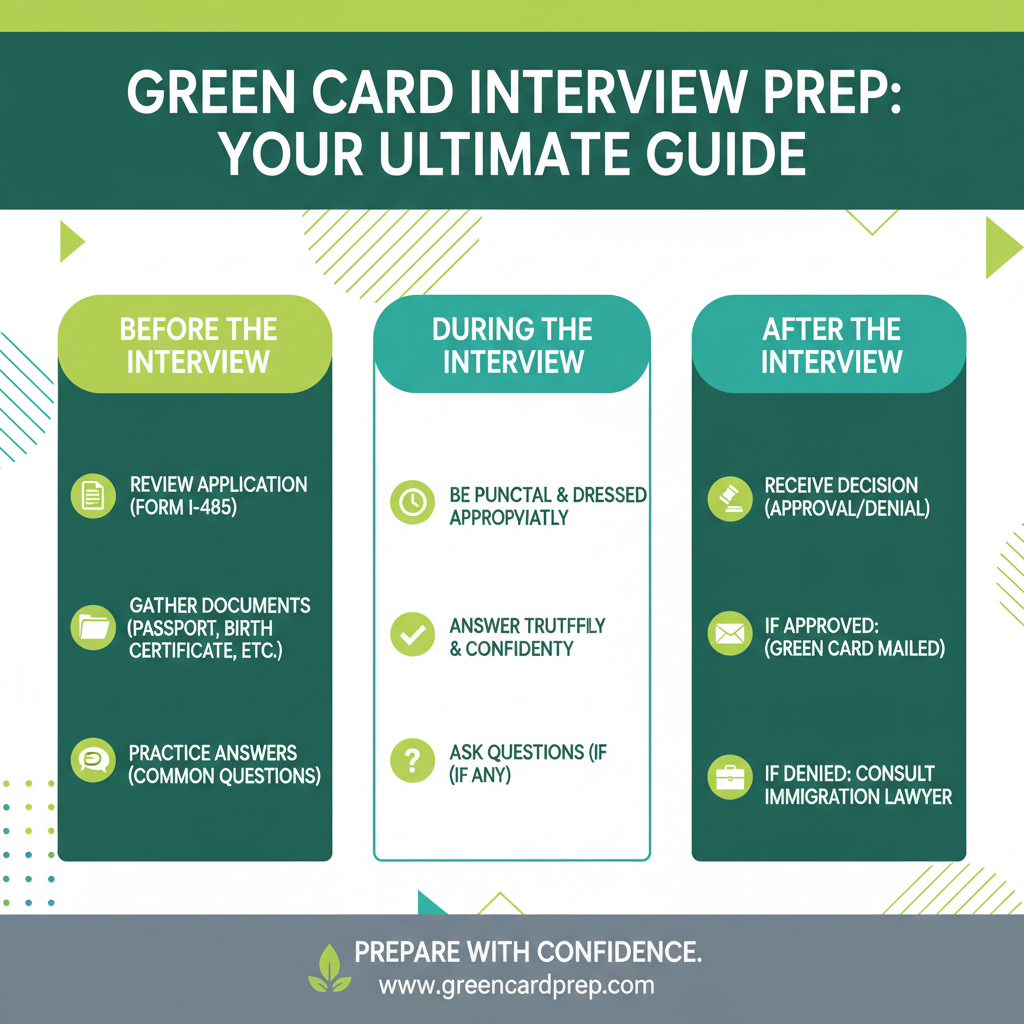
The continuous flow of information surrounding immigration law, particularly concerning critical stages like the Green Card interview, consistently highlights its significance for applicants. News sources frequently feature updates, advice, and stories related to navigating the complex U.S. immigration system. This ongoing media focus underscores the ever-present need for accurate, up-to-date, and practical guidance for immigrants. Our comprehensive guide is inspired by the persistent relevance of Green Card Interview Preparation Tips (Immigration Law) in the public discourse, reflecting the critical juncture this interview represents for countless individuals and families.
What This News Means for Immigrants in Orlando and Across Florida
The consistent attention given to Green Card interview preparation is not just general immigration news; it holds specific weight for individuals residing in Orlando, Central Florida, and throughout the Sunshine State. The U.S. Citizenship and Immigration Services (USCIS) conducts thousands of interviews annually, and a significant portion of these occur right here in Florida, including at the Orlando Field Office.
Why this news is showing up now
The discussion around Green Card interview preparation is perennially relevant, but it tends to gain particular traction due to several factors. Firstly, the sheer volume of individuals applying for Green Cards through various categories, such as family-based petitions (Form I-130, Petition for Alien Relative, followed by Form I-485, Application to Register Permanent Residence or Adjust Status) and employment-based petitions, means that interviews are a constant bottleneck and a critical hurdle. Secondly, changes in immigration policy, processing priorities, and national security concerns can subtly shift the focus and intensity of interviews. USCIS officers are consistently trained to look for specific details and potential issues, making thorough preparation more vital than ever. Thirdly, as online resources and community forums grow, applicants increasingly seek practical, peer-to-peer advice, which often centers around the interview experience. This creates a continuous demand for reliable, expert information to cut through the noise and provide clear guidance.
How it can affect Florida residents
For Florida residents, especially those in the Orlando metropolitan area and along the I-4 corridor, the importance of Green Card interview preparation cannot be overstated. Florida is a melting pot, home to a vast and diverse immigrant population. This means that the Orlando USCIS Field Office, located at 6650 Forum Drive, Orlando, FL 32821, is one of the busiest in the nation. High volume can sometimes lead to longer processing times or, conversely, a push for efficiency that requires applicants to be exceptionally well-prepared to avoid delays or requests for additional evidence.
- Local Processing: If your case is in Orlando, your interview will likely be scheduled at the local USCIS Field Office. Understanding the local office's procedures and typical interview environment can be an advantage.
- Diverse Caseloads: The Orlando office handles a wide array of Green Card applications, from family-based petitions (spousal, parent-child) to employment-based and asylum-based adjustments. Each category has unique interview nuances.
- Attorney Representation: Having an experienced Orlando immigration attorney like Imigrar by your side for the interview can be particularly beneficial, especially given the busy nature of the local field office. They can help you navigate local specificities and ensure you're fully prepared for the interview environment.
- Community Resources: Florida's large immigrant communities mean that support networks are strong, but also that misinformation can spread quickly. Relying on verified legal expertise is crucial.
The news about interview preparation serves as a critical reminder for Central Florida residents that meticulous attention to detail and thorough understanding of the process are your best assets for a successful outcome.
What the Green Card Interview Is (and Why It Matters)
The Green Card interview is a mandatory step for most individuals seeking to become lawful permanent residents of the United States. It is a formal meeting with a USCIS officer who reviews your application, verifies the information you've submitted, and determines your eligibility for a Green Card. This interview is a cornerstone of the immigration process, designed to ensure the integrity of the system and prevent fraud.
A plain-English definition
Think of the Green Card interview as your final exam for permanent residency. It's a face-to-face conversation where a U.S. immigration officer asks you questions about your life, your background, your family, and the reasons you're applying for a Green Card. They're essentially checking to make sure everything you've told them in your application forms is true and that you meet all the legal requirements to live permanently in the U.S. It’s also an opportunity for you to present any additional evidence and clarify any doubts the officer might have.
Key terms you need to know
- Green Card: Officially known as a Permanent Resident Card, it proves you are authorized to live and work permanently in the United States.
- USCIS: U.S. Citizenship and Immigration Services, the federal agency responsible for administering immigration and naturalization benefits. This is the agency that conducts your interview.
- Adjustment of Status (AOS): The process of applying for a Green Card while you are physically present in the United States. The Green Card interview is part of this process.
- Consular Processing: The process of applying for a Green Card through a U.S. embassy or consulate abroad. While the interview location differs, many preparation principles are similar.
- Sponsor/Petitioner: The U.S. citizen or lawful permanent resident who files a petition on behalf of an immigrant (e.g., a spouse filing Form I-130 for their foreign national husband/wife).
- Beneficiary/Applicant: The foreign national seeking the Green Card.
- Bona Fide Marriage: A marriage entered into in good faith, not solely for immigration purposes. This is a critical concept for marriage-based Green Cards.
- Affidavit of Support (Form I-864): A legally binding document signed by a sponsor to accept financial responsibility for the applicant.
- Grounds of Inadmissibility: Specific reasons under U.S. immigration law why an individual may be denied entry or a Green Card (e.g., certain criminal offenses, health issues, immigration violations).
Why It Matters
The Green Card interview is critical because it is often the final hurdle before approval. A successful interview can lead directly to permanent residency, while an unsuccessful one can result in delays, a Request for Evidence (RFE), or even a denial. It’s the officer’s chance to assess your credibility, confirm the authenticity of your relationship (for marriage-based cases), and ensure you are not inadmissible to the U.S. Your performance, preparedness, and honesty during this interview are paramount.
Feeling Overwhelmed by Interview Preparation? Let Imigrar simplify the process for you. Our Orlando-based lawyers provide personalized support. Call +1 786-791-3106 for a free consultation, or message us online. Se Habla Español.
Current Immigration Law: The Foundation for Your Green Card Interview
The Green Card interview is not an arbitrary process; it is firmly rooted in U.S. immigration law. The Immigration and Nationality Act (INA) serves as the primary body of law governing immigration to the United States. USCIS officers conduct interviews to ensure that applicants meet all statutory and regulatory requirements for the specific Green Card category they are applying under.
Federal requirements
The legal framework for Green Card eligibility is complex, but generally involves:
- Eligibility Category: You must qualify under an eligible Green Card category, such as family-sponsored (e.g., immediate relative of a U.S. citizen, family preference categories), employment-based, refugee/asylee, diversity lottery, or special immigrant programs. Each category has its own specific set of requirements detailed within the INA.
- Admissibility: A crucial aspect reviewed during the interview is your admissibility to the United States. Sections 212(a) and 237 of the INA outline various U.S. Department of State grounds of inadmissibility, including health-related grounds, criminal grounds, security-related grounds, public charge (financial stability), immigration violations, and more. The officer will assess whether any of these apply to you.
- Bona Fide Relationship (for family-based petitions): For marriage-based Green Cards, the INA requires proof of a bona fide marriage. This means the marriage must be real and not entered into solely for immigration benefits. This is a primary focus of the interview for spouses.
- Financial Support: Most family-based and some employment-based Green Card applicants require a sponsor to file Form I-864, Affidavit of Support, demonstrating that the applicant will not become a public charge. The sponsor must meet specific income thresholds based on federal poverty guidelines.
- Proper Documentation: All applications must be supported by correct and complete documentation as mandated by the INA and USCIS regulations.
Key forms you will have submitted and that the officer will review include:
- Form I-130, Petition for Alien Relative (filed by the sponsor for family-based cases).
- Form I-485, Application to Register Permanent Residence or Adjust Status (the primary application for the Green Card itself).
- Form I-765, Application for Employment Authorization (often filed concurrently with Form I-485).
- Form I-131, Application for Travel Document (often filed concurrently for advance parole).
- Form I-693, Report of Medical Examination and Vaccination Record.
- Form I-864, Affidavit of Support.
You can find detailed information about these forms and the underlying laws on the USCIS official website and their USCIS Forms page.
Florida-specific considerations
While immigration law is federal, meaning the same laws apply nationwide, certain practical aspects can be unique to Florida. The Orlando USCIS Field Office, like others, operates under federal mandates. However, the sheer volume of cases, the specific demographics of applicants, and sometimes even the individual officer's approach can influence the interview experience. For Central Florida residents, understanding that the federal requirements are applied rigorously at the local level is key. The legal standards for a bona fide marriage, for example, are the same whether you apply in Orlando or Anchorage, but the type of evidence commonly presented and the questions asked might reflect local cultural norms or common fraud patterns seen in the region. An experienced Orlando immigration attorney will be familiar with the nuances of the local field office and can tailor your preparation accordingly.
How to Prepare for Your Green Card Interview: A Complete Step-by-Step Guide
Preparing for your Green Card interview is a multi-faceted process that requires meticulous organization, thorough review, and mental readiness. Follow these steps to maximize your chances of success.
1) Understand Your Interview Notice
The first step begins the moment you receive your interview notice, typically Form I-797C, Notice of Action. This document is critical. It will specify:
- Date and Time: Mark your calendar immediately and plan to arrive at least 30 minutes early.
- Location: For Orlando residents, this will likely be the Orlando USCIS Field Office. Confirm the full address.
- Required Documents: The notice will list specific original documents you MUST bring. Pay close attention to this list, as it can vary.
- Participants: It will indicate who must attend (e.g., both spouses for marriage-based interviews, the applicant and their parent/guardian for minors).
Important: Read every word of your interview notice. It is your official instruction guide.
2) Gather and Organize All Required Documents
This is arguably the most critical step. You need to bring originals of every document you submitted with your application, plus copies, and any additional evidence that strengthens your case.
General Documents (Bring Originals & Copies):
- Your interview notice (Form I-797C).
- Valid passport and any prior passports.
- Birth certificate (yours and your spouse's, if applicable).
- Marriage certificate (if applicable).
- Divorce decrees or death certificates for any previous marriages (yours and your spouse's).
- Medical examination report (Form I-693) in a sealed envelope, if not already submitted.
- Employment Authorization Document (EAD) and/or Advance Parole document, if you have them.
- All original supporting documents submitted with Form I-130 and Form I-485.
Financial Documents (Originals & Copies):
- Form I-864, Affidavit of Support, with all supporting financial documents (tax returns, W-2s, pay stubs, bank statements) for the sponsor and any joint sponsors.
Additional Evidence for Marriage-Based Green Cards (Originals & Copies):
The goal is to prove your marriage is bona fide. Gather as much evidence as possible showing commingling of finances, shared life, and mutual commitment.
- Joint bank accounts statements.
- Joint credit card statements.
- Lease agreements or mortgage statements showing joint residency.
- Utility bills in both names.
- Car titles or registrations showing joint ownership.
- Health, life, or auto insurance policies listing each other as beneficiaries.
- Photos together (dating, engagement, wedding, family, travel).
- Children's birth certificates (if you have children together).
- Affidavits from friends/family attesting to the legitimacy of your relationship.
- Travel itineraries for joint trips.
- Correspondence (emails, texts, social media posts) demonstrating ongoing relationship.
Reminder: Organize your documents in a clear, accessible binder or folder. Use tabs to separate categories. Have both originals and photocopies ready.
3) Review Your Application Forms Thoroughly
Before the interview, meticulously review every single form you submitted (Form I-130, Form I-485, G-325A, etc.). The interviewing officer will have these forms in front of them and will ask questions based on the information provided. It is crucial that your verbal answers are consistent with what you wrote on the forms.
- Make sure you remember dates, addresses, employment history, and travel history exactly as you reported them.
- If there were any errors or omissions in your original application, prepare to explain them clearly and honestly. Bring any updated information or corrected documents.
4) Prepare for Interview Questions
While the exact questions vary, common themes emerge. Practice answering them truthfully and concisely.
General Questions:
- Why are you applying for a Green Card?
- What is your full name, date of birth, and current address?
- What is your immigration history (entries, exits, visa types)?
- Have you ever been arrested, cited, or convicted of a crime?
- Have you ever violated immigration law?
- Do you have any health conditions?
- Have you ever been a member of any organization or political party?
Marriage-Based Questions (for both spouses):
- How and where did you meet?
- When did you decide to get married?
- Who proposed? Where was the wedding?
- Where do you live? Describe your home.
- What are your daily routines like? Who does chores?
- What did you do for your last birthday/holiday?
- Describe your spouse's family. Have you met them?
- What are your spouse's hobbies, favorite foods, pet peeves?
- Details about your finances (joint accounts, bills, expenses).
- Future plans together.
Warning: Be honest. Inconsistent answers or attempts to conceal information can lead to serious problems, including allegations of misrepresentation or fraud.
5) Practice with Your Spouse/Family (if applicable)
If your spouse or other family members are required to attend, practice answering questions together. This helps ensure consistency and can alleviate nervousness. For marriage-based cases, the officer may interview you together and separately. Be prepared for both scenarios. Discuss your relationship's timeline, key dates, and details of your shared life.
6) Dress Appropriately and Arrive Early
- Dress Code: Dress in neat, professional attire, as you would for a job interview. This shows respect for the process and the officer.
- Timeliness: Plan to arrive at the Orlando USCIS Field Office at least 30-45 minutes before your scheduled interview time. This allows for parking, security checks, and finding the correct waiting area without rushing. Being late can lead to rescheduling or even denial.
7) What to Expect During and After the Interview
- The Interview Itself: You will be called by an officer. You will be sworn in to tell the truth. The officer will review your documents, ask questions based on your application and supporting evidence, and clarify any discrepancies. Answer truthfully, concisely, and directly. If you don't understand a question, ask for clarification.
- Interpreters: If you need an interpreter and did not request one with your application, you must bring your own certified interpreter. The officer will verify their credentials. Imigrar can help arrange this if needed, and our team is fully bilingual (Se Habla Español).
- Decision: Sometimes, the officer can approve your case on the spot, or tell you they need more time or additional documents (Request for Evidence - RFE). You may receive a decision notice in the mail within a few weeks or months.
- Post-Interview: If approved, your Green Card will be mailed to you. If an RFE is issued, respond promptly. If denied, consult an attorney immediately to discuss your options.
Practical Steps You Can Take Today for Interview Success
The journey to a Green Card is significant, and proactive preparation is your most powerful tool. Here are actionable steps you can begin today:
Actionable Checklist for Green Card Interview Preparation:
- Consult an Immigration Attorney: This is paramount. An attorney from Imigrar can review your entire application, identify potential issues, help you gather strong evidence, and prepare you for specific questions relevant to your case. This is especially vital if you have a complex history or unique circumstances.
- Start Organizing Documents NOW: Don't wait until the last minute. Create a dedicated folder or binder. Sort documents by category (e.g., identity, financial, relationship evidence). Make sure you have both originals and copies.
- Verify Document Validity: Check expiration dates on passports, IDs, and other critical documents. Ensure all birth, marriage, and divorce certificates are certified copies. If documents are not in English, ensure they are accompanied by certified English translations.
- Review Your Submitted Application: Get a copy of everything you submitted to USCIS. Read through it several times. Highlight any areas where you might anticipate questions or where information might need clarification.
- Gather Additional Evidence: If your circumstances have changed since you filed your application, or if you have new, stronger evidence, gather it. For marriage-based cases, continuously collect evidence of your shared life (e.g., new joint bills, photos, travel tickets).
- Address Any Potential Issues: If you have any past arrests, immigration violations, or health issues, discuss them openly with your attorney. They can help you prepare explanations or necessary waivers (e.g., Form I-601, Application for Waiver of Grounds of Inadmissibility).
- Mentally Prepare: Understand that the interview is a formal process. Practice staying calm, answering truthfully and clearly, and asking for clarification if needed. Avoid guessing.
Document Preparation Guidance:
- Originals vs. Copies: Always bring ALL original documents listed in your interview notice and those you submitted. Also, bring a complete set of photocopies of everything. The officer will typically review originals and keep the copies.
- Translations: Any document not in English must be accompanied by a complete English translation and a certification from the translator stating that the translation is accurate and that they are competent to translate.
- Photographs: For marriage-based cases, arrange photos chronologically, perhaps with brief captions. Include photos with family and friends to show your relationship is public.
- Financial Documents: Ensure your Form I-864 and supporting documents clearly demonstrate the sponsor's ability to meet the income requirements.
Timeline Expectations:
- Interview Notice: You typically receive an interview notice 4-8 weeks before the scheduled date.
- Interview Length: Most Green Card interviews last between 20-45 minutes, though complex cases can take longer.
- Decision: Some applicants receive an immediate decision. Others may wait a few weeks to several months for a decision notice, especially if an RFE is issued. You can check your case status online using the receipt number on the USCIS Processing Times page.
- Green Card Delivery: If approved, the Green Card is usually mailed within 2-3 weeks of approval.
Important: Timelines can vary significantly based on the USCIS Field Office workload (like the busy Orlando office), the complexity of your case, and current processing priorities. Patience, combined with diligent preparation, is key.
How Imigrar Helps Immigrants in Orlando Prepare for Their Green Card Interview
At Imigrar, we understand that the Green Card interview is more than just a formality; it's a critical moment that can determine your future in the United States. Our firm, located in Orlando, Florida, is dedicated to providing comprehensive legal support to immigrants and their families, ensuring they are fully prepared for every step of the process, especially the interview.
Our experience and expertise
Our team of experienced immigration attorneys brings a wealth of knowledge and a compassionate approach to every case. We have successfully guided countless clients through their Green Card interviews, navigating the complexities of U.S. immigration law. Our expertise includes:
- Thorough Case Review: We meticulously review your entire application packet, identifying any potential red flags or areas that might require additional explanation or evidence.
- Document Organization: We assist you in organizing your documents systematically, ensuring you have all necessary originals and copies, and that they are presented clearly to the USCIS officer.
- Personalized Interview Preparation: We conduct mock interviews, asking questions tailored to your specific case, including those commonly asked at the Orlando USCIS Field Office. This helps you practice answering truthfully, confidently, and consistently.
- Evidence Strengthening: We advise on how to gather and present the strongest possible evidence to support your application, particularly for bona fide marriage cases.
- Addressing Complexities: If your case involves past immigration issues, criminal history, or other complexities, we develop strategies to address these concerns proactively and prepare you for difficult questions.
- Attorney Representation at the Interview: While not mandatory, having an Imigrar attorney present with you at your interview can provide immense peace of mind. We can clarify questions, ensure fair procedures, and advocate on your behalf if any issues arise. This is particularly valuable in a busy office like the Orlando USCIS Field Office.
- Post-Interview Support: Whether it's responding to a Request for Evidence (RFE) or strategizing after a denial, we stand by you until your case reaches its conclusion.
Free consultation offer
We believe that everyone deserves access to expert legal advice. That's why Imigrar offers a free consultation to discuss your Green Card interview preparation needs. This initial meeting allows us to understand your situation, answer your preliminary questions, and outline how we can best assist you. You’ll gain clarity and a clear path forward without any upfront commitment.
Se Habla Español: Our team is fully bilingual, ensuring that language is never a barrier to receiving the legal support you need. We are proud to serve the diverse Spanish-speaking communities in Orlando, across Florida, and nationwide.
Ready for Your Green Card Interview? Let Imigrar be your trusted partner. Call our Orlando office at +1 786-791-3106 for your free consultation, or contact us online. We are here to help you "Keep Families Together." Se Habla Español.

Frequently Asked Questions About Green Card Interviews
Q: What if I don't speak English well enough for the interview?
A: If you are not fluent in English, you generally need to bring a certified interpreter to your interview, unless USCIS specifically states they will provide one (which is rare). The interpreter must be fluent in both English and your native language. They cannot be your attorney, your sponsor, or another witness. Important: If you require an interpreter, inform USCIS when you file your application. Imigrar can assist you in finding a qualified, certified interpreter if needed.
Q: Can my attorney attend the interview with me?
A: Yes, your attorney has the right to attend the interview with you. While not legally required, it is highly recommended, especially for complex cases or if you are nervous. Your attorney can provide support, clarify legal points, object to improper questions, and ensure your rights are protected. For Central Florida residents attending interviews at the Orlando USCIS Field Office, having local counsel familiar with the office's procedures can be a significant advantage.
Q: What kind of questions will they ask in a marriage-based Green Card interview?
A: For marriage-based Green Cards, officers aim to verify the authenticity of your marriage (bona fide marriage). Questions can range from mundane daily routines (e.g., "What did you have for breakfast today?") to personal details (e.g., "When is your spouse's birthday?") and relationship history (e.g., "How did you meet?"). They will also ask about shared finances, living arrangements, family interactions, and future plans. Be prepared to answer questions about your spouse's habits, preferences, and details of your home life. Both spouses should be consistent in their answers.
Q: How long does it take to get a decision after the interview?
A: The timeline varies significantly. Some applicants receive an immediate approval notice at the end of the interview. Others may receive a Request for Evidence (


