


The reporting that sparked this guide
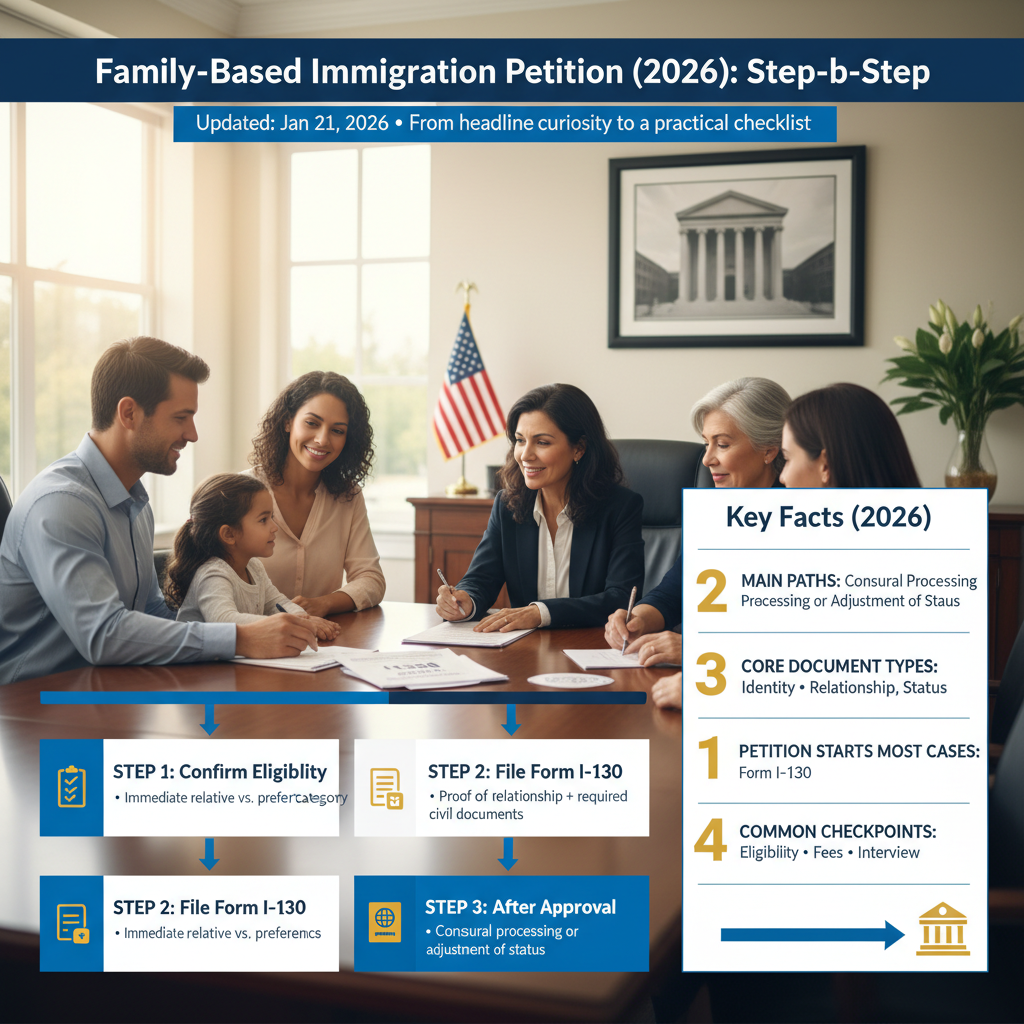
Family immigration is trending again in national coverage, and many families are searching for clear, step-by-step instructions they can actually follow. The news coverage we’re referencing is here: Family-Based Immigration Petition Guide (Immigration).
This article turns that “headline curiosity” into a practical roadmap for real families—especially those in Orlando, Orange County, and across the I-4 corridor—who want to start or finish a family-based case the right way.
Need Help? Our Orlando immigration team is ready to assist. Call +1 786-791-3106 for a free consultation, or message us online. Se Habla Español.
What This News Means for Immigrants in Orlando and Across Florida
Why this news is showing up now
Family-based immigration is always important, but it tends to “trend” when families feel extra uncertainty—about processing delays, shifting agency priorities, travel rules, or changing enforcement patterns. Many people are also seeing more discussion about:
- Longer or unpredictable USCIS timelines (and the need to check USCIS Processing Times)
- Interview backlogs and requests for evidence (RFEs)
- Confusion about whether to use Adjustment of Status or consular processing through the U.S. Department of State
- Concerns about travel, overstays, and “unlawful presence” bars
- More mixed-status families asking how to “do it safely” without triggering problems
Important: Family petitions are not “one form.” They are a process with decision points that can change your outcome. A small mistake can create months of delay—or, in some cases, a denial.
How it can affect Florida residents
Florida is home to large immigrant communities and many mixed-status households. For Central Florida residents, even “routine” family cases can become stressful when:
- Work authorization timing affects household income
- International travel plans (weddings, emergencies) conflict with pending applications
- Applicants move frequently (common along the I-4 corridor), causing missed USCIS notices
- Prior immigration history (entries, overstays, prior petitions, removal orders) complicates an otherwise normal case
If your case is in Orlando, you may interact with the Orlando USCIS Field Office for interviews and final decisions on many family-based Adjustment of Status applications. That means preparation matters—especially for the interview, medical exam timing, and evidence organization.
What Family-Based Immigration Petition Guide Is (and Why It Matters)
A plain-English definition
A family-based immigration petition is the legal process where a qualifying U.S. citizen or lawful permanent resident (green card holder) asks the U.S. government to recognize a real family relationship—so the family member can apply for a green card (lawful permanent residence).
In most cases, the process starts with Form I-130 (Petition for Alien Relative). But the petition is only step one. After the relationship is approved, the family member typically applies for the green card either:
- Inside the U.S. through Adjustment of Status (often using Form I-485), or
- Outside the U.S. through consular processing with the U.S. Department of State
Why it matters: a well-prepared family petition can keep families together, reduce delays, and avoid denials that can be difficult (and expensive) to fix.
Key terms you need to know
- Immediate Relative: Certain family members of U.S. citizens (spouse, unmarried child under 21, parent of a U.S. citizen age 21+). Often no visa “waiting line.”
- Preference Category: Family categories with annual limits (for example, siblings of U.S. citizens). These involve waiting for a visa number.
- Priority Date: The date USCIS receives the I-130; it’s your place in line for preference categories. Track it with the Visa Bulletin (Department of State).
- Adjustment of Status: Applying for a green card from inside the U.S. (often with Form I-485).
- Consular Processing: Applying for an immigrant visa at a U.S. consulate abroad after I-130 approval.
- RFE (Request for Evidence): USCIS asks for additional proof; responding correctly and on time is critical.
- Affidavit of Support: Financial sponsorship requirement, typically Form I-864.
- Unlawful Presence: Time in the U.S. without lawful status; may trigger 3- or 10-year bars if you depart.
Reminder: The right strategy depends on your relationship category, where the beneficiary is located, how they entered, and whether any inadmissibility issues apply.
Current Immigration Law: The Foundation
Family-based immigration is governed primarily by the Immigration and Nationality Act (INA) and implemented through federal regulations and agency policy. While Florida has no separate “Florida immigration law” for benefits applications, Florida-specific realities—like local court issues, driving/ID needs, and the practical impact of travel—can affect case strategy.
Federal requirements
Key legal foundations include:
- INA provisions governing family-based immigrant visas and immediate relatives (INA §§ 201, 203)
- Grounds of inadmissibility (INA § 212) that can block a green card unless a waiver applies
- Adjustment of Status eligibility rules (INA § 245), including exceptions and bars
- Affidavit of Support requirements (INA § 213A), implemented through Form I-864
Common USCIS forms in family cases include:
- Form I-130 (Petition for Alien Relative)
- Form I-485 (Application to Register Permanent Residence or Adjust Status)
- Form I-864 (Affidavit of Support)
- Form I-693 (Medical Examination and Vaccination Record)
- Form I-765 (Application for Employment Authorization) when eligible
- Form I-131 (Application for Travel Document / Advance Parole) when eligible
Always use the latest form editions and instructions from the USCIS official website and the USCIS Forms page.
Warning: Filing the wrong edition, missing signatures, or paying incorrect fees can lead to rejection (not just a delay).
Florida-specific considerations
Florida considerations are usually practical rather than legal:
- If your case is in Orlando... expect that your green card interview (for many Adjustment of Status cases) may be scheduled at the Orlando USCIS Field Office. Preparation and document organization are key.
- For Central Florida residents... address changes are common. Missing a USCIS notice can be case-ending. Update your address promptly and keep proof of updates.
- Many families in Orange County work in hospitality, healthcare, or construction—so work authorization timing can be critical for stability.
- If there is any history involving immigration court, check your status with the Executive Office for Immigration Review and coordinate strategy carefully.
Need Help? Our Orlando immigration team is ready to assist. Call +1 786-791-3106 for a free consultation, or message us online. Se Habla Español.
How to File a Family-Based Immigration Petition: A Complete Step-by-Step Guide
1) Confirm the correct family category and strategy
Before you file anything, identify (1) who the petitioner is (U.S. citizen or green card holder), (2) who the beneficiary is, and (3) whether the beneficiary will apply inside the U.S. via Adjustment of Status or outside the U.S. via consular processing.
This step matters because it affects:
- Whether a visa number is immediately available (immediate relative vs. preference category)
- Whether you can file “concurrently” (I-130 + Form I-485 together) in some cases
- Whether travel could trigger inadmissibility bars
- Which documents you must gather and when
Important: If the beneficiary entered without inspection (EWI), has certain criminal issues, prior removal, or misrepresentation concerns, strategy may change significantly and may require a waiver.
Documents to gather for Step 1:
- Petitioner’s proof of U.S. citizenship (passport, birth certificate, naturalization certificate) or green card
- Beneficiary’s passport biographic page
- Proof of current location (inside or outside the U.S.)
- Basic immigration history (I-94, prior visas, prior USCIS receipts, removal paperwork if any)
2) Prepare and file Form I-130 with strong relationship evidence
Form I-130 is the foundation. USCIS must be convinced the relationship is real and legally valid. The evidence depends on the relationship type:
- Spouse: proof of a bona fide marriage (not just a marriage certificate)
- Parent/child: birth certificate showing the relationship, and sometimes additional proof (legitimation, custody, adoption rules)
- Siblings: documents linking both siblings to at least one common parent
For marriage-based cases, USCIS looks for shared life evidence—finances, residence, children, insurance, photos, travel, messages—organized and consistent.
Documents to include for Step 2 (typical):
- Completed and signed Form I-130 (and Form I-130A for spouse cases, when required)
- Filing fee (per current USCIS instructions)
- Petitioner’s proof of status (U.S. citizenship or LPR)
- Beneficiary’s identity document (passport page)
- Marriage certificate (if spouse case) and divorce decrees/annulments for any prior marriages
- Birth certificates (parent/child or sibling cases)
- Relationship evidence (joint lease, bank statements, insurance, photos, affidavits, etc.)
- Certified translations for any non-English documents
Use the USCIS Forms page to confirm you’re using the correct edition and filing address.
3) Decide whether to file Form I-485 (Adjustment of Status) or choose consular processing
After (or sometimes together with) the I-130, the beneficiary pursues the green card through one of two paths:
- Adjustment of Status (inside the U.S.): often involves Form I-485, biometrics, possibly an interview at the Orlando USCIS Field Office, and a final green card decision.
- Consular processing (outside the U.S.): after I-130 approval, the case goes to the National Visa Center (NVC) and then to a U.S. consulate for an immigrant visa interview.
Warning: People sometimes assume consular processing is “faster.” But leaving the U.S. can trigger unlawful presence bars for some applicants. This is one of the most common high-stakes mistakes.
Documents to gather for Step 3:
- I-94 record (if applicable), entry stamp, visa page
- Proof of lawful entry (for many Adjustment of Status cases)
- Any prior immigration decisions (denials, removal orders, voluntary departure)
- Criminal disposition records (certified court documents) if any arrests/citations occurred
4) If applying in the U.S., file Form I-485 and related applications correctly
For eligible applicants inside the U.S., Form I-485 is the green card application. Many applicants also file:
- Form I-765 for a work permit (EAD), and
- Form I-131 for Advance Parole (permission to travel while the case is pending), when appropriate
You must also submit the financial sponsorship package (usually Form I-864) and later complete the medical exam on Form I-693 with a USCIS-designated civil surgeon.
Reminder: Some applicants can file I-130 and I-485 together (concurrent filing) if a visa is immediately available—common for immediate relatives of U.S. citizens.
Documents to include for Step 4 (typical AOS package):
- Completed and signed Form I-485
- Copy of passport (biographic page), visa page, and entry stamp
- I-94 record (if available)
- Birth certificate (with certified translation if needed)
- Marriage certificate (if applicable) and divorce decrees for prior marriages
- Form I-864 with tax returns/W-2s/pay stubs and proof of domicile
- Form I-765 (optional) and Form I-131 (optional)
- Two passport-style photos (if required by instructions)
- Filing fees per USCIS instructions
Always confirm current filing instructions at the USCIS official website.
5) Attend biometrics, respond to RFEs, and prepare for the interview
After filing, USCIS usually schedules biometrics (fingerprints/photo). Later, USCIS may issue an RFE if something is missing or unclear.
Important: An RFE is not a denial, but it is a deadline-driven request. Missing the deadline can lead to denial.
USCIS may also schedule an interview. If your case is in Orlando, the interview may be at the Orlando USCIS Field Office. Marriage-based interviews often focus on:
- How you met and your relationship timeline
- Where you live and who lives with you
- Finances and shared responsibilities
- Prior marriages, children, and immigration history
Documents to bring/prepare for Step 5:
- Interview notice and government-issued IDs
- Original civil documents (birth/marriage/divorce certificates)
- Updated relationship evidence (new lease, bank statements, photos, insurance)
- Updated financial documents for Form I-864 (recent pay stubs, employment letter)
- Any RFE response copies and proof of delivery
6) For consular processing, complete NVC steps and attend the visa interview abroad
If the beneficiary will process abroad, after I-130 approval the case typically goes to the National Visa Center (NVC). You’ll submit fees, forms, and civil documents, then schedule a medical exam and interview at a U.S. consulate.
This process is managed through the U.S. Department of State systems and instructions.
Documents to gather for Step 6 (typical):
- Passport valid for travel
- Civil documents (birth, marriage, divorce, police certificates as required)
- Affidavit of Support: Form I-864 with financial evidence
- Medical exam results from an authorized physician
- Proof of relationship (especially for spouse cases)
7) After approval: green card delivery, Social Security, and next steps to protect status
After approval, the beneficiary becomes a lawful permanent resident (green card holder). Next steps often include:
- Confirming correct address for card delivery
- Applying for or updating Social Security records
- Understanding travel rules and avoiding abandonment of residency
- Planning ahead for removal of conditions (if a 2-year conditional green card applies)
Reminder: Some marriage-based green cards are conditional (2 years). The removal of conditions process has strict timing—often a 90-day window before the card expires (commonly filed on Form I-751).
Need Help? Our Orlando immigration team is ready to assist. Call +1 786-791-3106 for a free consultation, or message us online. Se Habla Español.
Practical Steps You Can Take Today
Family petitions move faster and more safely when you treat them like a project: gather documents early, avoid risky travel, and track deadlines.
Actionable checklist (do these now)
- Create a shared folder (digital + paper) for all immigration documents and receipts.
- Order certified copies of birth, marriage, and divorce records (and certified translations if not in English).
- Collect “life evidence” for spouse cases: joint lease, bank statements, insurance, photos, messages, travel records.
- Download your I-94 (if applicable) and save copies of passport stamps/visas.
- Check current processing estimates at USCIS Processing Times and plan accordingly.
- Review finances for Form I-864: tax returns, W-2/1099, pay stubs, employment letter, and joint sponsor options if needed.
- Plan for the medical exam (Form I-693) timing so it’s valid when submitted.
Document preparation guidance
- Consistency matters: names, dates, and addresses should match across forms and evidence.
- Translations: USCIS requires a complete English translation with a translator certification.
- Quality over quantity: provide clear, organized evidence rather than a random pile of papers.
- Proof of delivery: keep tracking for every package you mail to USCIS or NVC.
Timeline expectations (realistic planning)
Timelines vary by category, location, and USCIS workload. Many families experience:
- I-130 processing: varies widely depending on category and service center
- Adjustment of Status: biometrics in weeks to months; interview and decision can take many months
- Work permit (if filed): timing varies; always check current trends
- Consular processing: I-130 approval + NVC document review + interview scheduling
Important: If you receive a deadline-based notice, do not wait. Some USCIS notices provide only 180 days or less for certain actions depending on the context, and missing a deadline can cause denial or closure.
How Imigrar Helps Immigrants in Orlando
Imigrar is an immigration law firm based in Orlando, Florida, serving clients nationwide. Our mission is simple: Keep Families Together.
Family-based cases can look “easy” online but become complicated fast when there are prior entries, overstays, missing documents, financial sponsorship issues, or past immigration court history. We help by:
- Confirming the safest strategy: Adjustment of Status vs. consular processing
- Preparing a strong Form I-130 package with organized relationship evidence
- Filing Form I-485 packages correctly, including Form I-864 support
- Coaching clients for interviews (including what to expect at the Orlando USCIS Field Office)
- Responding to RFEs and addressing red flags before they become denials
We offer a free consultation to help you understand your options and next steps. Se Habla Español.
Frequently Asked Questions
Q: Who is eligible to file a family-based petition?
A: Generally, a U.S. citizen or lawful permanent resident can file Form I-130 for certain qualifying relatives. U.S. citizens can petition broader categories (including parents and married children). Green card holders have more limited categories (typically spouse and unmarried children). Eligibility also depends on whether the relationship is legally valid and properly documented.
Q: Can I file Form I-130 and Form I-485 at the same time?
A: Sometimes. Concurrent filing is often possible when the beneficiary is an “immediate relative” of a U.S. citizen and is eligible for Adjustment of Status. If you’re in a preference category, you usually must wait until the Priority Date is current. Because the rules are fact-specific, it’s smart to confirm eligibility before filing to avoid a rejection or denial.
Q: How does my current immigration status affect a family petition?
A: Your current status can affect whether you can do Adjustment of Status inside the U.S. and whether leaving the U.S. for consular processing could trigger a bar. For example, certain overstays may be forgiven for immediate relatives of U.S. citizens in an AOS context, but travel can create serious consequences. Warning: Do not assume you can safely depart the U.S. without legal review.
Q: How long does a family-based petition take?
A: It depends on the relationship category, where you file, and whether you do Adjustment of Status or consular processing. Use USCIS Processing Times for current estimates and plan for additional time if you receive an RFE or interview rescheduling. Preference categories can take years due to visa limits and Priority Date backlogs.
Q: What documents are most important for a strong case?
A: The “must-haves” are civil documents (birth/marriage/divorce records), proof of petitioner status, and identity documents. For marriage cases, USCIS heavily weighs bona fide marriage evidence—joint residence, joint finances, insurance, children’s records, and consistent documentation over time. Reminder: Submit certified translations for non-English documents.
Q: How much does it cost to file a family-based case?
A: Costs include USCIS filing fees (which vary by form), medical exam costs for Form I-693, and potentially fees for obtaining civil documents and translations. If consular processing applies, there are Department of State/NVC fees as well. Always verify current fees on the USCIS official website and follow the latest instructions.
Q: What happens if my case is denied?
A: The next step depends on what was denied and why. Some denials can be fixed by refiling with stronger evidence; others may allow a motion to reopen/reconsider or an appeal. If denial relates to inadmissibility (like misrepresentation or unlawful presence), you may need a waiver strategy. If immigration court is involved, consult the Executive Office for Immigration Review context and get legal help immediately.
Common Mistakes (and How to Avoid Them)
Mistake #1: Filing without a strategy (AOS vs. consular) and triggering bars
Many families file forms first and ask questions later. The biggest danger is choosing consular processing (or traveling) when unlawful presence or other inadmissibility issues could be triggered.
How to avoid it: Confirm eligibility for Adjustment of Status, review entry history, and do not travel on a pending case without understanding Advance Parole rules and risks.
Mistake #2: Weak relationship evidence for marriage-based cases
A marriage certificate alone is not enough. USCIS wants proof of a shared life.
How to avoid it: Provide organized evidence across time—joint lease/mortgage, joint bank accounts, insurance, photos, travel, and consistent addresses. Bring updated evidence to the interview at the Orlando USCIS Field Office if applicable.
Mistake #3: Missing deadlines, notices, or submitting incomplete RFE responses
Address changes, busy schedules, and confusion about what USCIS is asking for can lead to missed notices or incomplete responses.
How to avoid it: Track every receipt number, check case status, keep copies of everything, and respond early. Treat any USCIS deadline as urgent—even if it looks like you have 180 days. Mail with tracking and keep proof.
Additional Official Resources (Bookmark These)
- USCIS official website
- USCIS Forms
- USCIS Processing Times
- U.S. Department of State
- Executive Office for Immigration Review
Reminder: Online information can be outdated. Always cross-check instructions on official government pages before filing.
Need Help? Our Orlando immigration team is ready to assist. Call +1 786-791-3106 for a free consultation, or message us online. Se Habla Español.
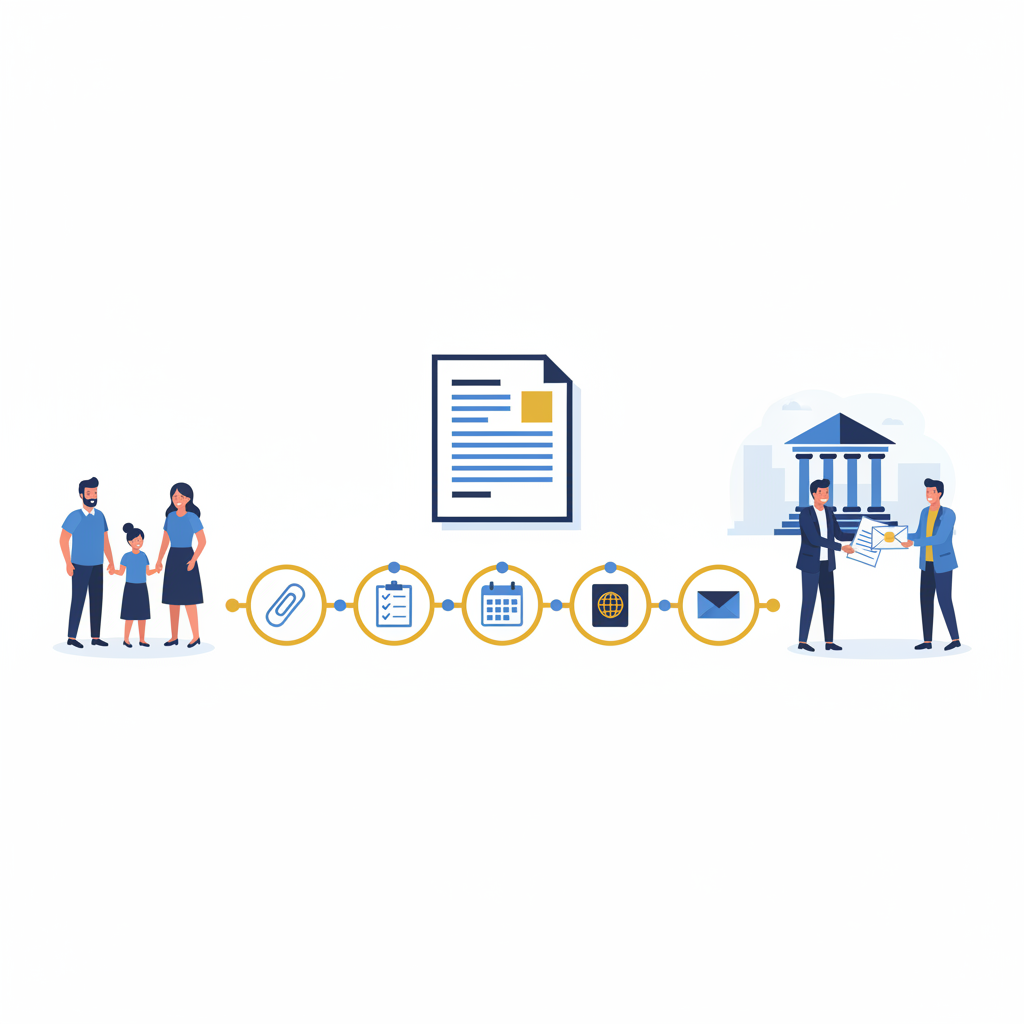
Closing: Start the Process the Right Way—Keep Your Family Together
Family petitions are about more than paperwork—they’re about stability, safety, and keeping loved ones together. Whether you’re preparing Form I-130, planning for Adjustment of Status with Form I-485, or navigating consular processing, the details matter.
If your case is in Orlando or anywhere in Florida—and especially if you have questions about Priority Date timing, travel risks, prior overstays, or interview preparation—Imigrar can help you move forward with clarity.
Need help now? Call Imigrar at +1 786-791-3106 for a free consultation, or message us online. Se Habla Español. Our goal is to Keep Families Together.


