

Navigating the evolving landscape of immigration law can be daunting, especially for those whose futures hang in the balance. For hundreds of thousands of young immigrants across the United States, including countless individuals and families here in Orlando and throughout Florida, the Deferred Action for Childhood Arrivals (DACA) program represents a lifeline.
Today, as of March 9, 2026, the DACA program continues to operate under significant legal scrutiny and uncertainty. While new applications remain on hold, the ability to renew DACA status is crucial for maintaining protection from deportation and work authorization. At Imigrar, we understand the profound importance of these protections and are dedicated to providing clear, accurate, and actionable information to help you secure your future.
Need Help? Our Orlando immigration team is ready to assist. Call +1 786-791-3106 for a free consultation, or message us online. Se Habla Español.
The reporting that sparked this guide
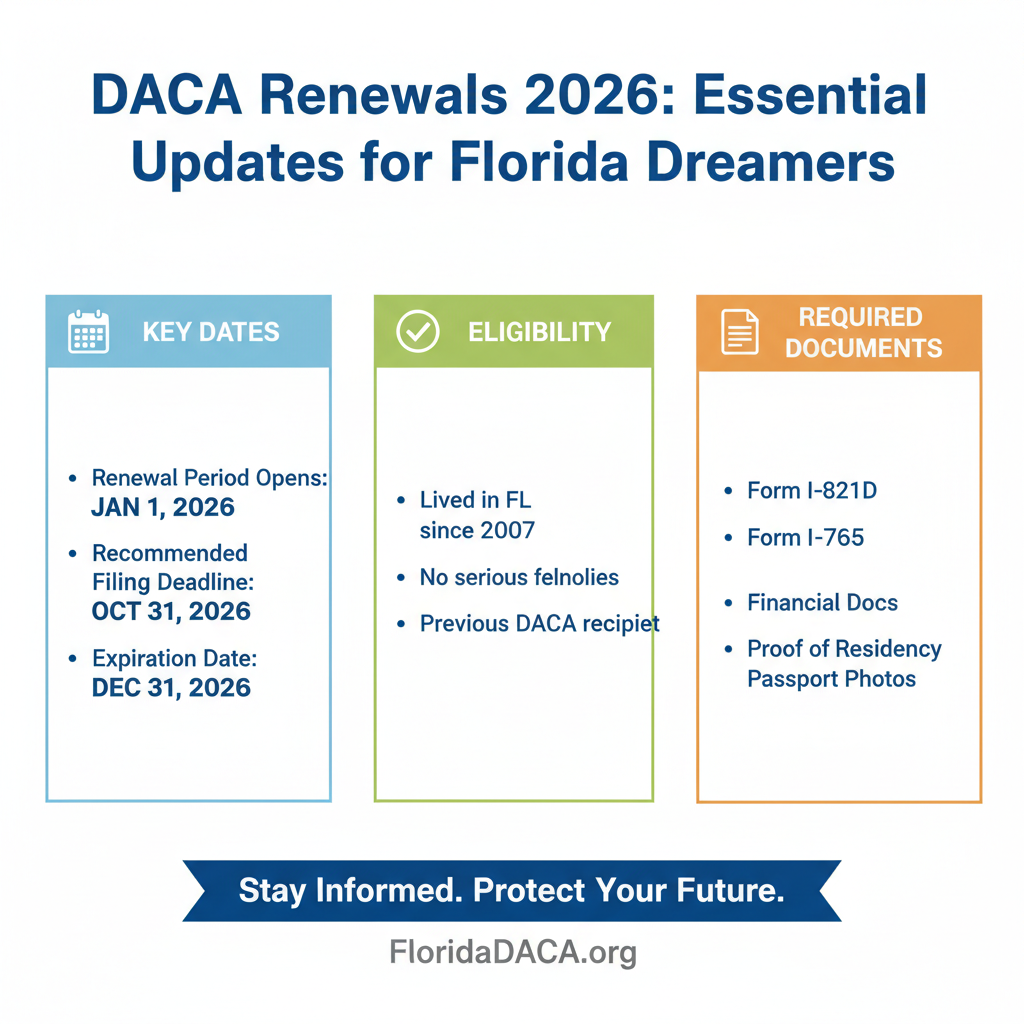
The information and guidance in this article are informed by ongoing developments reported by official government sources, particularly USCIS, and widely covered by reputable news outlets tracking the latest in immigration law. For the most recent official announcements and policy changes, we always recommend consulting the DACA Program Updates and Renewal Information (USCIS) directly.
What This News Means for Immigrants in Orlando and Across Florida
The continuous legal challenges and administrative updates surrounding DACA are a constant source of anxiety and hope for thousands of individuals. For DACA recipients, often referred to as Dreamers, these updates dictate their ability to live, work, and contribute to their communities without the constant fear of deportation. As of early 2026, the core message remains: DACA renewals are still being processed, but new applications are not.
Why this news is showing up now
DACA's existence has been contested in courts since its inception in 2012. The program faces a perpetual state of legal limbo, primarily due to ongoing litigation initiated by the state of Texas and other states. In 2021, a federal judge in the Southern District of Texas declared DACA unlawful, halting new applications. This decision was largely upheld by the Fifth Circuit Court of Appeals in 2022, and the case continues to weave its way through the legal system. Most recently, in late 2024 and early 2025, further court hearings and administrative reviews have kept DACA in the headlines, particularly regarding the legality of the program itself and any potential regulatory updates by the current administration. These judicial actions and administrative responses are what keep DACA updates in the news cycle, as millions await a definitive resolution.
The Department of Homeland Security (DHS) has, however, issued a final rule on DACA, which went into effect in October 2022, largely codifying the program as it existed prior to the Texas court ruling. While this rule aims to fortify DACA against future challenges, the federal courts continue to wield significant power over its implementation. This means that while USCIS continues to accept and process DACA renewal applications, the program remains under an injunction that prohibits the agency from granting initial DACA requests.
How it can affect Florida residents
Florida is home to a significant population of DACA recipients. According to recent estimates, thousands of Dreamers reside in the Sunshine State, contributing to its economy, culture, and social fabric. For these individuals, particularly those in the vibrant communities of Central Florida like Orlando, Kissimmee, and Sanford, the ability to renew DACA is paramount. Without renewal, they risk losing their work authorization, driver's licenses, and protection from deportation, plunging their lives into uncertainty.
Many DACA recipients in Florida are college students striving for higher education, essential workers in various industries, or small business owners contributing to local economies. The stability offered by DACA allows them to pursue these opportunities. Losing DACA status would not only affect them personally but also have ripple effects on their families, employers, and communities across Orange County and the I-4 corridor. Understanding the current renewal process and adhering to strict timelines is critical for every DACA recipient in Florida to maintain their status and continue building their lives here.
What DACA Is (and Why It Matters)
The Deferred Action for Childhood Arrivals (DACA) program, established in 2012, has provided a measure of stability for hundreds of thousands of young people who were brought to the United States as children. It's not a path to citizenship, but it offers crucial temporary protections.
A plain-English definition
Simply put, Deferred Action for Childhood Arrivals (DACA) is an immigration policy that allows certain undocumented immigrants who entered the country as minors to receive a renewable two-year period of deferred action from deportation and eligibility for a work permit. This means that while they are not granted legal status or a path to citizenship, the U.S. government agrees to "defer" or postpone any deportation actions against them. It also grants them the ability to legally work in the U.S., which opens doors to education, employment, and a more stable life.
For those living in Orlando and across Florida, DACA has allowed individuals to attend college, secure better jobs, obtain driver's licenses, and contribute taxes, all while building their lives in the only country many of them have ever known.
Key terms you need to know
- Deferred Action: A discretionary determination by the government to defer removal action against an individual. It does not confer lawful permanent resident status or citizenship.
- Dreamers: A term often used to refer to young undocumented immigrants who were brought to the U.S. as children, many of whom are eligible for or have received DACA.
- Employment Authorization Document (EAD): Also known as a work permit, this card (Form I-766) allows DACA recipients to legally work in the United States.
- USCIS: U.S. Citizenship and Immigration Services, the government agency responsible for administering immigration and naturalization benefits, including DACA.
- Injunction: A judicial order that restrains a person or government agency from beginning or continuing an action. In the context of DACA, an injunction currently prevents USCIS from accepting new DACA applications.
- Continuous Residence: A requirement for DACA eligibility, meaning the applicant must have continuously resided in the U.S. for a specified period (e.g., since June 15, 2007, for initial DACA, and since receiving DACA for renewals).
- Physical Presence: A requirement that the applicant must have been physically present in the U.S. on a specific date (e.g., June 15, 2012, for initial DACA).
Understanding these terms is crucial as you navigate the DACA renewal process and follow any news updates. They form the bedrock of eligibility and the current legal framework.
Need Help? Our Orlando immigration team is ready to assist. Call +1 786-791-3106 for a free consultation, or message us online. Se Habla Español.
Current Immigration Law: The Foundation
DACA itself is not a law passed by Congress, but rather an executive action implemented by the Department of Homeland Security. This distinction is critical, as it means DACA's fate is highly susceptible to administrative changes and judicial rulings, rather than requiring legislative action. As of March 2026, the program is governed by a final rule published by DHS in August 2022, which largely codified the original DACA policy while it remains subject to the existing injunction.
Federal requirements for DACA Renewal
While new DACA applications are not being accepted, individuals who have previously been granted DACA are eligible to apply for renewal. The federal requirements for DACA renewal are stringent and must be met precisely. To be considered for a DACA renewal, you must:
- Have previously been granted DACA.
- Not have departed the United States on or after August 15, 2012, without advance parole.
- Have continuously resided in the United States since you submitted your most recent DACA request that was approved.
- Not have been convicted of a felony, a significant misdemeanor, or three or more other misdemeanors, and not otherwise pose a threat to national security or public safety.
Important: USCIS reviews each renewal application on a case-by-case basis. Even if you meet all general requirements, USCIS retains discretion to deny your request. Any changes in your criminal history or residency since your last approval can affect your eligibility.
For the most accurate and up-to-date information on eligibility, always refer to the USCIS DACA page.
Florida-specific considerations
For DACA recipients in Florida, maintaining your status through renewal is essential for several reasons:
- Driver's Licenses: With a valid EAD and DACA approval, DACA recipients in Florida are generally eligible to obtain a Florida driver's license or state identification card. Loss of DACA status would revoke this privilege.
- In-State Tuition: While not universally guaranteed, some Florida public colleges and universities may offer in-state tuition rates to DACA recipients who meet specific residency requirements. This can significantly reduce the cost of higher education. Losing DACA status could jeopardize these opportunities.
- Employment Opportunities: Florida's diverse economy offers numerous employment opportunities. A valid EAD allows DACA recipients to legally work in these sectors, contributing to local economies and supporting their families.
- Community Integration: Maintaining DACA allows individuals to remain integrated into their communities in Orlando, Tampa, Miami, and beyond, without the fear of immediate deportation.
It's crucial to understand that while DACA offers federal protections and work authorization, state-level benefits can vary. Always check with specific state agencies or educational institutions regarding their policies for DACA recipients. Our firm, Imigrar, is well-versed in both federal immigration law and its interplay with Florida-specific considerations.
USCIS Forms for DACA Renewal
To renew your DACA, you will primarily need to file the following forms with USCIS:
- Form I-821D, Consideration of Deferred Action for Childhood Arrivals
- Form I-765, Application for Employment Authorization
- Form I-765WS, Worksheet (This worksheet helps you demonstrate economic necessity for your employment authorization application).
All forms must be the most current version available on the USCIS Forms page. Always download forms directly from the USCIS website to ensure you are using the correct version.
How to Renew Your DACA: A Complete Step-by-Step Guide
Renewing your DACA status is a critical process that demands precision and timely action. Missing deadlines or submitting an incomplete application can lead to significant delays or even denial. Follow this comprehensive guide to navigate your DACA renewal successfully.
1) Determine Your Eligibility for Renewal
Before you begin, confirm you meet the core renewal criteria:
- You were previously granted DACA.
- You have not left the U.S. without advance parole since August 15, 2012.
- You have continuously resided in the U.S. since your last DACA approval.
- You have not been convicted of a felony, a significant misdemeanor, or three or more other misdemeanors, and do not pose a threat to national security or public safety.
Warning: If you have any arrests or criminal convictions since your last DACA approval, even minor ones, it is imperative to consult with an experienced immigration attorney before filing your renewal. These issues can significantly impact your eligibility.
2) Gather Required Documents
Organize all necessary documents before filling out forms. This step is crucial for a complete and accurate submission.
- Previous DACA Approval Notices: Your most recent Form I-797C, Notice of Action, showing your DACA approval.
- Previous EAD Card: A copy of your current or most recently expired Employment Authorization Document (Form I-766).
- Proof of Continuous Residence: Documents showing you have continuously resided in the U.S. since your last DACA approval. Examples include:
- School records (transcripts, diplomas)
- Employment records (pay stubs, W-2 forms)
- Bank statements
- Medical records
- Utility bills
- Rental agreements
- Tax returns
- Identification Documents: A copy of your passport (if available), birth certificate, or state ID/driver's license.
- Photographs: Two identical passport-style photos taken within 30 days of filing. Write your name and A-number (Alien Registration Number) lightly on the back of each photo.
- Criminal History Records (if applicable): If you have any arrests or convictions, you must provide certified court dispositions and arrest records for all incidents, regardless of how minor they seem.
Tip: Create a checklist and tick off each document as you gather it. Make copies of everything you send to USCIS for your records.
3) Complete Forms I-821D, I-765, and I-765WS
Download the latest versions of these forms from the USCIS website. Fill them out carefully and completely. Use black ink if handwriting, or type your responses. Double-check all dates, names, and addresses for accuracy.
- Form I-821D: This is the primary request for DACA. Pay close attention to Part 2, information about your last DACA approval.
- Form I-765: This is your application for a work permit. For DACA renewals, the eligibility category is usually (c)(33).
- Form I-765WS: This worksheet requires you to demonstrate an economic need for employment authorization. Be honest and thorough in explaining your financial situation.
Reminder: Answer all questions truthfully. Any false statements can lead to denial and potentially severe immigration consequences. If a question does not apply, write "N/A." If the answer is none, write "None."
4) Prepare Your Application Packet
Once all forms are completed and documents gathered, assemble your application packet. While USCIS does not mandate a specific order, a well-organized packet can help ensure everything is reviewed correctly.
A recommended order:
- Cover letter (optional, but recommended, especially if your case has complexities)
- Payment (check, money order, or Form G-1450)
- Form I-821D
- Form I-765
- Form I-765WS
- Supporting documents (copies of previous DACA notices, EAD, proof of continuous residence, photos, criminal records if applicable).
Do not staple your entire packet. Use paper clips or binder clips to keep sections together. Ensure photos are placed in a small plastic bag and stapled to the upper left corner of Form I-765.
5) Pay the Filing Fees
As of March 2026, the DACA renewal filing fee is $495. This includes the Form I-821D fee (currently $0) and the Form I-765 fee of $410, plus the biometrics services fee of $85. Ensure your payment is correct, as incorrect fees are a common reason for application rejection.
You can pay by:
- Check or Money Order: Payable to "U.S. Department of Homeland Security." Write your A-number on the memo line.
- Credit Card: Submit Form G-1450, Authorization for Credit Card Transactions.
Important: Fee waivers for DACA renewals are extremely rare and generally not granted unless you can demonstrate extreme hardship and meet very specific criteria. It's usually best to pay the full fee.
6) Mail Your Application to USCIS
Mail your complete application packet to the correct USCIS Lockbox facility. The address depends on your state of residence. For Florida residents, you will typically mail your application to the USCIS Chicago Lockbox. Always verify the correct mailing address on the USCIS website before mailing.
- Use a reliable mail service that provides tracking, such as USPS Certified Mail with Return Receipt, FedEx, or UPS. This provides proof of mailing and delivery.
- Keep the tracking number for your records.
Reminder: Do not send your application to a USCIS Field Office, such as the Orlando USCIS Field Office. These offices do not process initial filings.
7) Attend Biometrics Appointment (If Required) and Monitor Your Case
After USCIS accepts your application, you will receive a Form I-797C, Notice of Action, confirming receipt. This notice will also contain a receipt number which you can use to track your case status online at USCIS Case Status Online.
You may also receive a separate appointment notice for biometrics (fingerprints, photos, and signature). It is mandatory to attend this appointment. If you miss it, your application may be denied.
- Bring the appointment notice, a valid photo ID, and any other requested documents.
- If you cannot attend, follow the instructions on the notice to reschedule, but do so promptly.
After biometrics, your case will be adjudicated. You will receive a decision notice by mail. If approved, your new EAD card will arrive separately.
Practical Steps You Can Take Today to Protect Your DACA Status
Proactive management of your DACA status is key to avoiding lapses and maintaining your protections. Here are actionable steps you can take starting today:
- Apply Early: Submit your DACA renewal application within the recommended 120- to 150-day window before your current DACA and EAD expire. Applying too late risks a lapse in your work authorization, while applying too early can sometimes result in USCIS holding your application.
- Maintain Continuous Residence: Ensure you do not leave the U.S. without a valid Advance Parole document. Any unauthorized departure can lead to denial of your DACA renewal and potential inadmissibility.
- Keep Impeccable Records: Maintain a well-organized file with copies of all your immigration documents, including previous DACA applications, approval notices, EAD cards, and any correspondence from USCIS. This includes records of continuous residence.
- Avoid Any Criminal Activity: Even minor offenses can have severe consequences for your DACA eligibility. Be mindful of your actions and seek legal counsel immediately if you have any contact with law enforcement.
- Update Your Address with USCIS: If you move, you must notify USCIS of your new address within 10 days of moving by filing Form AR-11, Alien's Change of Address Card, and by updating any pending applications online. Failing to do so can result in missed notices and even denial of your application.
- Consult with an Attorney: If you have any questions, concerns, or complexities in your case (e.g., criminal history, extended travel, previous denials), seek advice from a qualified immigration attorney.
- Save for Renewal Fees: The $495 renewal fee is a significant expense. Start saving well in advance to ensure you have the funds when it's time to renew.
- Educate Yourself: Stay informed about the latest DACA news and policy changes by regularly checking official USCIS announcements and reputable immigration news sources.
Timeline Expectations: The processing times for DACA renewals can vary significantly. You can check current estimates on the USCIS Processing Times page. Generally, it can take anywhere from 3 to 6 months or sometimes longer. Applying early helps mitigate the risk of your EAD expiring before your renewal is processed.
Need Help? Our Orlando immigration team is ready to assist. Call +1 786-791-3106 for a free consultation, or message us online. Se Habla Español.
How Imigrar Helps DACA Recipients in Orlando and Beyond
At Imigrar, we understand the unique challenges and anxieties faced by DACA recipients and their families in Orlando, Central Florida, and across the nation. Our firm is founded on the principle of "Keep Families Together," and we apply this commitment to every case we handle, including DACA renewals.
Our experienced immigration attorneys provide comprehensive legal support designed to make your DACA renewal process as smooth and stress-free as possible. We pride ourselves on our deep understanding of the intricate and ever-changing immigration laws, particularly those impacting DACA.
Our Experience and Expertise:
- Up-to-Date Knowledge: We continuously monitor all DACA-related legal developments, court rulings, and USCIS policy changes to ensure our advice is always current and accurate. This is especially crucial given the program's volatile legal status.
- Personalized Guidance: We provide individualized attention, reviewing your specific circumstances to identify any potential issues and address them proactively. This includes advising on criminal history disclosures, travel impacts, and continuous residence requirements.
- Meticulous Application Preparation: Our team assists with the accurate completion of all required forms (Form I-821D, Form I-765, Form I-765WS) and helps you compile a robust supporting document packet, ensuring nothing is overlooked.
- Error Prevention: We meticulously review your application for completeness and accuracy, minimizing the risk of rejections, requests for evidence (RFEs), or denials due to common mistakes.
- Strategic Advice: If your case presents complexities, such as a prior arrest, an extended trip abroad, or a previous denial, we offer strategic advice to navigate these challenges and present the strongest possible case to USCIS.
- Communication with USCIS: We can help you respond to RFEs, resolve issues, and communicate with USCIS on your behalf, providing peace of mind.
For DACA recipients in the Orlando area, we are conveniently located to serve you. Whether you're near Universal Studios, in Winter Park, or commuting from Kissimmee, our team is accessible and ready to provide the expert legal assistance you need.
We believe that everyone deserves the opportunity to pursue their dreams and live without fear. Let Imigrar be your trusted partner in securing your DACA renewal and protecting your future. We offer a free consultation to discuss your case and outline how we can help. Se Habla Español.

Frequently Asked Questions About DACA Renewals
Q: Who is eligible to renew DACA?
A: To be eligible for DACA renewal, you must have previously been granted DACA. You must also have continuously resided in the U.S. since your last DACA approval, not have departed the U.S. without advance parole on or after August 15, 2012, and not have been convicted of a felony, a significant misdemeanor, or three or more other misdemeanors, and not otherwise pose a threat to national security or public safety. USCIS reviews each case individually.
Q: Can I apply for DACA for the first time?
A: No, as of March 2026, USCIS is not accepting initial DACA applications due to a federal court injunction. Only individuals who have previously been granted DACA are eligible to apply for renewal.
Related Articles
You may also be interested in:
-
Navigating 2026 Naturalization Test Changes: Your Imigrar Guide
Prepare for the upcoming U.S. naturalization test changes in 2026 with Imigrar's expert guidance. Learn what's new, how it affects you in Florida, and...
-
H-1B Visa Lottery Changes for FY2027: What You Need to Know
Navigate the latest H-1B visa lottery changes for FY2027 with Imigrar's expert guide. Understand new rules, deadlines, and how to prepare your applica...
-
H-1B Visa Lottery Changes FY2027: Your Comprehensive Guide
Navigate the H-1B visa lottery changes for FY2027, including the new beneficiary-centric selection process. Imigrar provides expert guidance for immig...
-
USCIS Processing Times & Updates 2026: What Orlando Immigrants
Navigate USCIS processing times in 2026. This comprehensive guide helps Orlando and Florida immigrants understand updates, timelines, and how to prepa...


