


The journey to obtaining an immigration benefit in the United States is often marked by anticipation, hope, and sometimes, considerable waiting periods. For immigrants and their families, understanding the intricacies of U.S. Citizenship and Immigration Services (USCIS) processing times is not just about curiosity—it's about planning lives, making critical decisions, and maintaining peace of mind. As we navigate 2026, the discussion around USCIS processing times continues to be a central topic for anyone with an active immigration application.
At Imigrar, an immigration law firm based in Orlando, Florida, our mission is to "Keep Families Together." We understand the profound impact that processing delays and uncertain timelines can have on individuals and families striving for a better future in the U.S. This comprehensive guide is designed to demystify USCIS processing times, provide the latest insights for 2026, and offer actionable steps to help you navigate your immigration journey with confidence.
Need Help? Our Orlando immigration team is ready to assist. Call +1 786-791-3106 for a free consultation, or message us online. Se Habla Español.
The reporting that sparked this guide
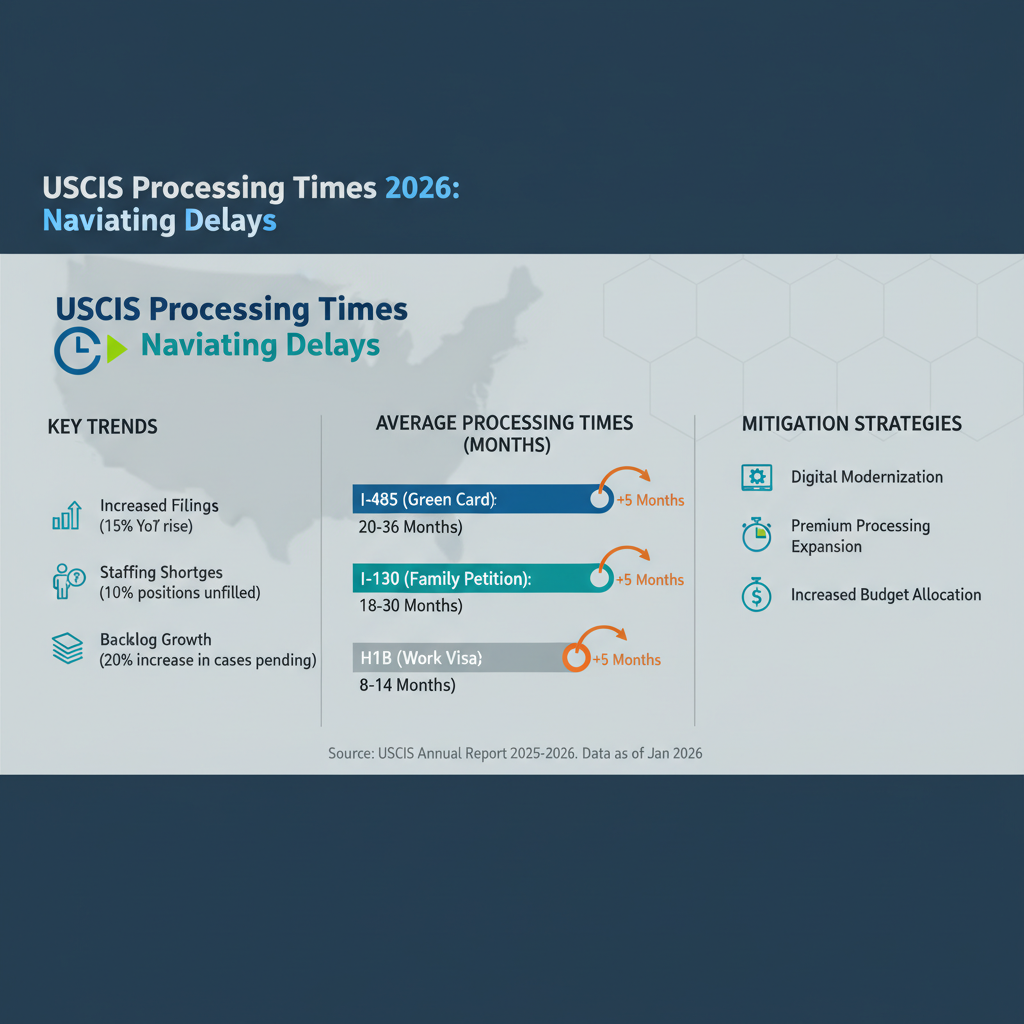
Recent discussions and ongoing reports across various news outlets, including those aggregated by search engines, consistently highlight the critical issue of USCIS processing times. The focus remains on the latest updates and the often-fluctuating timelines for various immigration applications. This constant attention underscores the significant impact these wait times have on individuals and families across the nation. For the most current official information, always refer to the USCIS Processing Times and Updates for 2026 (USCIS) directly.
What This News Means for Immigrants in Orlando and Across Florida
Why this news is showing up now
Reports and discussions about USCIS processing times are not new, but they gain renewed prominence each year, and 2026 is no exception. Several factors contribute to why this topic consistently appears in immigration news cycles:
- Fluctuating Backlogs: USCIS, like any large government agency, grapples with managing an immense volume of applications. Backlogs can grow or shrink based on staffing levels, budget allocations, and the sheer number of petitions filed.
- Policy Changes and Priorities: Each administration may introduce new policies or shift enforcement priorities, which can indirectly affect processing efficiency. For instance, increased vetting for certain categories or changes in how cases are adjudicated can lengthen timelines.
- Technological Upgrades and Challenges: USCIS is continually working to modernize its systems, but these transitions can sometimes introduce temporary delays or require adjustments.
- Increased Application Volume: Economic factors, global events, and legislative changes can all lead to surges in specific types of applications, overwhelming existing resources.
- Public Demand for Transparency: Immigrants and their advocates consistently call for greater transparency and predictability in the processing of applications, leading news outlets to track and report on these metrics.
Essentially, processing times are a dynamic reflection of the operational capacity of USCIS in response to demand and policy, making them a perpetual point of interest and concern.
How it can affect Florida residents
Florida, particularly Central Florida and the Orlando metropolitan area, is home to a vibrant and diverse immigrant community. The impact of USCIS processing times resonates deeply here:
- Family Separation: Delays in applications like Form I-130 (Petition for Alien Relative) can mean prolonged separation for families, directly challenging Imigrar's core mission to "Keep Families Together." Children may grow up without a parent, spouses may live apart for years, and elderly parents may not receive timely care.
- Economic Uncertainty: Delays in work authorization (Form I-765) or green card applications (Form I-485, Adjustment of Status) can prevent individuals from securing stable employment, starting businesses, or contributing fully to Florida's economy. This impacts not only the immigrant but also local businesses in Orlando and across the I-4 corridor that rely on a diverse workforce.
- Educational and Career Stagnation: Young adults waiting for immigration benefits may face hurdles in pursuing higher education or advancing their careers if their status is uncertain or work authorization is delayed.
- Healthcare Access: Without proper documentation, access to healthcare and other essential services can be limited, affecting the well-being of families in Orange County and beyond.
- Stress and Anxiety: The emotional toll of waiting, often for years, can be immense. The uncertainty can lead to significant stress and anxiety for individuals and their families, impacting their mental and physical health.
- Local USCIS Field Office Impact: The Orlando USCIS Field Office processes many local applications, particularly for interviews and naturalization. Delays at this office or national service centers directly affect Central Florida residents. If your case is in Orlando, understanding national trends and local office performance is key.
For Florida residents, these processing times are not abstract numbers; they represent real-life consequences that shape futures and challenge the stability of countless families.
Navigating complex USCIS timelines requires expert guidance. Don't face the waiting game alone. Contact Imigrar in Orlando for personalized legal support. Call +1 786-791-3106 today for a free consultation. Se Habla Español.
What USCIS Processing Times Are (and Why They Matter)
A plain-English definition
In simple terms, USCIS processing times refer to the estimated duration it takes for the U.S. Citizenship and Immigration Services to review and make a decision on an immigration application or petition, from the date they receive it. When you submit a form to USCIS, it enters a queue. The "processing time" is the length of that queue, plus the time it takes for an officer to actually review and adjudicate your specific case.
These times are not fixed guarantees but rather estimates based on historical data and the current workload of USCIS service centers and field offices. They can vary significantly depending on the type of application, the specific service center or field office handling the case, and even external factors like policy changes or budget constraints. For families in Orlando, understanding these times is crucial for setting realistic expectations and planning their future.
Key terms you need to know
To effectively understand and track your immigration application, it's essential to be familiar with certain key terms:
- Receipt Date: This is the date USCIS officially received your application or petition. It's typically indicated on your Form I-797C, Notice of Action (Receipt Notice). This date is critical for tracking your case.
- Notice Date: This is the date USCIS issued a notice related to your case, such as a receipt notice, approval notice, or a Request for Evidence (RFE).
- Priority Date: This applies primarily to family-sponsored and employment-based green card categories that are subject to annual visa limits. It's the date your petition (e.g., Form I-130 or Form I-140) was properly filed with USCIS or, for employment-based cases requiring a labor certification, the date the Department of Labor received your labor certification application. Your green card application (Form I-485) cannot be approved until your priority date is "current" according to the Visa Bulletin.
- Visa Bulletin: Published monthly by the U.S. Department of State, the Visa Bulletin provides the "cut-off dates" that determine when immigrant visas are available for specific preference categories and countries of chargeability. Your priority date must be earlier than the cut-off date for your category to be considered "current."
- Current for Filing: The Visa Bulletin has two charts for family-sponsored and employment-based preference categories: "Dates for Filing Applications" and "Final Action Dates." If your priority date is earlier than the "Dates for Filing Applications" cut-off, you may be able to file your Adjustment of Status application (Form I-485) even if a final visa is not yet available.
- Adjustment of Status (AOS): This is the process of applying for a green card while physically present in the United States. It involves filing Form I-485.
- Consular Processing: This is the process of applying for an immigrant visa through a U.S. embassy or consulate abroad. Once approved, the applicant enters the U.S. as a lawful permanent resident.
- Biometrics Appointment: After filing certain applications, USCIS will schedule an appointment at an Application Support Center (ASC) to collect fingerprints, photos, and a signature. These are used for background checks.
- Request for Evidence (RFE): If USCIS determines that your application is missing required documentation or needs more information to make a decision, they will send an RFE. Responding promptly and thoroughly is crucial to avoid delays or denials.
- Notice of Intent to Deny (NOID): A NOID is issued when USCIS intends to deny your application and provides you with an opportunity to submit additional evidence or argument before a final decision is made. This is a serious notice requiring immediate attention.
- Case Status Online: This is an online tool provided by USCIS where you can enter your 13-character receipt number to check the latest updates on your application. You can access it via the USCIS official website.
Understanding these terms empowers you to track your own application more effectively and comprehend the communications you receive from USCIS.
Current Immigration Law: The Foundation
The framework for all immigration processing, including the determination of processing times, is rooted in U.S. immigration law, primarily the Immigration and Nationality Act (INA). The INA, codified in Title 8 of the U.S. Code, establishes the rules for who can enter the U.S., how they can obtain status, and the procedures for doing so. While processing times are operational metrics, they are directly influenced by the legal categories and requirements set forth in the INA.
For example, the INA sets annual limits on the number of immigrant visas available for certain family-sponsored and employment-based categories, leading to the concept of priority dates and the Visa Bulletin. It also defines the eligibility criteria for various benefits, from naturalization to asylum, which in turn dictates the complexity and review time for each application.
Federal requirements
Every immigration application, regardless of its type, must meet specific federal requirements. These often include:
- Eligibility Criteria: Each visa category (e.g., family-based, employment-based, humanitarian) has specific requirements that applicants must meet. For instance, a U.S. citizen sponsoring a spouse must demonstrate a bona fide marriage and the financial ability to support them.
- Form Submission: Applicants must use the correct USCIS forms for their specific benefit. Common forms include:
- Form I-130, Petition for Alien Relative (for family-based immigration)
- Form I-485, Application to Register Permanent Residence or Adjust Status (for green card within the U.S.)
- Form I-765, Application for Employment Authorization (for work permits)
- Form I-131, Application for Travel Document (for Advance Parole or Reentry Permit)
- Form N-400, Application for Naturalization (for U.S. citizenship)
- Form I-129F, Petition for Alien Fiancé(e)
- Form I-90, Application to Replace Permanent Resident Card
- Supporting Documentation: Comprehensive evidence is required to prove eligibility. This can include birth certificates, marriage certificates, passports, financial records (e.g., tax returns, employment letters), medical examination results (Form I-693), and police clearance certificates.
- Filing Fees: Almost all applications require a filing fee, which must be submitted correctly. Fee waivers may be available for certain low-income applicants.
- Biometrics: Most applicants are required to attend a biometrics appointment for fingerprinting and photographs, used for background and security checks.
- Interviews: Many applications, especially for green cards and naturalization, require an interview with a USCIS officer.
- Admissibility: Applicants must generally be admissible to the U.S., meaning they must not have certain criminal records, immigration violations, or health issues that would make them ineligible. Waivers may be available for some grounds of inadmissibility.
Adhering to these federal requirements is paramount. Any oversight can lead to an RFE, NOID, or even denial, significantly impacting processing times and the ultimate outcome of the case.
Florida-specific considerations
While U.S. immigration law is federal, certain aspects touch upon Florida-specific considerations:
- USCIS Field Offices: Florida has several USCIS Field Offices, including one in Orlando, Miami, and Tampa. The processing of specific applications (like Adjustment of Status interviews or naturalization interviews) and the local backlog can vary by office. For Central Florida residents, the Orlando USCIS Field Office is the primary point of contact for interviews and local services.
- Local Resources: Florida provides various resources that immigrants might need, such as state-issued IDs and driver's licenses, which often require proof of valid immigration status. Understanding how to obtain these documents while your application is pending is crucial.
- Community Support: Florida has robust immigrant communities and non-profit organizations that offer support, language services, and assistance, though they cannot provide legal advice.
- Economic Landscape: Florida's diverse economy, from tourism in Orlando to agriculture in other regions, means various employment-based immigration needs and opportunities. Processing times for related work visas or green cards directly impact these sectors.
It's important to remember that Florida does not have its own immigration laws separate from federal law. However, the local operational realities and resources available can influence an immigrant's experience during the processing period.
How to Navigate USCIS Processing Times: A Complete Step-by-Step Guide
Understanding processing times is one thing; actively managing your case through the USCIS system is another. Here’s a comprehensive guide to help you navigate your immigration journey effectively in 2026.
1) Understand Your Application Type and Current Processing Times
Before anything else, you must know what specific application you have filed or intend to file. Each form has its own processing stream. USCIS provides an online tool to check processing times, which is updated regularly. This tool allows you to select your form type, the specific service center or field office handling your case, and view an estimated processing range.
- Action: Visit the USCIS Processing Times page.
- Action: Select your form number (e.g., Form I-485), and then choose the service center or field office that has jurisdiction over your case. Your receipt notice (Form I-797C) will indicate which service center is handling your application. For interviews, it will usually be your local field office, such as the Orlando USCIS Field Office.
- Warning: These times are estimates. Your case may take more or less time.
Required Documents (for checking):
- Your Form I-797C (Receipt Notice) with your 13-character receipt number.
2) Gather and Organize All Required Documentation Meticulously
A complete and well-organized application package is your best defense against delays. RFEs are a primary cause of extended processing times. Ensure every document is included, accurate, and properly formatted.
- Action: Review the official USCIS instructions for your specific form thoroughly. Do not rely solely on third-party checklists.
- Action: Collect all primary evidence first (birth certificates, marriage certificates, passports, etc.).
- Action: Obtain certified translations for any documents not in English. The translator must provide a certification that they are competent to translate and that the translation is accurate.
- Action: Make copies of everything you send to USCIS. Keep the originals safely.
- Reminder: For certain applications like Adjustment of Status (Form I-485), a medical examination (Form I-693) conducted by a USCIS-approved civil surgeon is often required. Ensure it is completed and sealed properly.
Required Documents (examples):
- Birth Certificates (applicant and petitioner/beneficiary)
- Marriage Certificates (if applicable)
- Passports and all previous visas
- Financial documents (e.g., Form I-864 Affidavit of Support, tax returns, employment letters)
- Medical Examination Report (Form I-693, sealed envelope)
- Police clearance certificates (if required by country of origin or U.S. residence)
- Photographs meeting USCIS specifications
3) File Your Application Accurately and Completely
This step is critical. Errors here can lead to rejections, RFEs, or outright denials.
- Action: Fill out all forms completely and accurately. Use black ink if filling by hand, or type the information.
- Action: Sign all forms where required. An unsigned form will be rejected.
- Action: Pay the correct filing fee. You can pay by check, money order, or credit card using Form G-1450. Check the USCIS Fee Schedule as fees can change.
- Action: Assemble your application package in the order specified by USCIS, if any, or logically (e.g., cover letter, forms, supporting documents).
- Action: Mail your application to the correct USCIS lockbox facility or service center. The mailing address varies by form and your place of residence. Always use a trackable mailing service (e.g., USPS Certified Mail, FedEx, UPS).
Required Documents (examples):
- Completed and signed application forms (e.g., Form I-130, Form I-485, Form I-765, Form I-131)
- All supporting documentation from Step 2
- Fee payment (check, money order, or Form G-1450)
- Cover letter (optional, but recommended for complex cases)
4) Attend Biometrics and Interviews (If Required)
If your application requires biometrics or an interview, you will receive an appointment notice. These are mandatory steps.
- Action: Attend your biometrics appointment at the scheduled time and location (e.g., an Application Support Center in Orlando). Bring your appointment notice (Form I-797C) and a valid photo ID.
- Action: Prepare thoroughly for any interviews. If you are applying for Adjustment of Status or Naturalization, you will likely be interviewed at your local USCIS Field Office. For Central Florida residents, this is usually the Orlando USCIS Field Office.
- Action: Bring all original documents you submitted with your application, plus any additional documents requested in your interview notice. An attorney from Imigrar can accompany you to your interview to provide legal support and ensure a smooth process.
Required Documents (for appointments):
- Appointment notice (Form I-797C)
- Valid government-issued photo identification (passport, driver's license, etc.)
- (For interviews) All original supporting documents you submitted, and any new documents requested.
5) Monitor Your Case Status and Respond to RFEs/NOIDs Promptly
Staying informed about your case progress is crucial. USCIS will communicate with you primarily through mail, but the online case status tool provides real-time updates.
- Action: Regularly check your case status online using your 13-character receipt number on the USCIS Case Status Online tool.
- Action: If you receive a Request for Evidence (RFE) or a Notice of Intent to Deny (NOID), read it carefully and understand exactly what is being asked.
- Action: Gather the requested evidence as quickly as possible. These notices come with strict deadlines (e.g., 87 days or 33 days). Missing a deadline can lead to denial.
- Action: Submit your response to the RFE/NOID with a copy of the notice to the specified address. Use a trackable mailing service.
- Important: If you receive an RFE or NOID, we highly recommend consulting with an experienced immigration attorney at Imigrar immediately. These notices often require a nuanced legal response.
Required Documents:
- RFE/NOID notice
- Requested evidence
- Copy of your original application and all previously submitted documents
6) Understand What to Do If Your Case Is Outside Normal Processing Times
If your case has been pending longer than the estimated range shown on the USCIS processing times page, you may be able to take action.
- Action: First, ensure your case is indeed outside the normal processing time by carefully checking the USCIS Processing Times page for your specific form and office.
- Action: If it is, you can submit an "e-Request" online through the USCIS website for cases outside of normal processing times.
- Action: If the e-Request does not yield a satisfactory response within 30 days, or for more complex situations, consider contacting your Congressional representative or Senator. Their constituent services staff can often make inquiries on your behalf.
- Action: For significant delays, especially those causing extreme hardship, an attorney can help you explore options such as an expedite request (though these are rarely granted) or even a Mandamus lawsuit against USCIS in federal court.
Required Documents:
- Case receipt number (Form I-797C)
- Dates of previous inquiries (if any)
- Proof of hardship (for expedite requests)
7) Seek Professional Legal Guidance
Navigating the complex and ever-changing landscape of immigration law and USCIS processing can be overwhelming. An experienced immigration attorney is an invaluable asset.
- Action: Consult with an immigration lawyer early in the process, especially if your case is complex, you have a criminal history, or you've previously been denied.
- Action: An attorney can help you prepare a robust application, respond to RFEs/NOIDs effectively, represent you at interviews, and advocate for you


