

The journey to a new life in the United States is often marked by hope, determination, and, frequently, a significant wait. For immigrants in Orlando, across Florida, and nationwide, understanding and managing expectations around U.S. Citizenship and Immigration Services (USCIS) processing times is paramount. As we move further into 2026, USCIS continues to adapt to evolving caseloads, policy adjustments, and technological changes, all of which directly impact how long it takes for applications to be processed.
At Imigrar, an immigration law firm based in Orlando, Florida, we understand the anxiety and uncertainty that come with waiting. Our mission is to "Keep Families Together," and a crucial part of that is providing clear, accurate, and actionable information about the immigration process. This comprehensive guide will break down the latest USCIS processing time updates for 2026, offering practical advice, step-by-step instructions, and expert insights to help you navigate your immigration journey.
Feeling overwhelmed by USCIS processing times? Don't wait in uncertainty. Our experienced Orlando immigration team can help you understand your case and its timeline. Call +1 786-791-3106 for a free consultation today, or message us online. Se Habla Español.
NEWS SOURCE REFERENCE SECTION
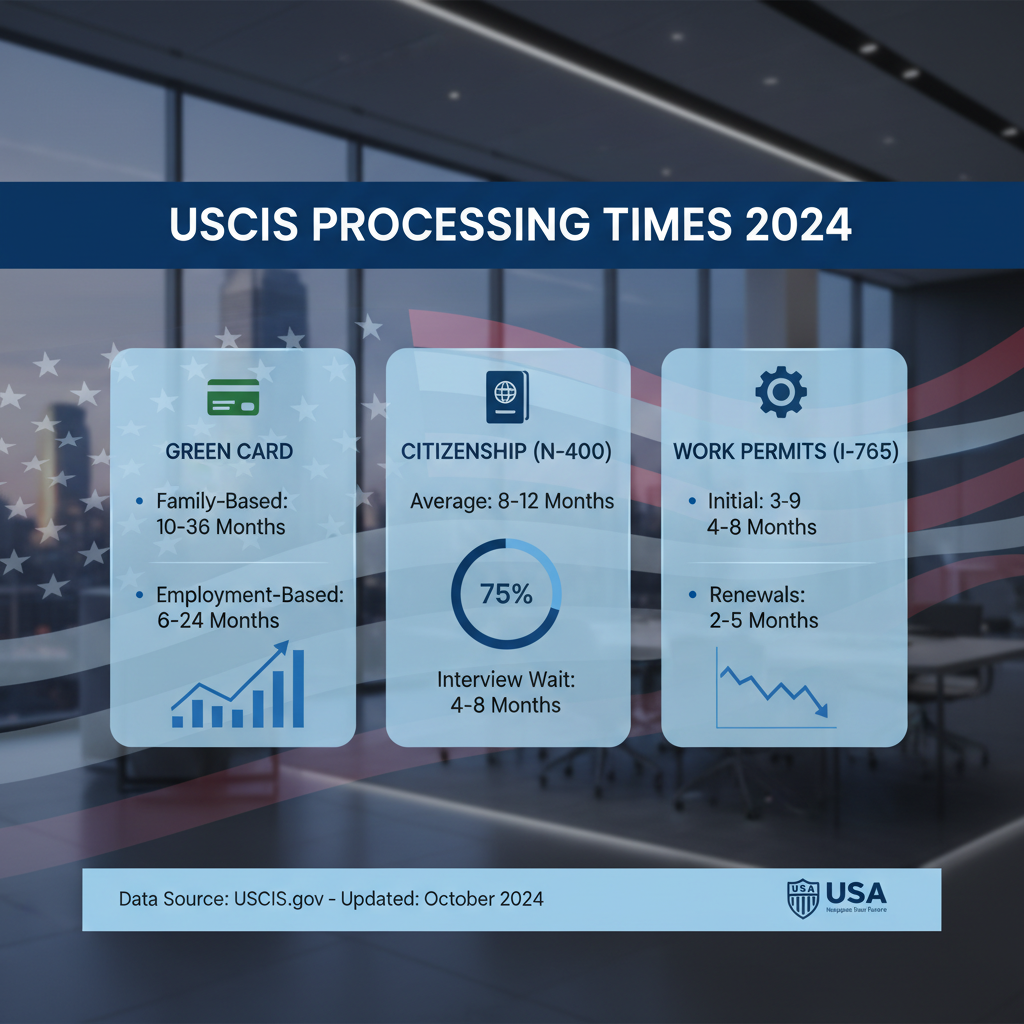
The reporting that sparked this guide: USCIS Processing Times and Updates for 2026 (USCIS)
What This News Means for Immigrants in Orlando and Across Florida
The latest updates from USCIS regarding processing times are more than just numbers on a website; they are critical indicators that directly affect the lives, plans, and futures of countless individuals and families. For anyone with an active or prospective immigration application, these updates determine everything from when they can start a new job to when they can reunite with loved ones. Understanding these shifts is not just about patience; it's about strategic planning and informed decision-making.
Why this news is showing up now
USCIS processing times are not static; they are dynamic estimates that fluctuate based on a multitude of factors. These updates are a regular occurrence, often reflecting the agency's operational efficiency, changes in policy, budget allocations, staffing levels, and the sheer volume of applications received. As we progress through 2026, USCIS, like any large government agency, faces ongoing challenges and implements new strategies to manage its extensive caseload. The agency is constantly analyzing historical data, current backlogs, and projected application volumes to provide updated processing time estimates. These updates are crucial for maintaining transparency and helping applicants understand the potential wait involved. They are a snapshot of the agency's current capacity and workload, offering a benchmark against which applicants can measure their own case's progress. Furthermore, annual cycles often bring adjustments to the Visa Bulletin and other quotas, which indirectly influence processing speeds for certain categories.
How it can affect Florida residents
Florida, particularly Central Florida and the Orlando metropolitan area, is home to a vibrant and diverse immigrant community. This means that USCIS processing times have a profound and direct impact on a significant portion of the state's population. Here’s how these updates can specifically affect Florida residents:
- Family Reunification: Many Floridians are sponsoring family members for visas or green cards. Delays in processing can mean longer separations, impacting everything from children growing up without a parent to spouses living apart for extended periods. For families along the I-4 corridor in cities like Orlando, Kissimmee, and Tampa, these waits can be agonizing.
- Employment Opportunities: For those awaiting employment-based visas or Adjustment of Status, processing delays can postpone the ability to start new jobs, switch employers, or advance careers. This affects individuals and businesses in Florida's growing economy, from tourism and hospitality to tech and healthcare.
- Travel Plans: Applicants waiting for travel documents, such as Advance Parole (Form I-131), may find their ability to visit family abroad or attend important life events severely restricted by prolonged processing times.
- Uncertainty and Stress: The emotional toll of prolonged waits is immense. Immigrants often put their lives on hold, facing uncertainty about their future, housing, and financial stability. This is particularly true for those in Orange County and surrounding areas navigating complex immigration pathways.
- Local USCIS Field Office Impact: The Orlando USCIS Field Office handles interviews and certain local adjustments. While national service centers process most initial applications, local office backlogs can impact the final stages of many cases. Longer national processing times often create a ripple effect, increasing the workload and wait times at local field offices for interviews and other local services.
- Community Planning: For Florida's diverse communities, immigration processing times influence population growth, school enrollment, and demand for social services.
Important: Understanding these impacts is the first step toward proactive planning. Imigrar is here to help you navigate these challenges and advocate for your case.
What USCIS Processing Times Are (and Why It Matters)
Understanding USCIS processing times is crucial for anyone involved in the U.S. immigration system. These aren't fixed deadlines but rather estimates that provide a general idea of how long it might take for a particular application or petition to be processed by USCIS.
A plain-English definition
Simply put, USCIS Processing Times refer to the period, usually expressed as a range (e.g., "6 to 12 months"), that USCIS estimates it will take to review and make a decision on a specific type of immigration application or petition. These times are calculated based on historical data – specifically, how long it took to process similar cases in the recent past. For example, if you file a Form I-130, Petition for Alien Relative, USCIS will tell you that petitions of that type, filed at your specific service center, are currently taking a certain number of months to process.
It's vital to understand that these are estimates. Your individual case might be processed faster or slower than the posted times due to various factors, including the completeness of your application, the complexity of your case, the need for additional evidence (Request for Evidence - RFE), or unforeseen administrative delays.
Key terms you need to know
Navigating USCIS processing times requires familiarity with several key terms:
- Receipt Date: This is the date USCIS officially receives your application or petition. It's usually found on your Form I-797C, Notice of Action. This date is critical because processing times are often measured from your Receipt Date.
- Priority Date: Primarily relevant for family-sponsored and employment-based green card categories subject to annual quotas. The Priority Date is the date your petition (usually Form I-130 or Form I-140) was properly filed with USCIS. You can only proceed with your green card application (Adjustment of Status - Form I-485 or Consular Processing) if your Priority Date is "current" according to the Visa Bulletin, published monthly by the U.S. Department of State.
- Processing Time Range: The estimated minimum and maximum time USCIS expects to process a particular form at a specific service center or field office. For example, a range of "6 to 12 months" means most cases are decided within that period.
- Case Inquiry Date: This is the date, displayed on the USCIS processing times page, after which you can submit an inquiry about your case if it has exceeded the normal processing time range. If your Receipt Date is *before* the Case Inquiry Date, you are generally eligible to submit an inquiry.
- Service Center: One of several USCIS offices (e.g., California, Nebraska, Texas, Vermont, Potomac) that process mail-in applications and petitions. The specific service center handling your case is usually indicated by the first three letters of your receipt number (e.g., WAC for California, LIN for Nebraska, SRC for Texas, EAC for Vermont, NSC for Nebraska, IOE for online filings often processed by NBC).
- Field Office: Local USCIS offices (like the Orlando USCIS Field Office) that primarily handle interviews for Adjustment of Status (Form I-485) applications, naturalization applications (Form N-400), and other local services.
- Adjustment of Status (AOS): The process of applying for a green card while physically present in the United States using Form I-485.
- Consular Processing: The process of applying for an immigrant visa (green card) through a U.S. embassy or consulate abroad. This involves the U.S. Department of State and the National Visa Center (NVC).
- Request for Evidence (RFE): A letter from USCIS requesting additional documents or information to support your application. Responding to an RFE promptly and completely is crucial to avoid further delays or denial.
- Notice of Intent to Deny (NOID): A letter from USCIS indicating that they intend to deny your application unless you provide specific information or explanation within a given timeframe. This is a serious notice requiring immediate attention.
Why it matters: Understanding these processing times and terms is crucial for several reasons:
- Planning Your Life: Knowing the estimated wait allows you to plan your employment, housing, travel, and family arrangements more effectively.
- Managing Expectations: It helps manage the emotional toll by providing a realistic outlook on how long you might wait.
- Identifying Delays: It enables you to identify when your case falls outside normal processing times, prompting you to take action, such as submitting an inquiry or consulting an attorney.
- Preventing Status Lapses: For those whose current non-immigrant status might expire, understanding processing times is vital for planning extensions or other solutions to maintain legal presence.
Ignoring or misunderstanding these processing times can lead to significant stress, missed opportunities, or even legal complications. That's why Imigrar emphasizes constant vigilance and expert guidance.
Current Immigration Law: The Foundation
While USCIS processing times are an administrative function, they are deeply rooted in and influenced by the complex framework of U.S. immigration law. The Immigration and Nationality Act (INA) is the primary body of law governing immigration, establishing the categories of visas, eligibility requirements, and the fundamental processes that USCIS must follow. Every application, from a simple work permit to a green card, is adjudicated under specific sections of the INA and its corresponding regulations.
For example, the INA sets annual limits on the number of immigrant visas available for certain categories, leading to the creation of the Priority Date system and the Visa Bulletin. When demand exceeds supply, backlogs form, and processing times for those categories naturally extend. Similarly, statutory requirements for background checks, interviews, and specific forms (like Form I-130 for family petitions or Form I-485 for adjustment of status) all contribute to the necessary steps and thus the overall timeline.
Federal requirements
At the federal level, USCIS operates under the authority of the Department of Homeland Security (DHS). The INA dictates fundamental aspects like:
- Eligibility Criteria: Each visa or benefit category has specific legal requirements that applicants must meet. USCIS adjudicators must ensure compliance with these laws.
- Application Procedures: The INA and its regulations define the forms to be used, the supporting documentation required, and the sequence of steps for various applications. For example, a U.S. citizen sponsoring a spouse must file Form I-130, Petition for Alien Relative. If the spouse is in the U.S. and eligible, they might file Form I-485, Application to Register Permanent Residence or Adjust Status, concurrently or later.
- Admissibility and Grounds of Inadmissibility: The law specifies reasons why an individual might be deemed inadmissible to the U.S. (e.g., certain criminal convictions, health issues). USCIS must conduct thorough checks to ensure applicants are admissible.
- Security Checks: All applicants undergo rigorous background and security checks mandated by federal law, which can significantly impact processing times.
- Quota Systems: Many visa categories are subject to numerical limitations set by Congress, which creates the backlogs reflected in the Visa Bulletin and directly affects the wait for a green card.
Common USCIS forms relevant to processing times include:
- Form I-130, Petition for Alien Relative: The initial step for family-sponsored immigration.
- Form I-485, Application to Register Permanent Residence or Adjust Status: Filed by individuals already in the U.S. seeking a green card.
- Form I-765, Application for Employment Authorization: Often filed concurrently with Form I-485 to obtain a work permit while the green card application is pending.
- Form I-131, Application for Travel Document: Filed to obtain Advance Parole (to travel abroad while an I-485 is pending) or a Reentry Permit.
- Form N-400, Application for Naturalization: For eligible permanent residents seeking U.S. citizenship.
For detailed information on these forms and the laws governing them, always refer to the USCIS official website and the USCIS Forms page.
Florida-specific considerations
While U.S. immigration law is federal and applies uniformly across all states, there are practical considerations specific to Florida that can influence how federal processing times are experienced by residents:
- High Volume of Cases: Florida has one of the largest immigrant populations in the U.S. This means the Orlando USCIS Field Office, along with others in the state (e.g., Miami, Tampa), often handles a high volume of interviews and local adjudications. While initial processing by service centers is national, final interviews and local adjustments can face local backlogs.
- Diverse Case Types: Due to its diverse population, Florida sees a wide range of immigration cases, including family-based petitions, asylum claims, temporary protected status (TPS), and various employment-based visas. The processing times for these different categories can vary significantly.
- Local Field Office Operations: The efficiency and staffing levels of the Orlando USCIS Field Office directly impact the wait times for interviews for Adjustment of Status applicants and naturalization applicants in Central Florida. While service centers process the paperwork, the local office conducts the critical in-person interactions.
- Accessibility: For many Central Florida residents in Orange County and surrounding areas, the Orlando field office is the primary point of contact for in-person appointments (if available) and interviews. Delays at this office can cause particular frustration.
Reminder: No state-specific immigration laws exist; federal law governs. However, the operational realities of local USCIS offices and the demographic makeup of Florida's immigrant communities mean that federal processing times translate into very real, localized impacts.
Confused about which forms apply to your case or worried about processing delays? Imigrar provides clarity and expert representation. Schedule a free consultation with our Orlando immigration attorneys by calling +1 786-791-3106. Se Habla Español.
How to Track Your USCIS Case: A Complete Step-by-Step Guide
Waiting for USCIS to process your application can be one of the most stressful parts of the immigration journey. Fortunately, USCIS provides several online tools to help you track your case progress. Knowing how to use these tools effectively can alleviate some anxiety and help you determine when it's appropriate to take further action.
1) Understand Your Receipt Notice (Form I-797C)
What it is: After USCIS accepts your application or petition, they will mail you a Form I-797C, Notice of Action. This document is extremely important. Key information:
- Receipt Number: This is a unique 13-character code (e.g., WAC-XX-XXX-XXXXX or IOE-XXX-XXX-XXXXX) that identifies your specific case. The first three characters indicate the service center (e.g., WAC for California, LIN for Nebraska, SRC for Texas, EAC for Vermont, IOE for online filings often processed by the National Benefits Center - NBC).
- Receipt Date: The date USCIS officially received your application. This is the date from which processing times are calculated.
- Notice Date: The date the notice was generated.
- Form Type: Identifies the specific application or petition you filed (e.g., I-130, I-485, I-765).
2) Check the USCIS Online Tools
USCIS offers two primary online tools for tracking:
a) Case Status Online
Purpose: To check the most recent status update for your specific application. How to use:
- Go to the USCIS Case Status Online page.
- Enter your 13-character Receipt Number (without hyphens) in the designated box.
- Click "Check Status."
b) Check Processing Times
Purpose: To see the estimated processing time range for your specific form type at your assigned service center or field office. How to use:
- Go to the USCIS Check Processing Times page.
- Select your "Form" from the dropdown menu (e.g., I-130, I-485, I-765).
- Select the "Form Category" (e.g., Family-based petition, Employment-based, etc., if applicable).
- Select the "Field Office or Service Center" that is processing your application. This is indicated by the first three letters of your Receipt Number or, for interviews, your local field office (e.g., Orlando USCIS Field Office).
- Click "Get processing time."
3) Navigate the Processing Times Page
When viewing the processing times, pay close attention to the specific details:
- Date Range: The displayed range reflects how long it took USCIS to process 80% of completed cases over the past six months. Your case might fall outside this.
- Case Inquiry Date: This is a crucial date. If your Receipt Date is *before* the posted Case Inquiry Date, it generally means your case is outside normal processing times, and you may be eligible to submit an inquiry.
Warning: Do not submit an inquiry before your case is outside the posted processing times, as this can delay the processing of other cases and potentially yours.
Required documents/information: Your Receipt Date (from your Form I-797C).
4) Identify Your Case Inquiry Date
As mentioned, the Case Inquiry Date is your trigger for action. Carefully compare your application's Receipt Date with the Case Inquiry Date listed for your specific form and service center/field office. If your Receipt Date is earlier than the Case Inquiry Date, you have a legitimate reason to inquire about your case.
Example: If the processing time for Form I-485 at the Orlando Field Office is 10-18 months, and the Case Inquiry Date is January 1, 2025. If your I-485 was filed on December 15, 2024, you would be eligible to inquire. If it was filed on February 15, 2025, you would not yet be eligible.
Required documents/information: Your Receipt Date and the current Case Inquiry Date from the USCIS website.
5) Submit an e-Request (If Eligible)
If your case is outside normal processing times (i.e., your Receipt Date is before the Case Inquiry Date), you can submit an online inquiry. How to use:
- Go to the USCIS e-Request page.
- Select "Case Outside Normal Processing Times" as your inquiry type.
- Fill out the required information, including your Receipt Number, form type, and personal details.
6) Contact USCIS Directly (If Necessary)
If you don't receive a satisfactory response to your e-Request, or if your situation is urgent and requires direct communication, you can contact USCIS by phone. How to use:
- Call the USCIS Contact Center at 1-800-375-5283.
- Be prepared to provide your Receipt Number, personal information, and details of your inquiry.
- Important: Be patient, as wait times can be long. Have all your documentation ready.
7) Seek Legal Counsel for Complexities
If your case is significantly delayed, you receive an RFE or NOID, or you simply feel overwhelmed, it is highly advisable to consult with an experienced immigration attorney. How Imigrar can help:
- Analyze Your Case: We can review your entire application, identify potential issues, and determine the best course of action.
- Submit Inquiries and Follow-Ups: We can submit inquiries on your behalf and escalate issues through appropriate channels.
- Respond to RFEs/NOIDs: We ensure thorough and timely responses to any requests for evidence or notices of intent to deny, which are critical for preventing denials.
- Ombudsman Assistance: In extreme cases of delay or error, we can help you seek assistance from the DHS Office of the Citizenship and Immigration Services Ombudsman.
- Mandamus Lawsuit: In very rare and prolonged delays where USCIS has failed to act on a case, an attorney may consider filing a Writ of Mandamus in federal court to compel USCIS to make a decision.
For Central Florida residents navigating these complex waters, Imigrar provides expert legal guidance to protect your interests. Our Orlando immigration lawyers are well-versed in USCIS procedures and can advocate effectively on your behalf.
Practical Steps You Can Take Today
While you can't directly control USCIS processing times, there are many proactive steps you can take to ensure your case proceeds as smoothly as possible and to manage the waiting period effectively. These actions can minimize potential delays and provide peace of mind.
Actionable Checklist (5+ items):
- Keep Copies of Everything: Before sending any document to USCIS, make a complete copy for your records. This includes every application form, supporting document, cover letter, and especially your Form I-797C, Notice of Action. Organize these copies meticulously.
- Respond to RFEs/NOIDs Promptly and Thoroughly: If USCIS sends a Request for Evidence (RFE) or a Notice of Intent to Deny (NOID), respond immediately and provide *all* requested information. Incomplete or late responses are


